

Instantly Connect For Your Personal Injury Consultation When Filling Out Form
Your Larimore Personal Injury Attorney
Insurance sits in the middle of most injury matters. One insurer may be paying for treatment, another may be handling the claim against the person said to be at fault, and a third may be involved if the other driver had no coverage. For readers in Larimore, the aim of this page is to explain where a lawyer fits among those parties and to sketch the state rules that tend to come up. It is a general overview. Whether any rule helps or hurts in a specific case depends on facts that only a close review can bring out.
Records come first in nearly every matter. When a crash is reportable to the state, the state Department of Transportation’s own page says reports for crashes that are reportable to the department can be purchased online. The page is the North Dakota Department of Transportation crash report page.
A few place details may also be useful. Altru Health System’s own page lists Altru Therapy Services in Larimore at 226 Towner Ave. The North Dakota court system’s own page lists the Grand Forks County district court address as 124 South 4th St. in Grand Forks.
On timing, the actions listed in section 28-01-16 of the North Dakota Century Code must be commenced within six years after the claim for relief has accrued, according to the North Dakota law text for N.D.C.C. 28-01-16(5). The statement is confined to the actions the section lists, and a lawyer can say whether a given matter belongs among them.
On responsibility, the North Dakota law text for N.D.C.C. 32-03.2-02 contains section 32-03.2-02 of the North Dakota Century Code. The section states that contributory fault does not bar recovery unless the claimant’s fault was as great as the combined fault of all other persons, and that damages are reduced in proportion to the claimant’s fault.
More general material appears on the statewide page for North Dakota personal injury attorneys. A neighboring community has a page too: personal injury attorneys in Northwood.

What To Look For When Hiring Your Personal Injury Attorney

Before choosing a lawyer, it helps to know what you are looking for. Some people want someone who explains everything in detail. Others prefer brief updates and decisions made on their behalf. Neither preference is wrong, but it is worth saying out loud, since fit matters over what may be a long process.
Prepare for the first conversation by bringing what you can. Items that tend to be useful:
- records of treatment, including referrals and follow up plans
- bills and the explanation of benefits from your plan
- photographs taken at the scene or soon after
- the names and contact details of witnesses
- anything you have received from an insurer
- documents that show how much work you missed
- a few pages in your own words about what happened
Do not worry if the list is only half filled. Many items can be requested later.
Take care with the questions you ask, because the answers shape your impression. Try these:
- What do you consider the main obstacles in a matter like mine?
- Which tasks fall to me, and which to you?
- How will I be told about offers or developments?
- What costs may come up, and how are they described in the written terms?
- What do you want me to refrain from doing?
Listen to how the lawyer answers. Clear, direct responses with honest limits are a good sign. Vague or overconfident responses are not. A lawyer who cannot tell you how the work will be organized may not be well organized.
Some care is needed outside the lawyer’s office as well. Phone calls from other parties’ insurers can come soon after an event. You may decline to give a recorded statement, and you can say you would like to collect your thoughts first. Keep a note of who called and when. Do not sign a release or accept a settlement check until you have read the terms and understand them.
Keep copies of photographs on more than one device. Phones are lost and cracked, and images that show an injury at its worst cannot be recreated. Label them with dates if you can, and avoid editing or filtering them.
Be open about health history. Earlier problems in the same part of the body are common, and they do not necessarily harm a matter, but surprises can. A lawyer who knows early can plan around the facts.
Think, too, about the people around you. Family members who help with rides, errands or paperwork may later be able to describe how the injury changed daily routines, so it is sensible to keep their names and a note of what they did.
A last thing: treat your own account as something to protect. Public posts, even harmless ones, can be taken out of context. When in doubt, say less online and more to your lawyer.
Intake form for an injury matter in Larimore
Personal Injury Types of Cases
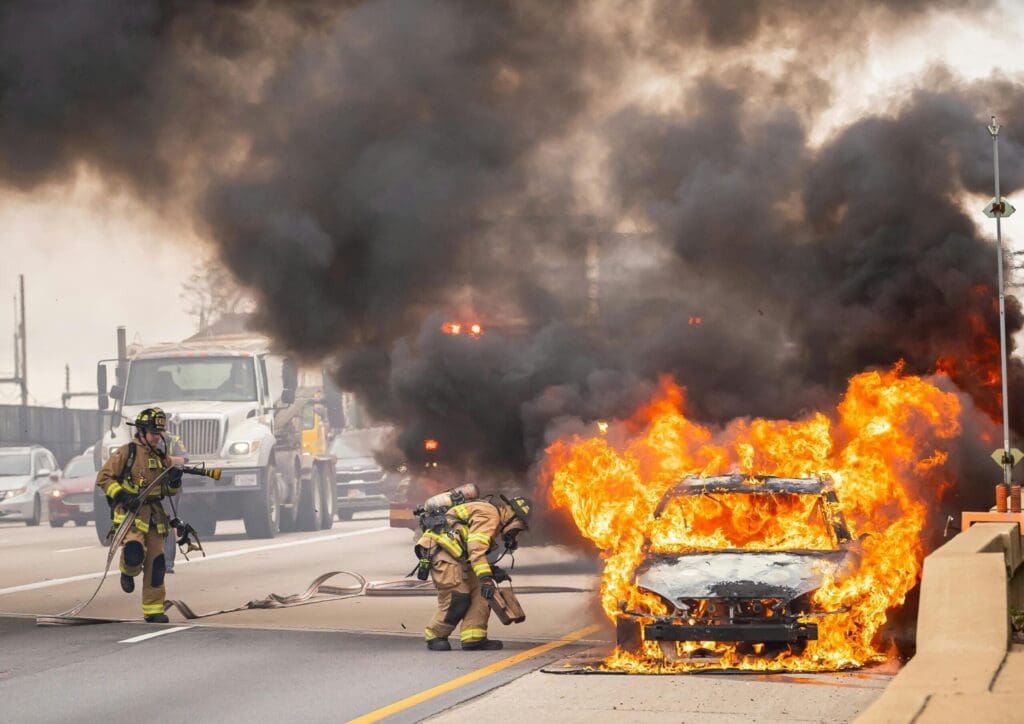
Injury matters can be grouped by where and how the harm occurred. The headings below follow common groupings, and many events touch more than one.
Work Place Accidents
An injured worker may be dealing with workplace benefits and may separately ask whether an outside party, such as an equipment maker, is responsible. Reported situations include:
- slips and falls at work
- unsafe conditions
- equipment in poor repair
- crashes while driving for work
- electrical hazards
- illness from exposure on the job
Premises Liability
Property owners and occupiers are expected to prevent dangers that could hurt visitors. Frequent causes of injury include:
- loose or broken stairs and handrails
- poor lighting in halls and alleys
- slippery floors
- cracked, raised or uneven surfaces
- burns and chemical exposure
- dog bites
- other hazards on someone else’s property
Motor Vehicle Accidents
The usual questions after a collision involve fault and coverage. Matters in this group include crashes involving passenger vehicles and pickups, commercial trucks, motorcycles and bicycles, and those that involve impairment, distraction or reckless driving.
As to coverage, section 39-16.1-11 of the North Dakota Century Code describes a motor vehicle liability policy for proof of financial responsibility with limits of twenty five thousand dollars for one person and fifty thousand dollars for two or more persons in one accident for bodily injury or death. Actual policies can differ from that description.
Wrongful Death
Families dealing with a death often ask who may bring a claim and what it can include. Typical causes include vehicle crashes, boating and aircraft accidents, drowning, electrocution, falls, fires and firearms.
Timing is covered by section 28-01-18(4) of the North Dakota Century Code, which appears in the North Dakota law text for N.D.C.C. 28-01-18(4). It says that in an action for injuries done to the person of another when death ensues, the claim for relief is deemed to have accrued at the time of the death of the party injured.
Product and Medical Care Matters
Some matters begin with an unsafe product or with an error in diagnosis or treatment. Keep the product with its packaging and instructions, and ask your provider for complete records and bills.
Losses and State Limits
People ask for medical bills, lost wages, a reduced ability to earn, pain and suffering, property damage, permanent injury and lost enjoyment of life to be counted.
One category of damages has a ceiling. Section 32-03.2-11(4) of the North Dakota Century Code, in the North Dakota law text for N.D.C.C. 32-03.2-11(4), says exemplary damages may not exceed two times the compensatory damages or two hundred fifty thousand dollars, whichever is greater.
Disputes over a trademark, a copyright or another business or creative work are covered on a separate page for intellectual property attorneys in Larimore.
Use the form on this page to send a short description of your matter
How To Start The Personal Injury Attorney North Dakota Larimore Intake Process
The form on this page is a straightforward way to ask for contact. It needs your contact information and a short description of the event. Everyday words work. If you are not sure of something, write that you are not sure.
Gather these items ahead of time if you can:
- the date and the place of the injury
- any other people or businesses involved
- the providers who have treated you
- an insurer’s claim number
- the number of a police or incident report
Unknowns can stay unknown for now. A fact can be added later without trouble, whereas a wrong guess can mislead.
Tell the story in order. Include how you were hurt, what care you have had, which symptoms are ongoing, and whether you have lost time at work. If you think someone specific is responsible, say who. Do not postpone sending the form until records are complete.
Using the form is only a request to be contacted. It does not commit you to anything, and nothing here discusses result, timing or price, because those turn on facts that must be reviewed.
Pages for other nearby communities include personal injury attorneys in Grand Forks and personal injury attorneys in Park River.
Frequently Asked Questions
Where can I buy a copy of a crash report?
The North Dakota Department of Transportation crash report page says reports for crashes that are reportable to the department can be purchased online.
What happens if both drivers made mistakes?
Fault can be shared. Section 32-03.2-02 of the North Dakota Century Code says contributory fault does not bar recovery unless the claimant’s fault was as great as the combined fault of all other persons, and damages are reduced in proportion to the claimant’s fault.
Do I need to keep my medical bills if my health plan paid them?
Yes. Keep the bills and the plan’s statements. They show what treatment you received and what it cost, and they may matter later even if you owe nothing now.
What should I do with photographs on my phone?
Keep the originals and copy them to a second place. Do not edit or filter them. A lawyer may want to see the images as taken, including the date information stored with them.
What if the injury involved the state or a state employee?
Section 32-12.2-04 of the North Dakota Century Code says a person bringing an injury claim against the state or a state employee presents written notice to the director of the office of management and budget within one hundred eighty days after the injury is discovered or reasonably should have been discovered.
