

Instantly Connect For Your Personal Injury Consultation When Filling Out Form
Your Moore Personal Injury Attorney
People in Moore deal with injuries in the same stretch of days that they deal with tow yards, pharmacies and insurance calls, and the legal questions can wait until they feel unavoidable. This page is meant to make them less mysterious. It names three local points of contact from public pages, explains what a personal injury claim is, restates two Oklahoma statutes, and describes how to prepare for a talk with a lawyer.
In brief, a personal injury claim is a request to the person or business believed to have caused harm, or to that party’s insurer, to pay for the harm. The request is only as persuasive as the records behind it: treatment notes, an account of the event that stays consistent, and proof of what the injury has cost.
For police paperwork, the city’s police reports page lists the Moore Police Records Division at 117 E. Main St., Moore. It is wise to check the page for what to bring before going, since offices change their requirements.
For court matters, the Cleveland County Court Clerk’s page says the county includes communities such as Moore, Norman and Noble. The Cleveland County website lists the District Court Clerk’s mailing address as 200 S. Peters Ave., Norman, OK 73069. Filings are usually handled by a lawyer, so treat both as background.
A claimant’s own negligence is addressed in Section 13 of Title 23 of the Oklahoma Statutes. It does not bar recovery unless it is of greater degree than the negligence of the person, firm or corporation causing the damage. Compare the wording in the posted Title 23. A lawyer can help you see how fault might be assessed.
If an action is for injury to the rights of another, does not arise on contract and is not otherwise listed, Section 95(A)(3) of Title 12 of the Oklahoma Statutes sets a period of two years. The Title 12 posting has the section. Whether your matter qualifies is for a lawyer to check.
Elsewhere on the site, readers can open injury attorneys in Del City, injury attorneys in Norman or injury attorneys in Oklahoma City, or begin at the statewide Oklahoma page. The site also has pages for Midwest City and, in another state, Denver.

What To Look For When Hiring Your Personal Injury Attorney

Think of the first month after an injury as a series of small decisions, each of which is easier when you have a few habits in place. This section describes habits worth building and the questions worth asking a lawyer.
Start with what you want. Some people like to hear about every development, and some only about turning points. Some want a say in each step, and others prefer to hand off the routine work. Name your preference in the first conversation and see whether the response is specific.
Write your questions on paper:
- Who will work on my file day to day?
- How will I hear about progress, and how often?
- What stages should I expect, and roughly in what order?
- What do you need from me, starting now?
- How are costs described, and will the terms be given to me in writing?
- Which deadlines might apply?
- What could change the course of the matter?
Several traits tend to separate lawyers: how much of the work is injury work, how plainly the lawyer explains, how well the lawyer knows local courts and offices, and how openly the lawyer discusses uncertainty.
Habit one is to ask every provider how to obtain a copy of your chart and bills, to write down the date, the person and the reply, and to store originals somewhere safe. Habit two is to keep a folder with photographs of the scene, damaged items and injuries; bills, receipts and discharge papers; letters from insurers with claim numbers; names and numbers of witnesses; pay stubs or an employer’s note covering missed work; and a dated diary of pain, sleep and tasks you could not do.
Habit three is to share the unflattering facts yourself. An older injury to the same area, a missed visit or a recorded statement already given is easier to manage when a lawyer hears it from you at the start.
Habit four is care with insurers. The adjuster may be pleasant, but the call is part of evaluating a claim. Give basic facts, avoid guessing about fault or recovery, and say you will call back. Read any release closely before signing it. Keep the event and your health off social media, because a remark can be repeated without its context.
Habit five is to read your own insurance papers. Policies describe what is covered and what must be reported, and a lawyer will want to see yours. Keep any claim numbers with the policy.
Intake form for an injury matter in Moore
Personal Injury Types of Cases
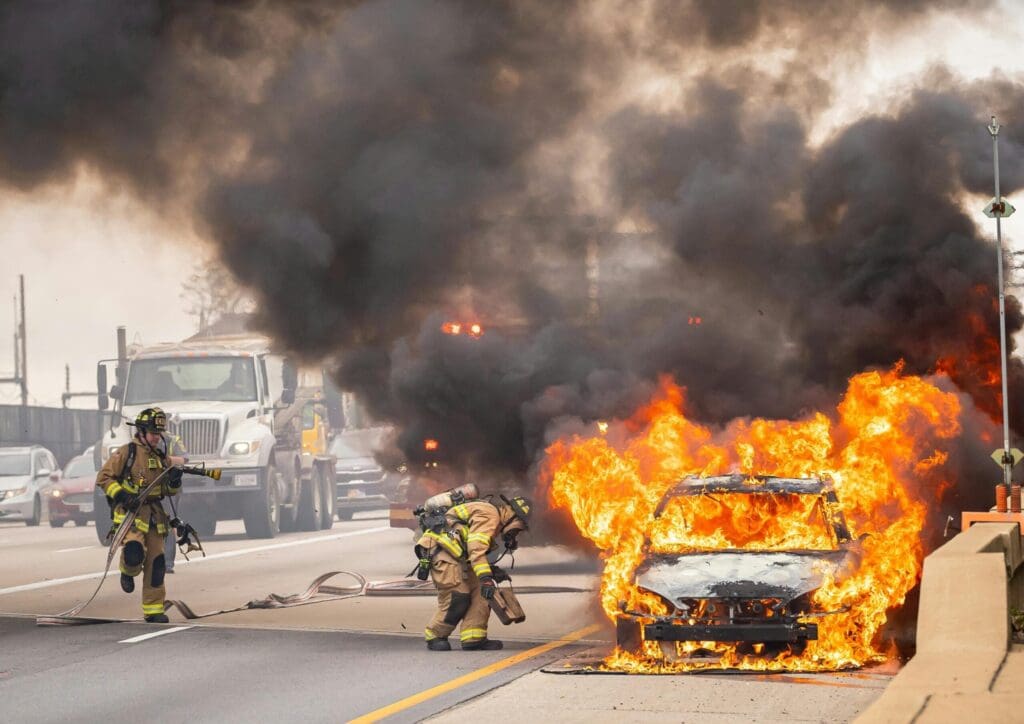
Think of this section as a glossary of situations. Lawyers and insurers sort injuries into families, mostly so that the right records and rules can be found quickly. A person describing a hard week does not need those labels, and one event can fit several of them.
Wrecks and collisions
On the road, the first questions are who was at fault and which policy responds. Common descriptions: two passenger cars meeting at an intersection, a collision with a semi or another tractor trailer, a motorcyclist who went down, a bicyclist struck while riding, and drivers who were intoxicated, texting or driving recklessly.
Title 47, Section 7-103, defines minimum liability insurance limits, and for policies issued or renewed on or after April 1, 2005 the figure is at least $25,000 for bodily injury to or death of one person in any one accident. The wording is in the Senate’s posted Title 47. Bring your own policy so a lawyer can see what coverage applies.
Hazards at a home, store or lot
The idea is that anyone who controls a property should keep it from endangering others. A lawyer will usually ask for the date, the place and photographs first. Typical hazards:
- damaged stairways and uneven walking surfaces
- a wet or slick floor
- a dim alley or walkway
- scalds, burns or contact with chemicals
- an attack by a dog
- another dangerous condition
Hazards at work
Alongside a workplace system, there may be a claim against someone outside the employer, such as a contractor or the maker of a machine. Typical accounts:
- falling, tripping or slipping while working
- working conditions that put people at risk
- worn or poorly maintained equipment
- electrical hazards
- a crash while driving on the job
- strain from repeated motions and other harm that builds slowly
- illness traced to exposure at work, including lung disease and asbestos related illness
Defective products and poor treatment
A product that fails or has weak warnings can hurt someone, and so can treatment that falls short of what a patient could reasonably expect. Those matters depend on thorough records and on review by qualified medical or technical professionals.
A fatal injury
A death that may be linked to negligence leaves relatives asking who may act for the person who died, and until when. Compensation in such a matter can differ in kind from other injury claims, and a lawyer can explain how. These matters can follow vehicle crashes, drowning, electrocution, falls, fire, firearm incidents, and maritime or helicopter accidents.
A federal fatal injury trends page is available for readers who want it, and this page makes no statement about its contents.
The Oklahoma Statutes set two years, in Title 12, Section 1053(A), for commencing a wrongful death action that the personal representative of the person who died brings. The posted Title 12 has the wording. Ask a lawyer about it early.
A claim against a public body
The section governing the presentation of claims against government bodies is Section 156(B) of Title 51. It provides that a claim against the state or a political subdivision is to be presented within one year of the date the loss occurs and is forever barred unless notice is presented within one year after the loss. The Title 51 text has it. Mention a public agency early.
The limit on punitive awards
One category of punitive damages awards may not exceed whichever is greater, $100,000 or the actual damages awarded, under 23 O.S. 9.1. You can read it in the Senate’s posted Title 23. A lawyer can explain how the limit would be applied.
Readers whose question concerns a trademark, a copyright or another business or creative dispute can turn to intellectual property attorneys in Moore.
Use the form on this page to send a short description of your matter
How To Start The Personal Injury Attorney Oklahoma Moore Intake Process
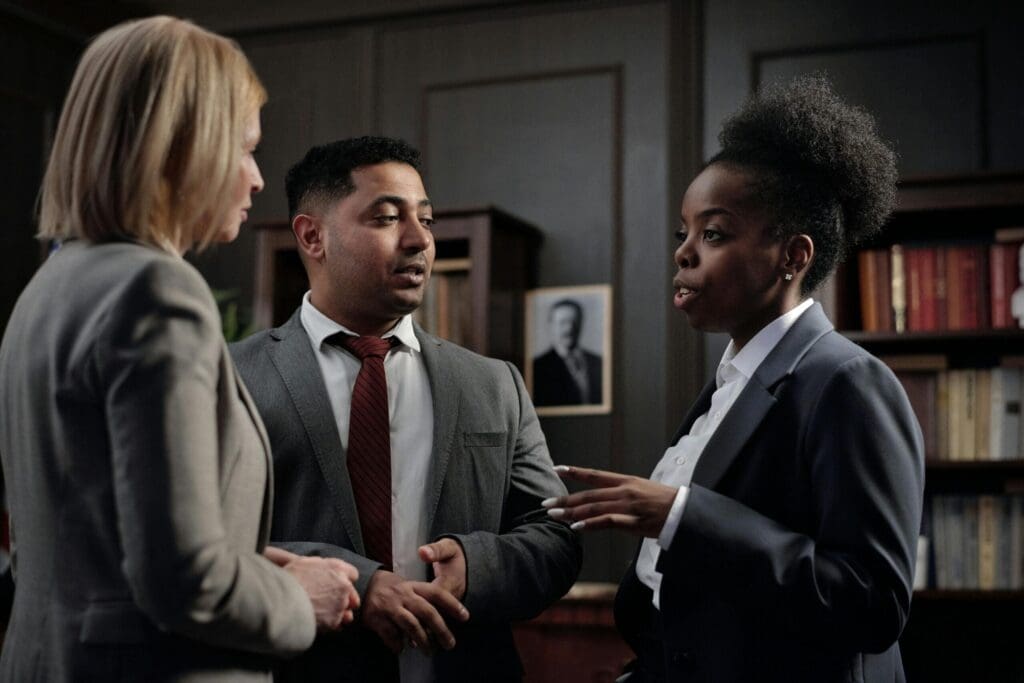
Describe your situation in the form on this page, which is the next step. A few sentences about what happened, when it happened and how you are now will do. Accuracy matters more than length, and the form does not ask you to know which kind of injury matter yours is.
These details speed things along:
- a phone number you check regularly, and the hours you can take calls
- the date and general place of the event
- the names of other people involved, if you know them
- the providers who have treated you
- the insurer’s name and any claim number
- a short note on work you have missed
If you are unsure about something, say that you are unsure. A gap is simple to fill in later, while a mistaken answer must be corrected.
Using the form is a request to be contacted. It promises no result, price or timetable, and you can ask questions before you decide anything. In the meantime, keep adding to your folder and keep a short dated note of your symptoms.
Some readers wonder whether to mention an earlier injury or a health condition on the form. It is better to mention it in a line than to leave it out. Prior conditions are common, and a lawyer will want to hear about them early. The same goes for any earlier claim, or any time you gave a statement to an insurer, an employer or an agency.
Frequently Asked Questions
What does the city page list for police records?
The city’s police reports page lists the Moore Police Records Division at 117 E. Main St., Moore.
Which county does the clerk’s page describe?
The Cleveland County Court Clerk’s page says the county includes communities such as Moore, Norman and Noble.
Where is the District Court Clerk’s mailing address?
On the Cleveland County website, the District Court Clerk’s mailing address is 200 S. Peters Ave., Norman, OK 73069.
How long should I keep receipts and bills?
Hold on to every receipt, bill and statement tied to the injury until your lawyer says otherwise. Sort them by date, and store a digital copy in a safe place.
Is a recorded statement to my own insurer different?
It can be. Ask what the recording will be used for, and talk with a lawyer before agreeing. Keep to basic facts.
