

Instantly Connect For Your Webster Medical Malpractice Consultation When Filling Out Form
Webster Medical Malpractice Legal Help
A medical mistake leaves questions that are hard to put down: what went wrong, who was responsible, and whether South Dakota law gives you a way to hold them accountable.
The sections below set out the South Dakota law that applies to malpractice claims and explain how to reach, through needanattorney.net, an attorney in our network who handles them.

Medical Malpractice Under South Dakota Law

A claim counts as medical malpractice in South Dakota when it is an action for malpractice, error, mistake or failure to cure against a physician, hospital, nurse, dentist, chiropractor or another practitioner of the healing arts, whatever the legal theory (SDCL § 15-2-14.1).
South Dakota’s damages statute for malpractice, SDCL § 21-3-11, names the providers it covers, including physicians, dentists, hospitals, nurses, nurse practitioners and physician assistants, and extends to a practitioner’s corporate, partnership or limited liability employer.
Medical care does not always succeed, and an unhappy outcome is not by itself malpractice; the claim has to connect a failure in care to the injury.
Common Medical Malpractice Claims

Malpractice claims come in many forms. The ones below are common, and each depends on linking a failure in care to the injury.
Missed or late diagnosis
Diagnostic claims turn on timing: what was known when, what a careful provider would have done with the same symptoms, and what an earlier diagnosis would have changed.
Errors in the operating room
Operating room claims examine whether the surgeon and the team followed accepted practice for the procedure, and whether a departure from it, rather than a known risk, caused the harm.
Prescription and dosing mistakes
A prescription or dosing mistake may involve a physician, a pharmacy or a hospital staff member. A claim looks at who made the error and what it caused.
Birth injuries
A delivery that goes wrong can leave lasting harm. A claim looks at what the providers knew, what they did and whether that caused the injury.
Filing Deadlines Under South Dakota Law
A medical malpractice action can be commenced only within two years after the alleged malpractice, error, mistake or failure to cure occurred (SDCL § 15-2-14.1).
SDCL § 15-2-14.1 counts from the occurrence of the alleged malpractice, not from the day it was discovered, so the date of the care is the first thing to pin down, and an attorney can say whether an exception fits.
Children and Patients Under a Disability
Under SDCL § 15-2-22, the period of a disability, minority or mental illness at the time of accrual, is left out of the time limited for commencing the action.
Extra time for a disability has limits in SDCL § 15-2-22: not more than five years unless the disability is infancy, and in every case not beyond one year after it ends.
Wrongful Death After a Medical Error
SDCL § 21-5-1 makes a person or corporation liable in a wrongful death action when the death was caused by a wrongful act, neglect or default that would have entitled the injured person to sue.
SDCL § 21-5-3 gives three years from the death to commence a wrongful death action, measured from the death rather than from the care.
The action is for the exclusive benefit of the husband or wife and children, or if there are none, the parents and next of kin, and it is brought in the name of the personal representative (SDCL § 21-5-5).
What South Dakota Law Says About Damage Limits
Under SDCL § 21-3-11, general damages in an action alleging malpractice against the listed providers may not exceed $500,000, and the limit applies to arbitration as well as court.
The limit does not reach special damages: SDCL § 21-3-11 says there is no limitation on their amount.
What a claim is worth depends on the injury, the proof and the allocation of fault, not on a statutory ceiling.
How South Dakota Treats a Patient’s Own Negligence
SDCL § 20-9-2 bars recovery only when the patient’s own negligence was more than slight in comparison with the defendant’s; otherwise damages are reduced in proportion.
The fact finder decides whether the patient’s negligence was slight in comparison without a percentage being disclosed by special interrogatory (SDCL § 20-9-2).
Knowing who treated the patient, and when, helps an attorney decide whom to name and how fault may be divided.
Notice to a Public Entity in South Dakota
An action for damages for personal injury or death caused by a public entity or its employees cannot be maintained unless written notice of the time, place and cause of the injury is given to the public entity within one hundred eighty days after the injury (SDCL § 3-21-2).
Public entities include the state and its agencies, municipalities, counties, school districts and other public entities established by law (SDCL § 3-21-3 names who receives the notice, such as the county auditor for a county or the mayor or city finance officer for a municipality).
Two points to remember: the notice does not toll the limitation period (SDCL § 3-21-2), and for a minor or incapacitated patient a court can allow late notice on an application within two years of the event (SDCL § 3-21-4).
Where a Day County Malpractice Case Is Filed
Where to file depends on the facts. A plaintiff may bring a damages action in the county where the cause of action arose (SDCL § 15-5-8), which for a Webster claim is often Day County, or where a defendant resides (SDCL § 15-5-6).
The Court and Hospitals Behind a Webster Claim
The Census Bureau places Webster in Day County. South Dakota Codified Law 16-5-1.2 places Day County in the Fifth Circuit. The South Dakota Department of Health list of designated trauma hospitals shows Sanford Webster Medical Center in Webster as a designated trauma receiving hospital. Whichever hospital treated you, request your full records and an itemized bill early, and keep a list of the providers you saw.
Start Your Webster Medical Malpractice Claim
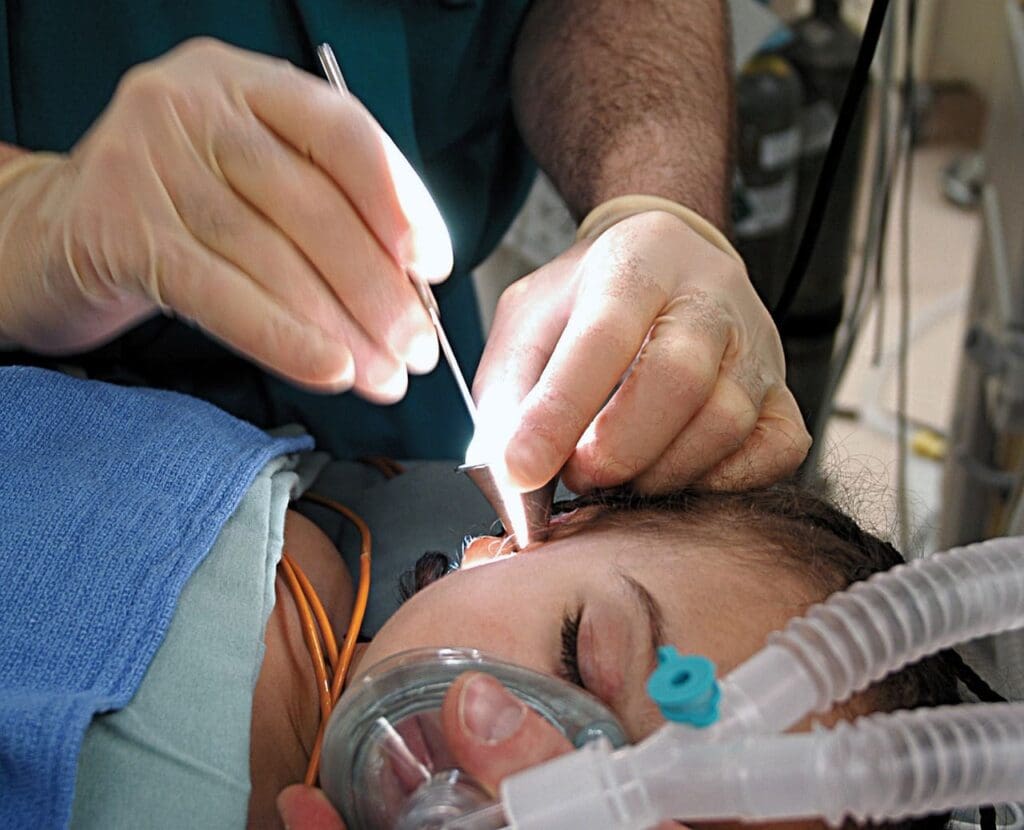
If you believe medical care in Webster caused you or a family member harm, a good first step is to write down what happened, when it happened and who was involved, and to gather the records and bills you already have.
The form on this page sends your details to an attorney in our network who handles medical malpractice claims in South Dakota, so you can talk through what happened and what your options are.
Frequently Asked Questions
Does the deadline change for a child injured by medical care?
The time of a disability, minority or mental illness at accrual, is not counted (SDCL § 15-2-22), but an extension is limited to one year after the disability ceases, and to five years for a disability other than infancy.
How does shared fault affect a South Dakota claim?
You can recover if your negligence was slight in comparison with the defendant’s, and the damages are reduced in proportion (SDCL § 20-9-2).
What is the filing deadline for a malpractice claim in South Dakota?
The period is two years from when the alleged malpractice occurred (SDCL § 15-2-14.1).
Who can bring a wrongful death claim in South Dakota?
Yes. SDCL § 21-5-1 provides the action, which must be commenced within three years after the death (SDCL § 21-5-3).
Is there a different notice rule for public hospitals in South Dakota?
Very fast: written notice within one hundred eighty days after the injury (SDCL § 3-21-2), and the notice does not toll the limitation period.
Is a hospital covered by the South Dakota malpractice time limit?
SDCL § 15-2-14.1 reaches hospitals, nurses and the other practitioners it lists, whether the claim is based on contract or tort.
Are special damages limited in a South Dakota malpractice claim?
The limit is on general damages ($500,000); special damages are not limited (SDCL § 21-3-11).
More Medical Malpractice Pages
Medical care often happens outside your own town; these pages cover other South Dakota communities.