

Instantly Connect For Your Criminal Defense Consultation When Filling Out Form
Ready to talk to someone about a charge in Forest City? The form above connects you directly, no need to read everything below first.
Your Forest City Criminal Defense Attorney
A criminal charge brings a lot at once: a court date, questions about work and family, and no clear picture of what comes next. This page walks through the Pennsylvania rules that most often shape how a case in Forest City unfolds. Keep reading for the time limits, the truth about the 365-day trial rule, straight answers on DUI, drug, assault, and theft charges, and how expungement, Clean Slate, and limited access differ. A local attorney who handles Susquehanna County cases can tell you which of these rules apply to your situation.

Your Key Pennsylvania Rules in One Place
- Most criminal charges must be started within 2 years of the offense, per 42 Pa.C.S. § 5552(a), while listed serious offenses carry 5 or 12 years.
- Rule 600 sets 365 days from the complaint to the start of trial. Time caused by other things, including defense continuances, is excluded, which is why it is not a simple countdown.
- Sitting in jail awaiting trial: 180 days is the ceiling under Rule 600(B), after which release on nominal bail can be requested unless bail is not available in your case.
- Grades run from summary offenses up to first-degree felonies, with three degrees each of felony and misdemeanor, and each grade has its own sentencing ceiling (18 Pa.C.S. § 106).
- Will it stay on my record? That depends on which of three routes fits: expungement, automatic Clean Slate limited access, or a petition for limited access (18 Pa.C.S. §§ 9122 to 9122.2).
The Grading System Behind Your Charge
The Crimes Code grades offenses in tiers (18 Pa.C.S. § 106): felonies of the first, second, and third degree, misdemeanors of the first, second, and third degree, and summary offenses. A charge’s grade is the quickest way to understand how serious it is.
Sentencing maximums follow the grade: 20, 10, and 7 years for felonies of the first, second, and third degree (18 Pa.C.S. § 1103); 5, 2, and 1 years for the three misdemeanor degrees (§ 1104); and 90 days for a summary offense (§ 1105). Fines are capped by grade as well: up to $25,000 for a first- or second-degree felony, $15,000 for a third-degree felony, $10,000, $5,000, and $2,500 for first-, second-, and third-degree misdemeanors, and $300 for a summary offense, unless a specific statute sets a different amount (18 Pa.C.S. § 1101).
If a statute says only ‘felony’ or ‘misdemeanor,’ the offense is a third-degree one, and anything with a maximum of 90 days or less is a summary offense (18 Pa.C.S. § 106).
How Long Does the Commonwealth Have to Bring Charges?
For most offenses the Commonwealth has two years to start a prosecution (42 Pa.C.S. § 5552(a)). Offenses not named in the longer-period lists, such as simple assault and DUI, are subject to that general two-year rule.
The exceptions run long. Aggravated assault, burglary, robbery, theft, forgery, and offenses punishable under § 13(f) of the Controlled Substance Act are on a five-year list (§ 5552(b)), the most serious sexual offenses on a twelve-year list (§ 5552(b.1)), and murder and voluntary manslaughter can be prosecuted at any time (§ 5551).
Timing is measured to the start of the case, not to trial: an indictment, an information, or a warrant, summons, or citation issued and executed without unreasonable delay (§ 5552(e)). The period does not run during continuous absence from Pennsylvania, when no home or workplace here can reasonably be found, or while a prosecution for the same conduct is pending (§ 5554).
Charged in Forest City? Get matched with an attorney now.
The 365-Day Trial Rule: What It Really Means
Pennsylvania’s speedy trial rule, Rule 600 of the Rules of Criminal Procedure, says trial in a court case must begin within 365 days after the complaint is filed. It is a real right. A violation is raised by a written motion, the judge holds a hearing, and dismissal under the rule is with prejudice, meaning the charges cannot be brought again. Read the rule closely and the 365 days turns out to be adjustable. Delay caused by the Commonwealth without due diligence is counted, and everything else is excluded, including defense continuances, unavailability of the defendant or counsel, and time the defendant has waived.
Judges work from two dates, the ‘mechanical run date’ (the complaint plus 365 days) and the ‘adjusted run date’ (after excluded time). The record of each continuance, including who asked for it and why, and the prosecution’s proof of due diligence, usually decide which side the numbers favor. Two appellate decisions show the range. Commonwealth v. Graves (2024) upheld a dismissal because the Commonwealth could not show diligence, and under Commonwealth v. Harth (2021) a court’s own crowded calendar cannot excuse a late trial unless diligence was shown.
Time in jail is measured separately. Under Rule 600(B) a person may not be held more than 180 days before trial, excluding only defense delay, and (D)(2) provides a motion for release on nominal bail, except where the defendant is not entitled to bail. Philadelphia Municipal Court cases run on a different 180-day clock under Rule 1013, but that court sits only in Philadelphia.
From the Magisterial District Judge to Common Pleas
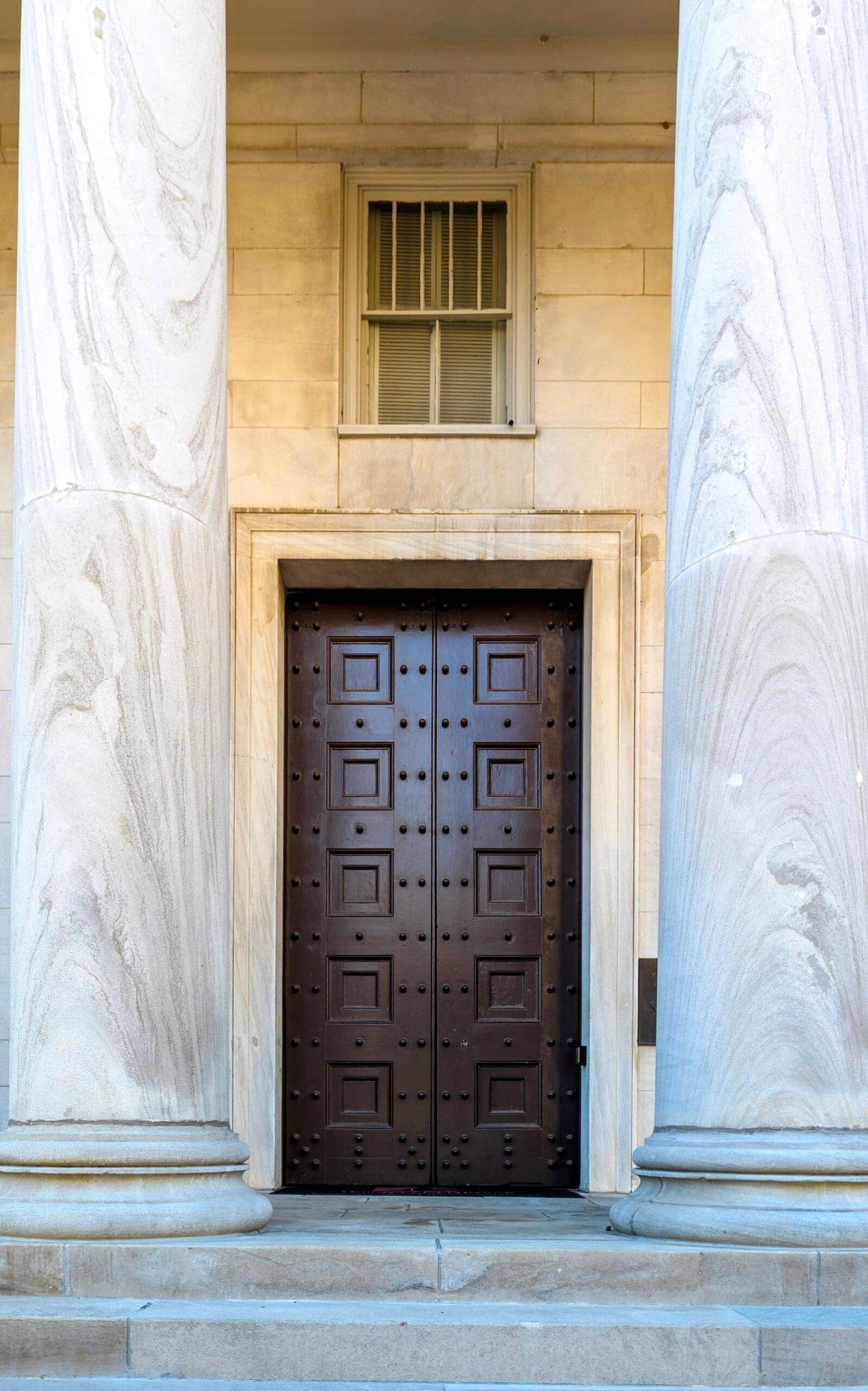
The first stop is typically the magisterial district court. Its judge handles summary offenses, arraignments, bail, and preliminary hearings (42 Pa.C.S. § 1515), and charges that survive that stage move to the Court of Common Pleas for trial.
The trial court for Forest City is the Court of Common Pleas of Susquehanna County, part of the Thirty-fourth Judicial District (42 Pa.C.S. §§ 901, 951), and the county seat is Montrose. The magisterial district for a case is generally the one where the offense is alleged to have occurred (Pa.R.Crim.P. 130).
The Charges Behind Most Calls From Forest City
What happens if I am charged with DUI in Forest City?
Pennsylvania’s DUI law has tiers. General impairment covers driving while unable to drive safely or with a blood alcohol level of 0.08 to under 0.10, high rate covers 0.10 to under 0.16, and highest rate covers 0.16 and above (75 Pa.C.S. § 3802). For a first offense the minimums rise with the tier: six months of probation and a $300 fine, then at least 48 hours in jail and $500 to $5,000, then at least 72 hours and $1,000 to $5,000 (§ 3804).
Accelerated Rehabilitative Disposition (ARD) is a diversion program that can end in dismissal and expungement of the arrest record (Pa.R.Crim.P. 320), but for a DUI it is not risk-free: since December 22, 2025, driving under the influence within 10 years after completing ARD for a DUI is a separate offense under 75 Pa.C.S. § 3802(h)(1), graded under § 3803(c).
What are the penalties for possession of a controlled substance?
Possession of a controlled substance under 35 P.S. § 780-113(a)(16) is a misdemeanor with a maximum of one year and a $5,000 fine, or three years and $25,000 after a prior conviction. Possession of a small amount of marijuana, 30 grams or 8 grams of hashish, carries a maximum of 30 days and $500. Charges of delivery or possession with intent to deliver are felonies with much higher ceilings.
Drug offenses punishable under section 13(f) of the Controlled Substance Act, the delivery-type offenses, fall on the five-year list in 42 Pa.C.S. § 5552(b)(2). Simple possession is not on that list, so the general two-year period applies to it.
How does Pennsylvania grade assault charges?
Simple assault is graded second-degree misdemeanor, with exceptions: third degree for a mutual-consent fight and first degree against a child under 12 by an adult (18 Pa.C.S. § 2701(b)). Aggravated assault (§ 2702) is graded first-degree felony under subsections (a)(1), (2), and (9) and second-degree felony under the rest.
An assault charge also sets the calendar: with a two-year default for simple assault and five years for aggravated assault (42 Pa.C.S. § 5552), the date of the incident and the date the complaint or warrant issued can matter.
Is retail theft a misdemeanor or a felony?
Retail theft (18 Pa.C.S. § 3929) can be either, depending on the facts. A first offense under $150 is only a summary offense and a second is a second-degree misdemeanor, but merchandise worth $150 or more is a first-degree misdemeanor, and a third or subsequent offense, an amount over $1,000, or a firearm or motor vehicle makes it a third-degree felony.
A theft charge turns on proving value and the taking, so how the property was valued, at market value at the time and place of the offense or replacement cost, can change the grade (18 Pa.C.S. § 3903(c)).

Want someone to check the deadlines in your Forest City case? Get matched now.
What Can Be Cleared From a Pennsylvania Record?

Three routes exist for clearing a Pennsylvania record, and which one fits depends on how the case ended and how long ago. They are expungement, automatic Clean Slate limited access, and limited access by petition, and they are not interchangeable.
Expungement (18 Pa.C.S. § 9122) removes the record, and it is narrow. It covers charges that did not end in a conviction, acquittals on all charges (now expunged automatically), and completed Accelerated Rehabilitative Disposition cases (Pa.R.Crim.P. 320). For a conviction, it is available for a summary offense after five years free of arrest or prosecution, or at age 70 after ten years free of arrest following release from confinement or supervision.
The automatic route is Clean Slate limited access (18 Pa.C.S. § 9122.2). No petition is needed. Summary convictions qualify after five years, second- and third-degree misdemeanors (and misdemeanors punishable by two years or less) after seven years free of any conviction punishable by a year or more, and qualifying drug offenses after ten years, provided restitution and the fee are paid. Non-convictions are covered too.
For everything else, § 9122.1 allows a petition. A qualifying misdemeanor becomes eligible after seven years without a new conviction, and a felony of the third degree or lower in specific categories (theft, forgery, criminal mischief, criminal trespass) after ten. Higher-degree felonies are excluded, restitution and a fee are required, and the prosecutor can object within 30 days.
Some offenses are excluded by category. Crimes against the person, crimes against the family, firearms offenses, sex-offender-registration offenses, and corruption of minors cannot use most of these routes (18 Pa.C.S. §§ 9122.1, 9122.3), and a person’s other convictions can limit eligibility as well.
Limited access is not erasure. The State Police and the courts must withhold a limited-access record from most background checks (18 Pa.C.S. § 9121), but the record still exists and criminal justice agencies can see it. A few requesters can still get it, including child-welfare agencies, custody and protection-from-abuse cases, and employers whose federal rules require a criminal-history review. Even after an expungement, including one that follows a diversion or probation program, the prosecutor and the State Police keep a list of names, used only to decide eligibility for later programs, to identify people in criminal investigations, and to grade later offenses (§ 9122(c)).
Local Court Details for Forest City
The rules on this page are statewide, but the practical details are local. For a Forest City case that means Susquehanna County, the Court of Common Pleas of Susquehanna County, and the county seat of Montrose. Asking a local attorney how long cases usually take there helps put the 365-day rule in context.
Frequently Asked Questions
How long can the state wait to charge me with a crime in Pennsylvania?
Usually two years from the offense (42 Pa.C.S. § 5552(a)). Aggravated assault, burglary, robbery, theft, forgery, and certain drug offenses get five years, major sexual offenses get twelve, and murder and voluntary manslaughter have no limit. The clock stops when a warrant, summons, or citation is issued and served without unreasonable delay.
Is 365 days a hard deadline for my trial?
No. It is a starting point that adjusts. The count includes only Commonwealth delay without due diligence and excludes every other period (Pa.R.Crim.P. 600(C)(1)), and the judge must record who asked for each continuance and to whom the delay is attributed (Rule 600(C)(3)).
How does Pennsylvania grade crimes?
By class and degree under 18 Pa.C.S. § 106: felonies and misdemeanors are each divided into first, second, and third degree, and summary offenses sit below them. A statute that gives no degree is treated as third degree.
Can a summary offense be removed from my record?
Often, yes. A summary conviction can be expunged on petition after five years free of arrest or prosecution (18 Pa.C.S. § 9122(b)(3)), and it can qualify for automatic Clean Slate limited access after five years if restitution and the fee are paid (§ 9122.2).
Where will my criminal case be heard in Forest City?
It typically begins in a magisterial district in Susquehanna County, chosen by where the offense is alleged to have occurred (Pa.R.Crim.P. 130), and a serious charge that goes forward is tried in the Court of Common Pleas of Susquehanna County.
What if I am in custody and my trial keeps getting postponed?
The 180-day custody limit in Rule 600(B) counts delay caused by the Commonwealth and the court but not delay caused by the defense. If it is exceeded, a defense motion for nominal bail is the remedy, unless bail is not allowed.
Does my blood alcohol level change the penalty for a DUI?
Yes. The tiers are 0.08 to under 0.10, 0.10 to under 0.16, and 0.16 and above (75 Pa.C.S. § 3802), and a first offense carries higher minimums at each step (§ 3804). Refusing a required test is sentenced under the highest tier.
What is ARD in Pennsylvania and does it clear my record?
ARD is a diversion program. When a judge dismisses the charges after successful completion, the judge also orders the arrest record expunged, unless the Commonwealth files an objection within 30 days after the dismissal motion is served (Pa.R.Crim.P. 320). For a DUI, however, driving under the influence within 10 years after completing ARD is a separate offense (75 Pa.C.S. § 3802(h)(1)).
Can I get my record expunged in Pennsylvania?
Sometimes, through one of three routes. Expungement (18 Pa.C.S. § 9122) covers some non-convictions, acquittals, ARD cases, and only a few convictions, such as a summary offense after five arrest-free years. Automatic Clean Slate limited access (§ 9122.2) and limited access by petition (§ 9122.1) cover more, but restrict access rather than remove the record.
Will a background check show my record after limited access?
Usually not for ordinary employer and public background checks, because the State Police must withhold it, but exceptions apply, including federally required employment checks (18 Pa.C.S. § 9121(b), (b.2)).
Connect With a Forest City Criminal Defense Attorney
You do not have to work out the dates and rules alone. Fill out the form, and you will be connected with an attorney who can review your charge, the timeline, and what a record may look like afterward.
