

Fill Out The Form To Be Connected Instantly to the Patent Infringement Attorney Needed In Your Case!
Ready to talk to someone about an intellectual property matter in Ruidoso? The form above connects you directly, no need to read everything below first.
Your Ruidoso Intellectual Property Attorney
Intellectual property law splits into four main areas, patents, trademarks, copyrights, and trade secrets, and each has its own rules on where a case is filed and how long you have. The sections below explain those rules for a matter arising in Ruidoso. The sections that follow cover what patents, trademarks, copyrights, and trade secrets protect, the filing deadlines, registration, the federal courts for Lincoln County, New Mexico’s own trademark and trade secret rules, and what an infringement claim involves. An attorney who handles intellectual property matters can tell you which of these rules apply to your situation.
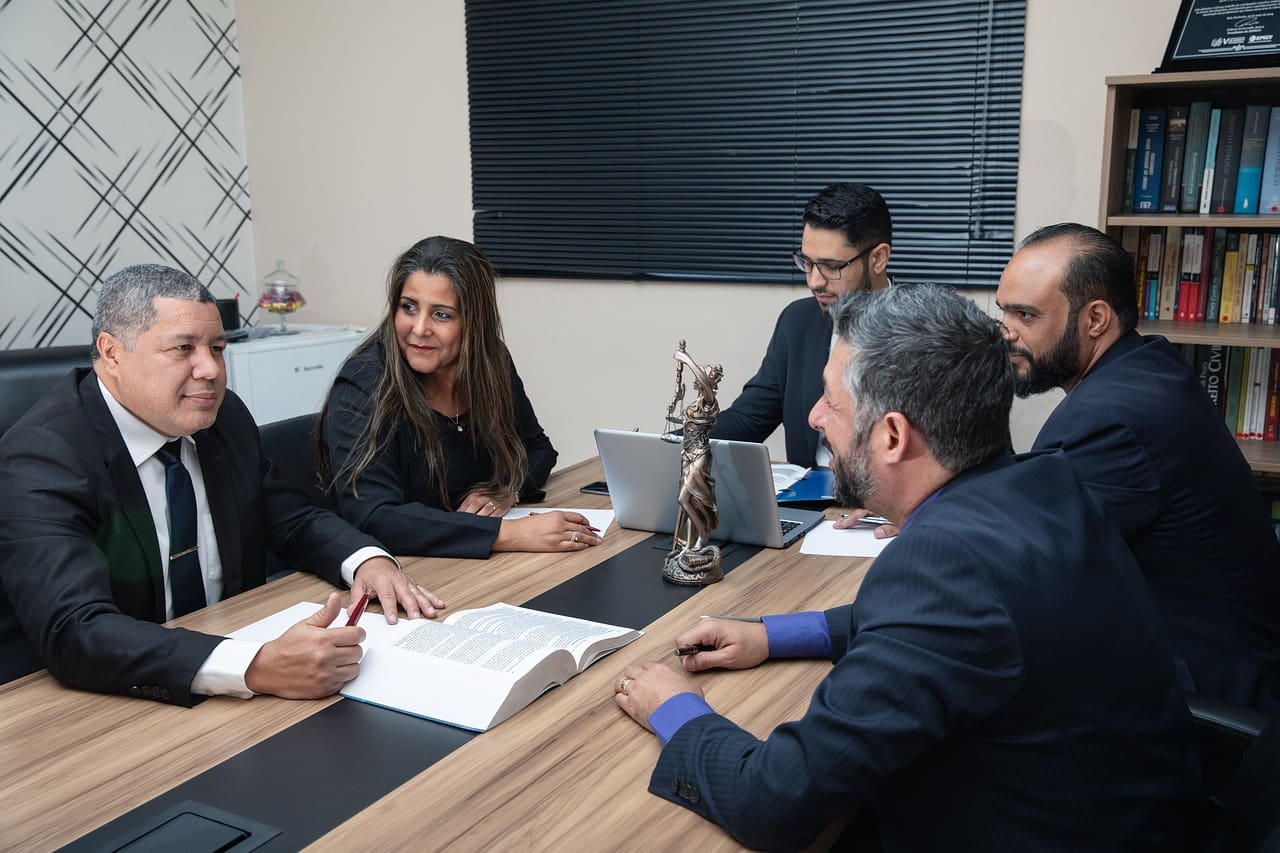
Quick Answers on Patents, Trademarks, Copyrights, and Trade Secrets
- Patents belong in federal court. Federal district courts have original jurisdiction over patent claims (28 U.S.C. 1338(a)), and damages cannot reach back more than six years before the complaint (35 U.S.C. 286).
- Trademarks can be registered federally and in New Mexico. The federal register is set up by 15 U.S.C. 1051, and state registration is filed with the New Mexico Secretary of State under NMSA 57-3B-1 to 57-3B-17.
- Three years to bring a copyright claim (17 U.S.C. 507(b)), and federal district courts have original jurisdiction over copyright claims (28 U.S.C. 1338(a)).
- What is a trade secret? Information the owner has taken reasonable measures to keep secret and that derives independent economic value from not being generally known (18 U.S.C. 1839(3)).
- Where is my case filed? Ruidoso is in the District of New Mexico, and that court holds court in Albuquerque, Las Cruces, Las Vegas, Roswell, Santa Fe, and Silver City (28 U.S.C. 111).
What Patents, Trademarks, Copyrights, and Trade Secrets Protect

Patents cover new and useful processes, machines, manufactures, and compositions of matter (35 U.S.C. 101). Protection lasts until 20 years after the date on which the application was filed in the United States (35 U.S.C. 154(a)(2)), so the filing date matters more than the date the patent issues.
If the issue is a business name, logo, or slogan, the question is trademark, which the Lanham Act defines as a word, name, symbol, or device that identifies and distinguishes goods and indicates their source (15 U.S.C. 1127), with service marks covering services.
Copyright protects expression, not ideas. The subject matter is original works of authorship fixed in a tangible medium (17 U.S.C. 102(a)), and protection does not extend to any idea, procedure, process, system, or method of operation, however it is described (17 U.S.C. 102(b)).
If the valuable thing is confidential know-how, the question is trade secret. Both elements in 18 U.S.C. 1839(3) must be present: reasonable measures to keep the information secret, and independent economic value from its not being generally known.
How Long Do You Have to Bring a Claim?
For copyright infringement, the statute sets three years from when the claim accrued (17 U.S.C. 507(b)), and registration or a refusal of registration must come before suit on a United States work (17 U.S.C. 411(a)).
The federal trade secret deadline is set by 18 U.S.C. 1836(d): three years from the date the misappropriation was discovered or by the exercise of reasonable diligence should have been discovered, with continuing misappropriation counted as one claim.
For patent damages, the look-back is six years from the complaint (35 U.S.C. 286), which is separate from the 20-year patent term measured from the filing date (35 U.S.C. 154(a)(2)).
A New Mexico state-law claim brings its own deadline and its own accrual rule. Both come from New Mexico statutes and court decisions and should be reviewed by an attorney at the start of the matter.
Protecting your work in Ruidoso? Get matched with an attorney now.
Registering and Protecting Your Rights
For a trademark, the owner of a mark used in commerce may request registration on the principal register by paying the prescribed fee and filing an application and a verified statement with the Patent and Trademark Office (15 U.S.C. 1051(a)(1)). A person with a bona fide intention to use a mark in commerce may also apply (15 U.S.C. 1051(b)(1)).
A New Mexico business can ask an attorney whether a state-level trademark filing with the New Mexico Secretary of State is worth adding to a federal application. The provisions are in NMSA 57-3B-1 to 57-3B-17, and the two registrations are separate.
Copyright exists without a filing, but a lawsuit about a United States work requires preregistration or registration first (17 U.S.C. 411(a)). The standard term for a work created on or after January 1, 1978 is the life of the author and 70 years after the author’s death (17 U.S.C. 302(a)).
A patent application starts the 20-year term (35 U.S.C. 154(a)(2)), and the invention must fit a statutory category such as a process, machine, manufacture, or composition of matter (35 U.S.C. 101). An attorney can review both points before you file.

Federal District Courts and Where They Sit
Under 28 U.S.C. 1338(a), the federal district courts have original jurisdiction over patent, plant variety protection, copyright, and trademark claims, and that jurisdiction is exclusive for patents, plant variety protection, and copyrights. A trademark claim can also be brought in state court.
There is only one federal district in New Mexico. The District of New Mexico hears federal cases from Lincoln County and holds court in Albuquerque, Las Cruces, Las Vegas, Roswell, Santa Fe, and Silver City (28 U.S.C. 111).
Trade Secrets and Trademarks Under New Mexico Law
The federal civil action for trade secrets (18 U.S.C. 1836(b)(1)) is filed in federal district court (18 U.S.C. 1836(c)), and a dispute from Ruidoso may also raise a claim under the Uniform Trade Secrets Act (NMSA 57-3A-1 to 57-3A-7). Which claims fit depends on the facts.
Federal trademark law under 15 U.S.C. 1114 and 1125 sits alongside New Mexico’s registration system, which runs through the New Mexico Secretary of State under NMSA 57-3B-1 to 57-3B-17. The two operate separately.
Which claims to bring, and in which court, is a strategy question for an attorney who can read the documents.
What Kinds of Intellectual Property Cases Come Up?

Patent Claims and Defenses
Patent disputes turn on the patent’s claims and on conduct listed in 35 U.S.C. 271(a), namely making, using, offering to sell, selling, or importing a patented invention without authority.
Because the six-year damages limit in 35 U.S.C. 286 runs back from the complaint, delay can reduce what is recoverable.
Trademark Infringement and Brand Disputes
Infringement of a registered mark means using in commerce a reproduction, counterfeit, copy, or colorable imitation of the mark in connection with the sale, offering for sale, distribution, or advertising of goods or services where the use is likely to cause confusion, mistake, or deception (15 U.S.C. 1114(1)(a)).
A state registration in New Mexico (NMSA 57-3B-1 to 57-3B-17) is different from federal registration on the principal register (15 U.S.C. 1051).
Protecting Creative Work
Whether copying is actionable begins with what is protected. Copyright subsists in original works fixed in a tangible medium (17 U.S.C. 102(a)) and does not reach ideas, procedures, processes, systems, or methods of operation (17 U.S.C. 102(b)).
Federal district courts have original jurisdiction over copyright claims (28 U.S.C. 1338(a)).
Trade Secret Claims
In a trade secret dispute, both sides examine the same two things: the steps the owner took to keep the information secret and the value that comes from its not being generally known or readily ascertainable (18 U.S.C. 1839(3)).
A continuing misappropriation is treated as a single claim for the federal deadline (18 U.S.C. 1836(d)).
Damages, Injunctions, and Other Relief
The patent statute provides for damages adequate to compensate for the infringement, not less than a reasonable royalty (35 U.S.C. 284), and for injunctions to prevent the violation of a patent right (35 U.S.C. 283).
Trademark: courts can grant injunctions according to the principles of equity to prevent the violation of the rights of a registrant or a violation of section 1125(a), (c), or (d) (15 U.S.C. 1116(a)), and when a violation is established the plaintiff is entitled, subject to the principles of equity, to recover the defendant’s profits, any damages sustained by the plaintiff, and the costs of the action (15 U.S.C. 1117(a)).
Copyright damages can be measured by the owner’s actual damages and the infringer’s attributable profits (17 U.S.C. 504(b)), or by statutory damages between $750 and $30,000 per work as the court considers just (17 U.S.C. 504(c)(1)).
Under 17 U.S.C. 412, an owner who registers after an infringement has started may lose access to statutory damages and attorney’s fees for that infringement, unless the work was published and registered within three months of first publication.
For a misappropriated trade secret, 18 U.S.C. 1836(b)(3) authorizes an injunction against actual or threatened misappropriation, damages for actual loss and unjust enrichment or a reasonable royalty, exemplary damages up to 2 times for willful and malicious misappropriation, and reasonable attorney’s fees to the prevailing party in stated situations.
Was your work copied or your brand used without permission? Talk to an attorney in Lincoln County.
What to Gather Before You Talk to an Attorney
Bring a simple chronology. When was the work created, when was it first shared or sold, and when did you first notice the copying or use? Many of the deadlines on this page run from those events.
Patent matters go faster with drawings, lab notes, patent or application numbers, and a list of who has seen the invention. Trademark matters go faster with the mark itself, samples of its use, and any registration documents.
Creators should bring the work itself, dated drafts, and examples of the copy. Owners of confidential information should bring a description of it, a list of who had access, and the steps taken to keep it secret.
What to Know About Cases From Ruidoso
The rules on this page are national or statewide, but the practical details are local. For a Ruidoso claim that means Lincoln County and the District of New Mexico. Asking an attorney how long cases usually take there helps put the deadlines in context.
For a personal injury rather than an intellectual property question, our Ruidoso personal injury page explains the New Mexico rules. Intellectual property matters in the surrounding area are covered on our pages for Tularosa, Alamogordo, and Corona. If your matter arose in a different city, start from our statewide New Mexico intellectual property directory.
Frequently Asked Questions
How far back can I recover damages for patent infringement?
Six years before the complaint. No recovery may be had for infringement committed more than six years before the filing of the complaint (35 U.S.C. 286).
Does an unregistered brand have any protection?
Possibly. A civil action can be brought under 15 U.S.C. 1125(a)(1) by a person who believes he or she is or is likely to be damaged by a false designation of origin likely to cause confusion, and New Mexico law may offer additional protection.
Can I copyright an idea?
No. Copyright never extends to any idea, procedure, process, system, method of operation, concept, principle, or discovery (17 U.S.C. 102(b)). It protects the original expression of an idea.
How long do I have to bring a trade secret claim under federal law?
Three years after the misappropriation is discovered or, by the exercise of reasonable diligence, should have been discovered, and a continuing misappropriation counts as a single claim (18 U.S.C. 1836(d)).
Which court handles patent and copyright cases from Ruidoso?
Both belong exclusively in federal district court (28 U.S.C. 1338(a)), which for Ruidoso means the District of New Mexico.
Does New Mexico law protect trade secrets?
Yes. New Mexico has the Uniform Trade Secrets Act (NMSA 57-3A-1 to 57-3A-7), and the federal Defend Trade Secrets Act (18 U.S.C. 1836) adds a separate federal action.
When does the trade secret clock start?
From the date the misappropriation is discovered or, by reasonable diligence, should have been discovered (18 U.S.C. 1836(d)).
Can I protect a logo or slogan?
A word, name, symbol, or device used to identify and distinguish goods or services and indicate their source can be a trademark or service mark (15 U.S.C. 1127).
Talk to an Attorney About Your Ruidoso Matter
If you are unsure where to start, the form above is the simplest first step. It connects you with an attorney who can explain your options in Ruidoso and what the next few weeks may involve.