

Instantly Connect For Your Hartford Medical Malpractice Consultation When Filling Out Form
Hartford Medical Malpractice Legal Help
Finding out that care in Hartford fell short can be painful, and sorting out whether it amounts to medical malpractice is a separate question from how you feel about it.
The sections below set out the South Dakota law that applies to malpractice claims and explain how to reach, through needanattorney.net, an attorney in our network who handles them.

How South Dakota Law Defines Medical Malpractice

A claim counts as medical malpractice in South Dakota when it is an action for malpractice, error, mistake or failure to cure against a physician, hospital, nurse, dentist, chiropractor or another practitioner of the healing arts, whatever the legal theory (SDCL § 15-2-14.1).
South Dakota’s damages statute for malpractice, SDCL § 21-3-11, names the providers it covers, including physicians, dentists, hospitals, nurses, nurse practitioners and physician assistants, and extends to a practitioner’s corporate, partnership or limited liability employer.
An unexpected outcome does not prove a mistake. What matters is whether care in Hartford departed from accepted practice and whether that departure caused the harm.
Kinds of Cases That Need a Malpractice Attorney

Malpractice claims come in many forms. The ones below are common, and each depends on linking a failure in care to the injury.
Failure to diagnose
Diagnostic claims turn on timing: what was known when, what a careful provider would have done with the same symptoms, and what an earlier diagnosis would have changed.
Errors in the operating room
Operating room claims examine whether the surgeon and the team followed accepted practice for the procedure, and whether a departure from it, rather than a known risk, caused the harm.
Prescription and dosing mistakes
A wrong drug, a wrong dose, a missed allergy or a harmful interaction can injure a patient. These claims ask who in the chain, the prescriber, pharmacist or nurse, made the error and whether it caused the harm.
Harm to a mother or baby at birth
Claims about harm at birth look at the care given and ask whether a departure from accepted practice caused the injury, which is why complete records matter.
How Long You Have to File in South Dakota
The filing deadline is two years, counted from the date the alleged malpractice, error, mistake or failure to cure occurred (SDCL § 15-2-14.1).
Because SDCL § 15-2-14.1 runs from the occurrence of the alleged malpractice, error, mistake or failure to cure, waiting to look into a claim can use up much of the two years.
Deadlines for Minors in South Dakota
South Dakota does not count the time a person is a minor or mentally ill when the claim accrues against the time limit (SDCL § 15-2-22).
Extra time for a disability has limits in SDCL § 15-2-22: not more than five years unless the disability is infancy, and in every case not beyond one year after it ends.
Wrongful Death After a Medical Error
If a patient dies because of care that would have supported a claim during the patient’s life, SDCL § 21-5-1 provides a wrongful death action.
SDCL § 21-5-3 gives three years from the death to commence a wrongful death action, measured from the death rather than from the care.
Under SDCL § 21-5-5, a wrongful death action is brought by the personal representative and benefits the spouse and children, or the parents and next of kin if there is no spouse or child.
The Limit on General Damages
Under SDCL § 21-3-11, general damages in an action alleging malpractice against the listed providers may not exceed $500,000, and the limit applies to arbitration as well as court.
There is no limitation on the amount of special damages that may be awarded (SDCL § 21-3-11).
What a claim is worth depends on the injury, the proof and the allocation of fault, not on a statutory ceiling.
How South Dakota Treats a Patient’s Own Negligence
Under SDCL § 20-9-2, contributory negligence is not a bar if it was slight in comparison with the defendant’s negligence, and the award is reduced in proportion.
Under SDCL § 20-9-2, no percentage of the patient’s fault is disclosed by special interrogatory when the slight comparison question is decided.
Listing each provider who touched the care, and the dates, is useful before the first consultation.
Notice to a Public Entity in South Dakota
An action for damages for personal injury or death caused by a public entity or its employees cannot be maintained unless written notice of the time, place and cause of the injury is given to the public entity within one hundred eighty days after the injury (SDCL § 3-21-2).
SDCL § 3-21-3 lists the officers to be notified, including the attorney general and the commissioner for the state and the county auditor for a county.
Nothing in the notice chapter tolls or extends any limitation on the time for commencing an action (SDCL § 3-21-2). If the person injured is a minor or is incapacitated, a court may allow notice within a reasonable time after the disability, on an application made within two years of the event (SDCL § 3-21-4).
Courts for a Hartford Claim
SDCL § 15-5-8 gives the plaintiff the option of the county where the damages were inflicted or the cause of action arose, and care in Hartford points to Minnehaha County as one choice. The county where a defendant resides is the general rule (SDCL § 15-5-6).
Courts and Hospitals Near Hartford
Hartford lies in Minnehaha County, according to Census Bureau place and county names. Minnehaha County is in the Second Circuit, according to South Dakota Codified Law 16-5-1.2. The South Dakota Department of Health trauma hospital list names Sanford USD Medical Center in Sioux Falls, also in Minnehaha County, as a designated tertiary trauma hospital. In Minnehaha County, the Department of Health list of designated trauma hospitals shows Sanford USD Medical Center Pediatrics in Sioux Falls as a designated regional trauma hospital. If your care took place at a hospital like this, ask for the complete chart and an itemized bill, and write down every provider who treated you.
Start Your Hartford Medical Malpractice Claim
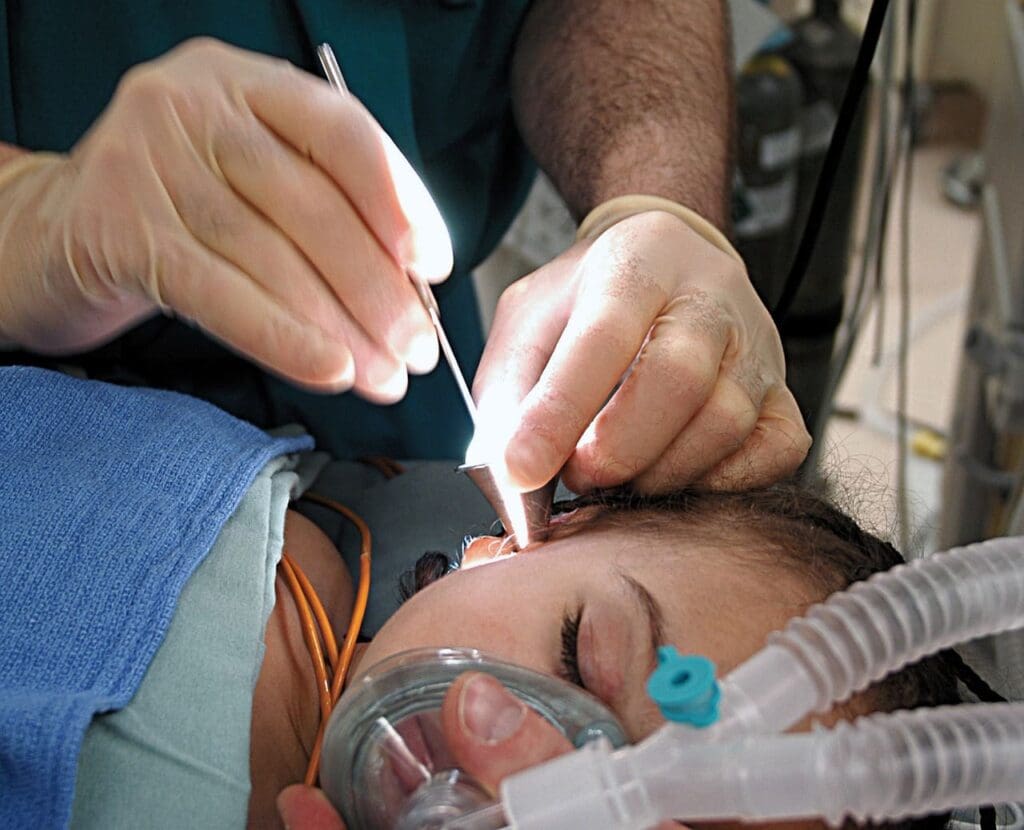
A short written account of what happened, with the names of the providers and the dates, gives an attorney a useful starting point, even if you are missing some records.
The form on this page sends your details to an attorney in our network who handles medical malpractice claims in South Dakota, so you can talk through what happened and what your options are.
Frequently Asked Questions
Can I recover if I share some blame in South Dakota?
South Dakota allows recovery when the patient’s negligence was slight in comparison, with damages reduced by that share (SDCL § 20-9-2).
How much time do I have to sue for medical malpractice in South Dakota?
The period is two years from when the alleged malpractice occurred (SDCL § 15-2-14.1).
Who can bring a wrongful death claim in South Dakota?
The personal representative brings the action (SDCL § 21-5-5), within three years after the death (SDCL § 21-5-3).
What if the hospital or provider is a government entity?
Very fast: written notice within one hundred eighty days after the injury (SDCL § 3-21-2), and the notice does not toll the limitation period.
Which providers does the South Dakota malpractice deadline cover?
Physicians, surgeons, dentists, hospitals, sanitariums, registered and licensed practical nurses, chiropractors and other practitioners of the healing arts, in contract or tort (SDCL § 15-2-14.1).
Is there a cap on malpractice damages in South Dakota?
Yes, for general damages: $500,000 in total, in court or arbitration, and no limit on special damages (SDCL § 21-3-11).
Where is a malpractice lawsuit from Hartford filed?
At the plaintiff’s option, the county where the damages were inflicted or the cause of action arose (SDCL § 15-5-8); for care in Hartford that can be Minnehaha County. The county where a defendant resides is the general rule (SDCL § 15-5-6).
Where to Look Next
These pages cover other communities in South Dakota, in case the care you received was somewhere else.