

Instantly Connect For Your Personal Injury Consultation When Filling Out Form
Your Washington Personal Injury Attorney
On the day of an injury, nobody is thinking about statutes. The questions about records, offices and deadlines come later, often at an inconvenient hour and often when an unfamiliar envelope arrives in the mail. This page is written for readers in Washington who have reached that point. It points to two public listings, sets out several Indiana rules in everyday language, and describes how to prepare for a conversation with a lawyer. It is general information, and nothing in it can substitute for advice on your own facts, which a lawyer would have to review.
For medical records, the Indiana Department of Health hospital directory page for Washington lists Daviess Community Hospital at 1314 E Walnut St in Washington. The entry is on the state hospital directory page. It is a public listing and carries no recommendation.
For court records, the Indiana court directory lists the Daviess County Clerk’s Office at 200 E. Walnut Street in Washington, with a post office box as the mailing address. A lawyer can tell you whether a given matter would ever involve that office.
Section 34-51-2-6 bars recovery in an action based on fault whenever the claimant’s contributory fault is greater than the fault of all persons whose fault proximately contributed to the claimant’s damages. The full text is in the chapter on comparative fault.
Contributory fault chargeable to the claimant in an action based on fault is handled differently in section 34-51-2-5: it diminishes proportionately the compensatory damages awarded, and recovery is not barred except as provided in section 6.
Deadlines for injury actions begin with section 34-11-2-4(a), in the chapter on limitation periods. It says an action for injury to a person or character, or injury to personal property, must generally be commenced within two years after the cause of action accrues, while subsections (b) to (d) contain separate rules for some actions for injury to a person that result from the sexual abuse of a child. A lawyer can tell you which rule applies.
Readers can also open personal injury attorneys in Bedford or the Indiana personal injury attorneys overview.

What To Look For When Hiring Your Personal Injury Attorney

When you meet a lawyer, questions fall into a few groups, and it helps to have at least one from each. Here are suggestions, and you can drop any that do not suit you.
About how the matter would be handled:
- What do you see as the main issues in what I have described?
- What are the likely stages, and what will be asked of me at each?
- What could slow things down or complicate them?
About communication:
- Who will be my daily contact?
- How will I hear about developments, and in what form?
- What should I do if I have not heard anything for a while?
About money:
- How are fees calculated and explained?
- Which expenses are charged separately, and when are they due?
- Will the terms be in writing before I decide?
About your own conduct:
- What should I avoid doing or saying while this is open?
- How should I handle calls from insurers?
- What should I keep and what should I write down?
Listen to the answers, and notice how they are given. A good answer is specific where it can be and honest about uncertainty where it cannot. A weak answer is vague, defensive or too certain about a result.
Worth looking for:
- State Specific Expertise
- Personalized Attention
- Clear Communication
Bring a few things to support the conversation. A short timeline, the records you have, and any letters from insurers are enough. If you have photographs or videos, mention them. Say what is missing, and ask how to request it.
You might also bring a person you trust. A second listener can catch details you miss and can help you recall afterward what was said.
When the meeting ends, resist any pressure to decide on the spot. Take the papers home, read them, and ask about anything that is unclear. If you speak with several lawyers, compare notes and choose the person whose explanations you understood most clearly and whose approach felt respectful.
Afterward, write down what you were told in your own words. If you cannot restate the explanation of a stage, a term or a fee, it probably was not explained well enough, and it is fair to ask again or to try another office. Understanding is the point of the meeting, and a lawyer who takes the time to make things clear is giving you something useful whatever you decide.
Keep your list of questions as the matter goes on, too. New ones will arise when records arrive, when an insurer calls, or when treatment changes, and a running list means that you will ask them instead of letting them slip away between conversations.
Intake form for an injury matter in Washington
Personal Injury Types of Cases

Below is a sorting of the kinds of injury matters that readers ask about. It is only a guide. One event can sit under several heads, and the facts, not the label, decide which rules matter, so a lawyer’s help is worth having when you sort it out.
Motor Vehicle Accidents
Fault after a crash turns on what each driver did, on road and weather conditions, and on what the vehicles show. Typical settings:
- Distracted Driving
- Truck Accidents
- Car Accidents
- Motorcycle crashes
- Drunk Driving
- Tractor trailer accidents
- Bicycle Accidents
- Aggressive Driving
- and other types of motor vehicle accidents
Section 9-25-4-5 sets minimum financial responsibility amounts. One individual’s bodily injury or death carries a $25,000 amount; for two or more individuals in any one accident the amount is $50,000. The section is in the chapter on financial responsibility. A policy on a particular vehicle may provide more or less than a minimum.
Premises Liability
The people who own or manage a property are expected to see that it does not endanger those who come onto it. Think of a loose stair rail, an unsalted icy walk, a floor with a spill and no sign, a pothole in a lot, or a dark entrance. Photograph the scene before it changes. Keep what you were wearing, and write down who saw the fall and who was told about the problem before it.
Conditions of this kind include:
- Places to receive chemical exposure
- Dog bites
- Broken Stairs
- Slippery Floors
- Places to receive burns
- Unlit alleyways
- Surfaces that are uneven
- and other unsafe conditions
Animal Attacks
When a dog or another animal causes an injury, the questions are about who controlled the animal and what happened first. Photograph the wound as it heals, note where and when it happened, and keep every medical record.
Work Place Accidents
When someone is hurt on the job, the questions usually split in two: what workplace benefits are available, and whether anyone outside the employer had a part in what happened. Situations people describe include a fall from a ladder, a hand caught in a machine, a crash in a company truck, a shock from damaged wiring, and a breathing problem after long exposure to fumes. Follow your employer’s reporting steps, keep your own copy of the report, and write down the names of coworkers who saw it.
Matters of this kind include:
- Occupational illnesses like chronic lung disease and contagious diseases
- Electrical Hazards
- Unmaintained equipment
- Slip and Fall
- Death
- Unsafe working conditions
- Auto Accidents
- and other injuries at work
Wrongful Death
A family that has lost someone through another person’s wrongful act needs to know who can act. Section 34-23-1-1, in the chapter on wrongful death actions, provides for an action when someone’s death is caused by the wrongful act or omission of another: the action shall be commenced by the personal representative of the decedent within two years. A lawyer can explain how that applies to a family.
Circumstances that come up include:
- Drowning
- Falls
- Fire
- Firearm
- Auto Accident
- Helicopter Accident
- Maritime Accident
- Electrocution
- and other types of wrongful deaths
Defective Products and Poor Treatment
A product can be unsafe when used normally, and a course of treatment can fall below what a careful provider would offer. Keep the product, the packaging and every record, and avoid repairing or discarding anything until a lawyer has said what should be saved.
Compensation and a Limit on Punitive Awards
Things people ask to have counted:
- present and future medical costs
- earnings lost, and reduced earning capacity
- pain, and the loss of ordinary activities
- damage to property
- permanent injury
Punitive damages may not be more than the greater of three times the compensatory damages awarded in the action or $50,000, according to section 34-51-3-4, which is in the chapter on punitive damages. A lawyer can say whether punitive damages are even in play.
Trademark, copyright and business name disputes are handled on a separate page, the one for intellectual property attorneys in Washington.
Use the form on this page to send a short description of your matter
How To Start The Personal Injury Attorney Indiana Washington Intake Process
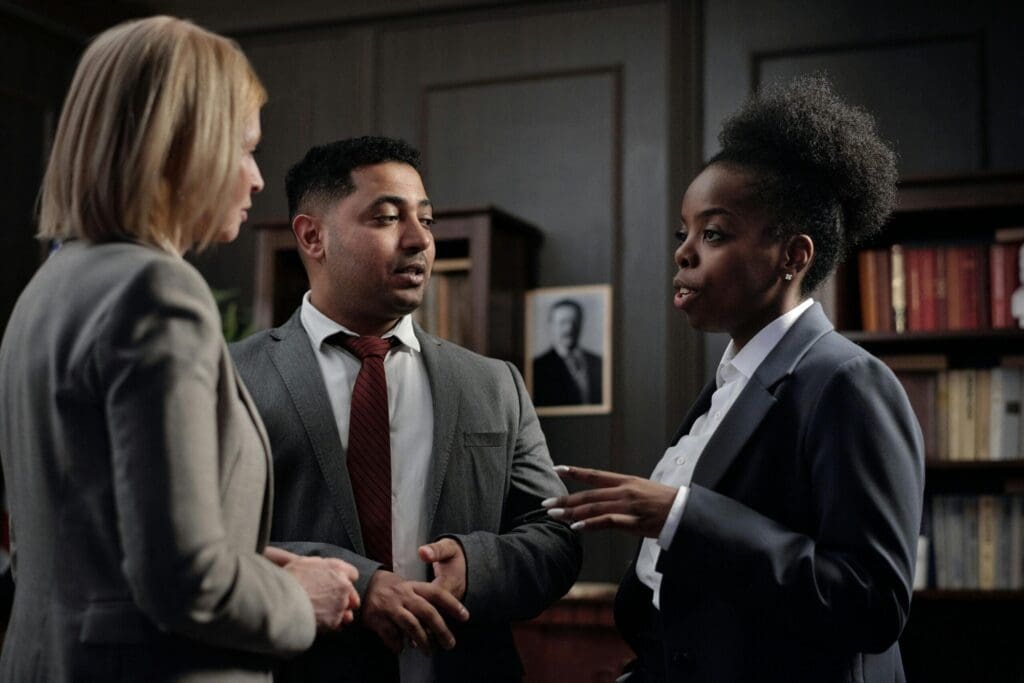
When you are ready to begin, the form on this page asks for contact details and a short outline of what happened. Everyday words are fine. A detail you are unsure of can be left out.
Things that make the outline easier:
- the day and place of the incident
- anyone else involved, person or company
- an insurer that has been in touch
- the providers you have seen so far
- a police report number, if there is one
- the work you have missed
You may not have all of these, and the form can still be sent. More can be added in conversation, and a blank is better than a guess. Describe events in order and say whether symptoms continue. If an insurer or anyone else has asked you for a signature or a recorded statement, say that as well.
If you have a list of questions for a lawyer, keep it for the first conversation instead of putting it in the form. The form is for the outline, and the conversation is the place for the rest.
Make sure the phone number and email address are correct and say when you can usually be reached. If you need an interpreter or any other accommodation, mention it in the outline.
Sending the form asks for a talk and nothing more. You are not bound by it, and nothing on this page tells you what a matter will cost, how it will end or how long it will take.
Other pages cover personal injury attorneys in Corydon and personal injury attorneys in Greencastle.
Frequently Asked Questions
How is the Daviess County Clerk’s Office listed?
At 200 E. Walnut Street in Washington, with a post office box shown as the mailing address.
Which hospital does the state list for Washington?
Its hospital directory page for Washington shows Daviess Community Hospital at 1314 E Walnut St.
Which questions should I ask a lawyer about money?
Ask how fees are calculated, which expenses are charged separately and when they are due, and whether the terms will be in writing before you decide.
Can I bring someone to the meeting?
Many people do. A second listener can catch details you miss, and you can compare notes afterward.
Do I have to decide at the end of the meeting?
No. Take the papers home, read them, and ask about anything that is unclear.
