

Instantly Connect For Your Personal Injury Consultation When Filling Out Form
Your Burnsville Personal Injury Attorney
Getting hurt rarely comes at a convenient time. You may be in pain, missing work and answering calls from an insurance company while trying to learn what you are owed. If your injury in Burnsville was someone else’s doing, start with the basics below and go at your own pace.
We match people with attorneys; we do not advise on cases. Treat what follows as a plain language guide to Minnesota law drawn from the statutes. When you want to talk to an attorney, the form at the top of this page is the way to start.

What To Ask Before You Choose An Attorney In Burnsville

Whoever you speak to, a few answers tell you a lot:
- The date. Ask the attorney to name the exact last day to file in your case. Minnesota has more than one time limit for injuries, and the claim decides which applies (Minn. Stat. 541.05, Minn. Stat. 541.07).
- Your share of fault. Ask how a finding that you were partly at fault would change the numbers. In Minnesota your fault does not bar a claim if it was not greater than the fault of the person you sue (Minn. Stat. 604.01).
- Pain and suffering after a crash. Ask whether your injuries meet the no fault threshold for noneconomic damages, which depends on medical expenses or on a lasting injury (Minn. Stat. 65B.51).
- Fees and costs. Ask what the fee is, when it is paid, and which expenses are deducted from a settlement.
- The people. Ask who will be in touch with you and how quickly they return calls.
Common Kinds of Injury Claims
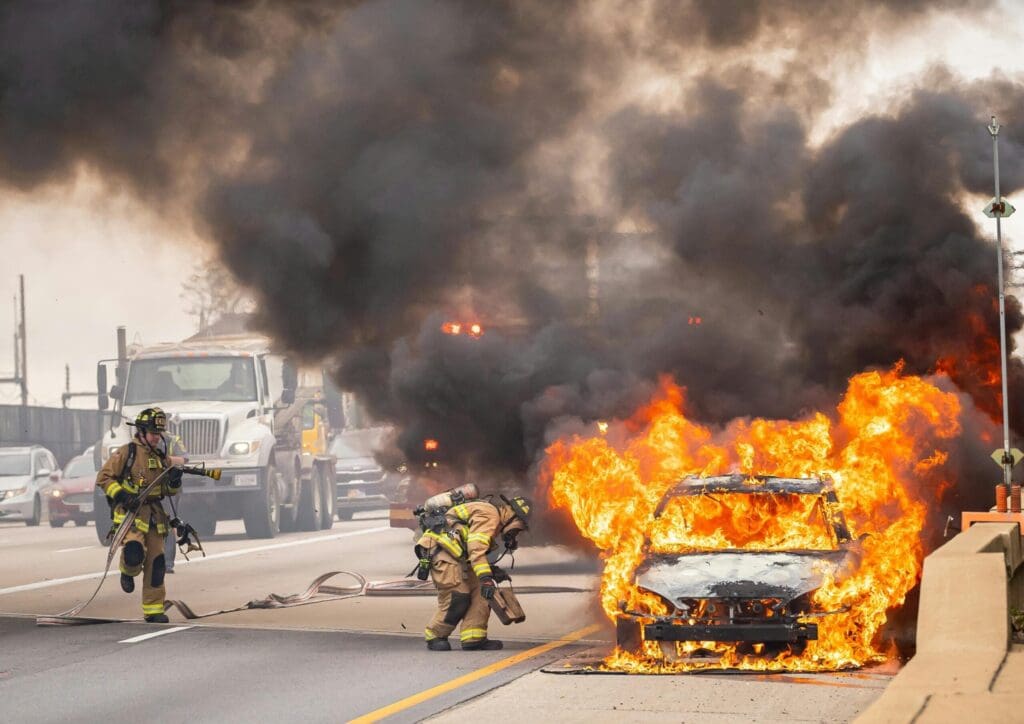
Vehicle crashes
Whether the collision was minor or serious, the same early steps help: get checked by a doctor, photograph the vehicles and the scene, exchange insurance information and keep any repair estimates.
Pedestrian and bicycle injuries
If a driver hit you while you were on foot or on a bike, note exactly where it happened, what the signals and lighting were like, and who saw it. Ask the people who stopped to leave their names and numbers.
Falls and unsafe property
Falls on someone else’s property usually depend on what the owner knew or should have known about the hazard. Photograph the spot before it changes, report the fall in writing, and keep the shoes you were wearing.
Wrongful death
When a death is caused by someone else’s wrongful act or neglect, the claim works differently from an injury claim. Minnesota law has a trustee bring the death action, and the jury awards what it finds fair and just for the damages the person suffered before death and for the pecuniary loss from the death, for the benefit of the surviving spouse and next of kin (Minn. Stat. 573.02). This is a hard moment to decide anything, and an attorney can walk you through the steps without hurrying you.
Injured in Burnsville? Get matched with an attorney now.
When Fault Is Shared
Minnesota assigns blame by percentage. A claim survives shared fault as long as the injured person’s fault was not greater than that of the defendant, and the award is diminished by the injured person’s share (Minn. Stat. 604.01). Because the comparison is with each defendant, who is named in the lawsuit can matter.
The exceptions are narrow. Minn. Stat. 604.02 makes a person whose fault is greater than 50 percent jointly and severally liable for the whole award, along with people who act in a common scheme and those who commit an intentional tort. Ask an attorney how the percentages could play out in your case.
Limits That Can Apply To A Claim
Claims against a city, county or other municipality have a dollar limit. Under Minn. Stat. 466.04, liability on a claim within the municipal tort claims law may not exceed $500,000 to any claimant, and $1,500,000 for any number of claims from a single occurrence, for claims that arise on or after July 1, 2009. A wrongful death claim has the same $500,000 limit.
Other rules apply to private defendants. Punitive damages require clear and convincing evidence of deliberate disregard for the rights or safety of others (Minn. Stat. 549.20), and after a motor vehicle crash the no fault threshold controls whether pain and suffering damages are available at all (Minn. Stat. 65B.51).
Filing Deadlines For Injury Claims
Minnesota has more than one time limit for injury claims. Actions for any other injury to the person or rights of another, not arising on a contract and not listed elsewhere, must be commenced within six years (Minn. Stat. 541.05). A different section sets two years for libel, slander, assault, battery, false imprisonment or other tort resulting in personal injury (Minn. Stat. 541.07). Which rule fits a claim is a legal question, so ask an attorney to name the last day in your case instead of assuming six years.
For a death, the action generally may be commenced within three years after the date of death, provided it is commenced within six years after the act or omission (Minn. Stat. 573.02).
Insurance Minimums in Minnesota
Minimum insurance is a floor, not a measure of your claim. Minnesota requires residual liability limits of at least $30,000 for one person, $60,000 for two or more people in one accident and $10,000 for property (Minn. Stat. 65B.49).
If a crash leaves you with more bills than the other driver’s policy pays, your own coverage may matter. Minnesota policies must include uninsured and underinsured motorist coverage with minimum limits of $25,000 and $50,000 (Minn. Stat. 65B.49). Before accepting a payment, ask an attorney to check every policy that could apply.
Courts and Hospitals in Burnsville
The Census Bureau counts Burnsville in Dakota County. Dakota County belongs to the First Judicial District under Minnesota Statutes section 2.722, which lists the counties of each district. According to the Minnesota Department of Health Trauma System Hospitals list, M Health Fairview Ridges Hospital is a Level III trauma hospital in Burnsville.
Ask every provider for your full records and an itemized bill, and keep a running list of appointments. A transfer between hospitals leaves two sets of records, so request both.
What To Do Once You Are Ready To Talk In Burnsville

The form at the top of this page is the starting point. NeedAnAttorney.net reviews your details and works to match you with an attorney in our network who may handle cases in Minnesota. It costs nothing to use and does not commit you to anything.
Until someone calls, make a simple record: what happened, the date and time, names of anyone who saw it, the treatment you have had, and the days you missed from work. Keep every bill and letter in one place.
Frequently Asked Questions
Are there special notice rules for claims against the government?
There are. Municipal claims need a notice within 180 days (Minn. Stat. 466.05), and a claim against the State needs a notice to the attorney general within 180 days (Minn. Stat. 3.736).
How long will my injury claim take?
There is no fixed time. Claims often wait until you finish treatment so the total losses are known, and cases that go to court take longer than ones that settle.
What is the Minnesota statute of limitations for an injury claim?
Two time limits appear in the statutes: six years under Minn. Stat. 541.05 for injuries not arising on a contract and not listed elsewhere, and two years under Minn. Stat. 541.07 for assault, battery, false imprisonment or other tort resulting in personal injury. Ask an attorney which fits your claim.
If I was partly responsible, can I still recover something?
Yes, if your fault was not greater than the fault of the person you are suing. Your damages are diminished in proportion to your fault (Minn. Stat. 604.01).
What is the no fault threshold in a Minnesota crash case?
After a motor vehicle crash covered by the no fault law, noneconomic damages are available only if medical expense benefits exceed $4,000 by the statute’s count or the injury results in permanent disfigurement, permanent injury, death or disability for 60 days or more (Minn. Stat. 65B.51).
How much insurance does the other driver have to have?
Stated limits of liability must be not less than $30,000 for bodily injury to one person, $60,000 for two or more people in one accident, and $10,000 for property damage (Minn. Stat. 65B.49).
What should I save for my claim?
Save treatment records and bills, photographs, the report number if there is one, pay stubs that show lost work, estimates for repairs, and every letter or email from an insurance company.
Can I talk to the other side’s insurance company?
You can, but you do not have to give a recorded statement right away. It is fair to say you are getting advice first.
Serving Injured Clients Across Minnesota
The same matching service covers more of Minnesota. Pick the community closest to where it happened.
