

Instantly Connect For Your Personal Injury Consultation When Filling Out Form
Your Rochester Personal Injury Attorney
Nobody plans for the call that follows an accident. Whether you were hurt in a crash, a fall or something else in Rochester, the weeks afterward bring decisions that feel bigger than they should. Here is what Minnesota law says, in plain terms, so you can ask better questions.
A quick note on what this page is: general information about Minnesota injury law, written from the statutes, from a matching service that does not practice law. It is meant to help you ask good questions, not to decide your case.

What To Ask Before You Choose An Attorney In Rochester

Whoever you speak to, a few answers tell you a lot:
- Your share of fault. Ask how a finding that you were partly at fault would change the numbers. In Minnesota your fault does not bar a claim if it was not greater than the fault of the person you sue (Minn. Stat. 604.01).
- The deadline. Ask for the specific last day to file. Minnesota allows six years for some injury claims and two years for others, so do not assume (Minn. Stat. 541.05, Minn. Stat. 541.07).
- The no fault threshold. Ask whether the threshold for pain and suffering damages after a motor vehicle crash applies to you and how your medical costs count toward it (Minn. Stat. 65B.51).
- Fees and costs. Ask what the fee is, when it is paid, and which expenses are deducted from a settlement.
- Who will work on it. Ask who handles your file day to day and how fast messages are answered.
Common Kinds of Injury Claims
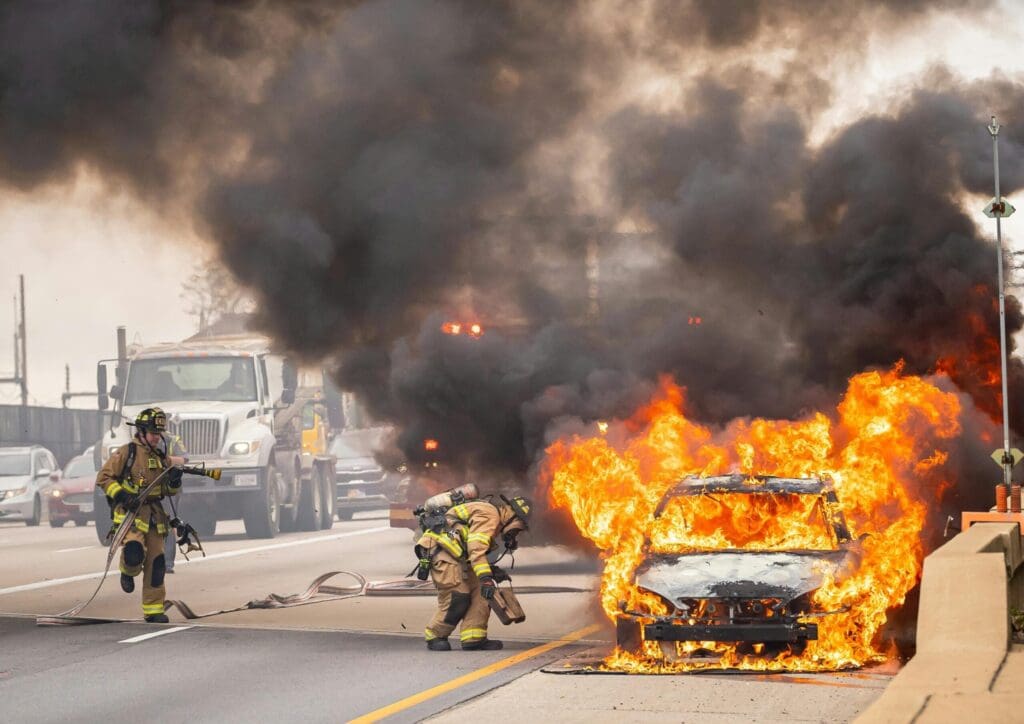
Vehicle crashes
After a crash, see a doctor even if you feel fine, since some injuries show up later. Take photographs of the cars, the road and any injuries, get the other driver’s insurance details, and save every repair estimate.
Pedestrian and bicycle injuries
A collision on foot or on a bicycle is easy to dispute afterward. Record where it happened, what the road and signals were like, and who saw it, and keep any damaged clothing, helmet or equipment.
Falls and unsafe property
Slips, trips and falls come from spills, uneven surfaces, poor lighting and broken stairs. What matters is who controlled the place and how long the problem was there, so document the hazard and tell the owner or manager promptly.
Wrongful death
When a death is caused by someone else’s wrongful act or neglect, the claim works differently from an injury claim. Minnesota law has a trustee bring the death action, and the jury awards what it finds fair and just for the damages the person suffered before death and for the pecuniary loss from the death, for the benefit of the surviving spouse and next of kin (Minn. Stat. 573.02). You do not have to sort this out alone or quickly; an attorney can explain who is allowed to act and what the dates are.
Injured in Rochester? Get matched with an attorney now.
If You Were Partly At Fault
Many people assume that a mistake of their own ends a claim. In Minnesota it does not. Under Minn. Stat. 604.01, contributory fault does not bar recovery if it was not greater than the fault of the person against whom recovery is sought, but any damages allowed must be diminished in proportion to the amount of fault attributable to the person recovering. The comparison is made against the person you are suing, not against everyone combined.
On request, the jury makes separate findings of the amount of damages and the percentage of fault of each party, and the court reduces the award by the injured person’s share (Minn. Stat. 604.01). A finding of 20 percent on a $90,000 loss would take $18,000 off the award.
Limits That Can Apply To A Claim
Claims against a city, county or other municipality have a dollar limit. Under Minn. Stat. 466.04, liability on a claim within the municipal tort claims law may not exceed $500,000 to any claimant, and $1,500,000 for any number of claims from a single occurrence, for claims that arise on or after July 1, 2009. A wrongful death claim has the same $500,000 limit.
Other rules apply to private defendants. Punitive damages require clear and convincing evidence of deliberate disregard for the rights or safety of others (Minn. Stat. 549.20), and after a motor vehicle crash the no fault threshold controls whether pain and suffering damages are available at all (Minn. Stat. 65B.51).
Time Limits To Know
If a city, county or other municipality may be responsible, the deadline for notice is much shorter than the filing deadlines above. A person claiming damages from a municipality must present a notice to its governing body within 180 days after the loss or injury is discovered (Minn. Stat. 466.05). When the claim is for a death, the notice may be presented within one year after the injury or loss that resulted in the death (Minn. Stat. 466.05).
Claims against the State have a similar 180 day notice to the attorney general (Minn. Stat. 3.736). These notice rules sit alongside the filing deadlines of Minn. Stat. 541.05 and Minn. Stat. 541.07, so ask an attorney about both.
What Auto Policies Must Cover
Minimum insurance is a floor, not a measure of your claim. Minnesota requires residual liability limits of at least $30,000 for one person, $60,000 for two or more people in one accident and $10,000 for property (Minn. Stat. 65B.49).
If a crash leaves you with more bills than the other driver’s policy pays, your own coverage may matter. Minnesota policies must include uninsured and underinsured motorist coverage with minimum limits of $25,000 and $50,000 (Minn. Stat. 65B.49). Before accepting a payment, ask an attorney to check every policy that could apply.
Courts and Hospitals in Rochester
Mayo Clinic Hospital Saint Marys Campus in Rochester appears on the Minnesota Department of Health Trauma System Hospitals list as a Level I trauma hospital. On the state’s Trauma System Hospitals list, Rochester is shown with Mayo Clinic Hospital Eugenio Litta Children’s Hospital, a Level I trauma hospital. According to the Minnesota Department of Health Trauma System Hospitals list, Olmsted Medical Center is a Level IV trauma hospital in Rochester. According to Minnesota Statutes section 2.722, the Third Judicial District includes Olmsted County. For Census purposes Rochester is part of Olmsted County.
Ask every provider for your full records and an itemized bill, and keep a running list of appointments. A transfer between hospitals leaves two sets of records, so request both.
Your First Step After Getting Hurt In Rochester

Fill in the form at the top of this page. NeedAnAttorney.net reviews your details and works to match you with an attorney in our network who may handle cases in Minnesota. The form is free to use, and sending it does not mean you have hired anyone.
Before the first call, collect the basics: the date, the place, names of witnesses, your medical visits and your missed work. A single folder for bills, letters and photographs saves time later.
Frequently Asked Questions
How much insurance does the other driver have to have?
Stated limits of liability must be not less than $30,000 for bodily injury to one person, $60,000 for two or more people in one accident, and $10,000 for property damage (Minn. Stat. 65B.49).
Which records matter most after an accident?
Keep your medical records and itemized bills, photographs of the scene and injuries, any police or incident report number, proof of missed pay, repair estimates, and all messages from insurers.
Can I talk to the other side’s insurance company?
You can, but you do not have to give a recorded statement right away. It is fair to say you are getting advice first.
What if a city or county caused my injury?
Yes. Notice must be presented to the governing body of the municipality within 180 days after the loss or injury is discovered (Minn. Stat. 466.05), and liability is limited to $500,000 to any claimant for claims arising on or after July 1, 2009 (Minn. Stat. 466.04).
Where do injury lawsuits from the Rochester area go?
The court is chosen by the type and size of the case and where the people involved live or the injury happened. Ask your attorney to confirm it; the court listing described above names the local court locations.
What is the Minnesota statute of limitations for an injury claim?
Two time limits appear in the statutes: six years under Minn. Stat. 541.05 for injuries not arising on a contract and not listed elsewhere, and two years under Minn. Stat. 541.07 for assault, battery, false imprisonment or other tort resulting in personal injury. Ask an attorney which fits your claim.
Can I still recover if the accident was partly my fault?
Yes. Contributory fault does not bar recovery if it was not greater than the fault of the person against whom recovery is sought, and the award is reduced in proportion to your share (Minn. Stat. 604.01).
Can I recover pain and suffering after a car crash in Minnesota?
Possibly. Under Minn. Stat. 65B.51, a person recovers noneconomic damages only if medical expenses exceed $4,000 as the statute counts them, or the injury results in permanent disfigurement, permanent injury, death or 60 days of disability.
Injury Attorney Pages For Other Minnesota Communities
NeedAnAttorney.net connects injured people throughout Minnesota with attorneys who handle cases in their area.
