

Instantly Connect For Your Personal Injury Consultation When Filling Out Form
Ready to talk to someone about an injury in Syracuse? The form above connects you directly, no need to read everything below first.
Your Syracuse Personal Injury Attorney
Being hurt because of someone else’s carelessness is stressful enough without a legal clock running in the background. This page explains the New York rules that most often decide how an injury claim from Syracuse unfolds. The sections that follow cover the filing deadlines, the fault rule, the no-fault threshold for car accidents, claims against government bodies, the courts, and the kinds of injuries most often behind a claim. These rules apply across New York, but where a case is filed depends on the county, and an attorney familiar with the Supreme Court in Onondaga County can explain what to expect there.

Quick Answers on Deadlines, Fault, and Claims
- The three-year rule: most personal injury actions must be started within three years (CPLR 214(5)), while a wrongful death action must be started within two years after the death (EPTL 5-4.1).
- Claims against the State of New York must be filed and served on the Attorney General within 90 days, unless a notice of intention is served in that time (Court of Claims Act 10(3)).
- Two fault rules exist: proportional reduction in most injury cases (CPLR 1411(a)), and a bar for a claimant found more at fault than the defendant in motor vehicle cases commenced on or after May 26, 2026 (CPLR 1411(b)).
- New York is a no-fault state for crash injuries. Basic economic loss is covered up to $50,000 per person (Insurance Law 5102(a)), and non-economic loss requires a serious injury (Insurance Law 5104(a)).
- If a loved one died: a wrongful death action has a two-year limit (EPTL 5-4.1), and the injured person’s own claim is not lost because of the death (EPTL 11-3.2(b)).
Filing Deadlines for Injury and Wrongful Death Claims in New York
The main deadline is set by CPLR 214(5): an action to recover damages for a personal injury must be commenced within three years. The exceptions listed in that subdivision, in CPLR 214-b, 214-c, 214-i and 215, carry their own periods.
The three-year clock can be extended for a child: under CPLR 208(a), where the person was under a disability because of infancy when the cause of action accrued, the time runs to three years after the disability ceases, without the ten-year cap except in malpractice cases.
When an injury leads to death, EPTL 5-4.1 requires a wrongful death action to be commenced within two years after the death, with an extension when a criminal action is pending, and EPTL 11-3.2(b) keeps the decedent’s own injury claim alive for the personal representative.
When the defendant is a city, county, town, village, fire district, or school district, the first deadline is the ninety-day notice of claim (General Municipal Law 50-e(1)(a)), and the lawsuit deadline is one year and ninety days after the event, with two years in a wrongful death case (General Municipal Law 50-i(1)).
There is some room for late notice: on application, a court may extend the time to serve a notice of claim, but not beyond the time limited for the injured person to commence an action against the public body (General Municipal Law 50-e(5)). The complaint must also allege the thirty-day wait (General Municipal Law 50-i(1)).
Where the State of New York is the defendant, ninety days is again the first number to know (Court of Claims Act 10(3)): file and serve the claim, or serve a notice of intention and file within two years after accrual.
A claimant who misses those dates may ask the court for permission to file late, at any time before an action against a private person for the same claim would be barred under CPLR article 2 (Court of Claims Act 10(6)).
If the injury came from medical care, CPLR 214-a applies instead of the general rule: two years and six months, continuous treatment for the same condition extends the period, and a foreign object discovered in the body may be sued on within one year of discovery.
Injured in Syracuse? Get matched with an attorney now.
What Happens When You Are Partly to Blame

New York does not require the injured person to be blameless. Under CPLR 1411(a), the amount of damages otherwise recoverable is diminished in the proportion which the culpable conduct attributable to the claimant bears to the culpable conduct which caused the damages. In most injury cases culpable conduct on the injured person’s part reduces the award; it does not bar it.
In a case outside the motor vehicle rule, the reduction is proportional. A person found 20% at fault recovers 80% of the damages, a person found 50% at fault recovers half, and a person found 70% at fault recovers 30%. Insurers know this, and arguing about percentages is a common way they try to reduce a claim.
If your case is a car, truck, or motorcycle case under the no-fault law, and the lawsuit is commenced on or after May 26, 2026, CPLR 1411(b) bars recovery when your share of the fault is greater than the defendant’s or the defendants’ combined share. Exactly equal shares are not covered by the words of the statute, which say greater than.
When more than one defendant is responsible, a defendant found 50 percent or less at fault is liable for non-economic loss only for its equitable share, in proportion to the relative culpability of each person causing or contributing to the total liability (CPLR 1601(1)). The exceptions are in CPLR 1602, so who is sued and who is left out can change how a judgment is collected.
Basic Economic Loss, Serious Injury, and Crash Lawsuits
Section 5102(a) of the Insurance Law sets the core no-fault benefit: up to fifty thousand dollars per person for basic economic loss, which covers necessary medical and rehabilitation services, lost earnings, and other reasonable and necessary expenses.
The definition sets specific limits inside the $50,000 figure. Loss of earnings is counted up to two thousand dollars a month for a maximum of three years, and other reasonable and necessary expenses are counted up to twenty-five dollars a day for up to one year from the accident (Insurance Law 5102(a)). An optional additional twenty-five thousand dollars of coverage can be purchased for lost earnings or therapy after the first fifty thousand is used.
Insurance Law 5104(a) bars recovery of non-economic loss unless the injury is a serious injury, and Insurance Law 5102(d) sets out categories that include a fracture, significant disfigurement, permanent loss of use of a body organ, member, function or system, and significant limitation of use of a body function or system.
A missed no-fault form can cost benefits even when the lawsuit deadline is far away. 11 NYCRR 65-1.1 sets 30 days from the accident for written notice, and 45 days after services for proof of claim.
Recent amendments matter for any lawsuit commenced on or after May 26, 2026. The 90 out of 180 days category was deleted from Insurance Law 5102(d), and Insurance Law 5104(a) now requires the trier of fact to decide fault first and then whether there is a serious injury, before liability for non-economic loss is fixed (Chapter 58 of the Laws of 2026, Department of Financial Services Circular Letter No. 3 (2026)).
Government Defendants: Different Rules and Notices
Whether a city, town, village, or county can be sued turns first on the notice of claim (General Municipal Law 50-e) and then on the deadlines in General Municipal Law 50-i(1): thirty days after notice before suit, and one year and ninety days from the event to commence the action.
For a fall on a sidewalk or a crash caused by a street defect, check whether the municipality received written notice of the defect. Town Law 65-a(2) requires it for towns, with a failure to remedy within a reasonable time, and Village Law 6-628 requires written notice to the village clerk for villages.
For state defendants the timing is in Court of Claims Act 10(3): a claim filed and served on the Attorney General within ninety days after accrual, or a written notice of intention within that time followed by a claim within two years.
Any injury on public property, or involving a public vehicle, deserves prompt review because of the notice periods that begin at the injury.
Court Structure for Injury Claims in Onondaga County
New York’s trial court of general jurisdiction is the Supreme Court, which handles civil cases seeking money damages above the limits of the local courts. Smaller claims can be brought in lower courts that have their own dollar limits, and in New York City the Civil Court of the City of New York has jurisdiction over money actions where the amount sought does not exceed $50,000 (New York City Civil Court Act 202). Claims against the State itself go to the Court of Claims.
The judicial districts are set by Judiciary Law 140, and a Syracuse injury lawsuit filed in the Supreme Court is heard in the Supreme Court in Onondaga County, part of the Fifth Judicial District. The county seat of Onondaga County is Syracuse.
What Kinds of Injury Cases Do We See in Syracuse?

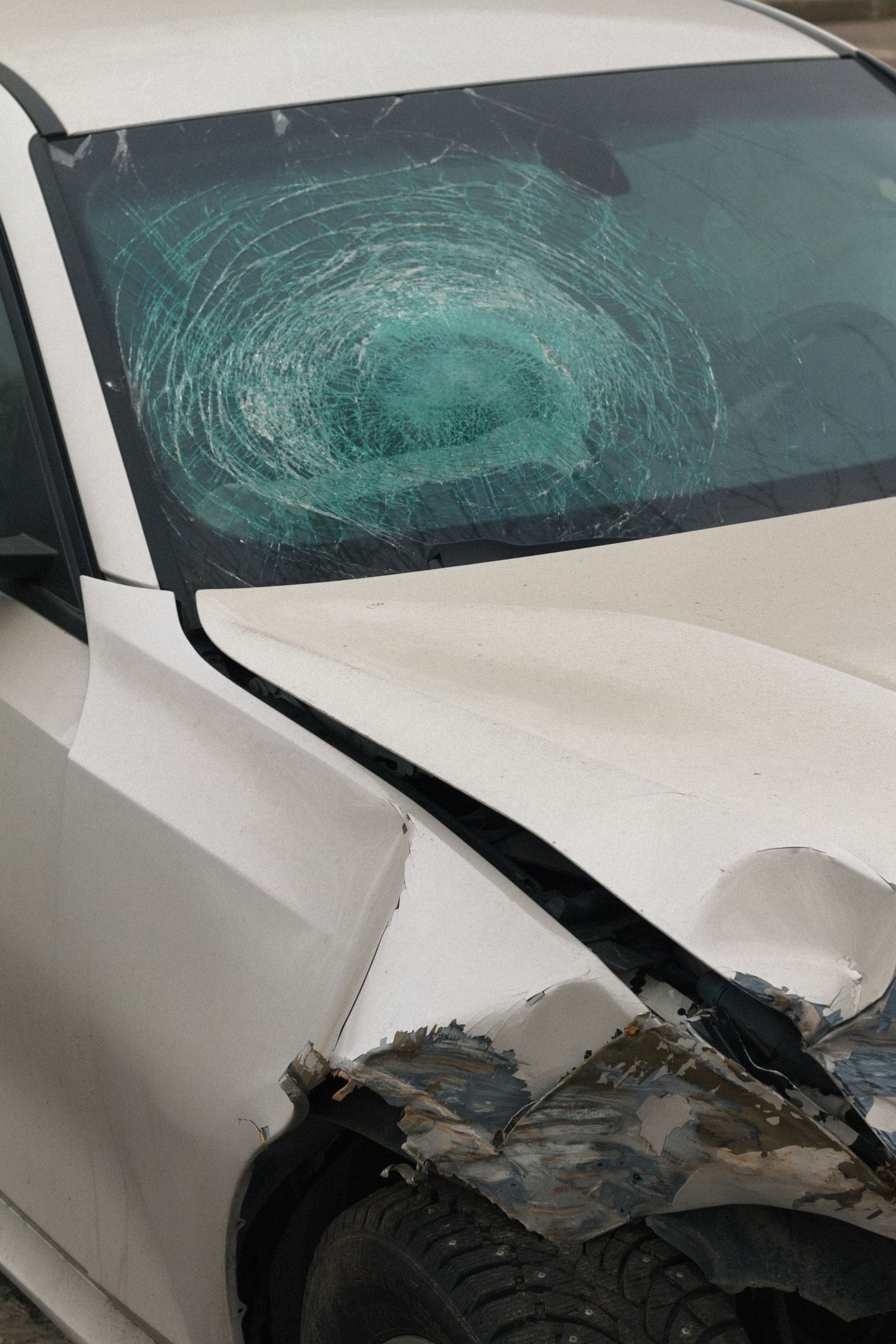
Motor Vehicle Accident Claims
Crash claims combine several rules at once: the three-year deadline (CPLR 214(5)), the fault rules in CPLR 1411, and the serious injury threshold (Insurance Law 5104(a)). Each can matter, and a police report and prompt medical records help on all three.
A fracture is one of the categories the serious injury definition lists (Insurance Law 5102(d)).
Slip and Fall and Premises Injuries
Premises injuries, such as a fall on a wet floor, an unlit stairway, or a broken step, turn on whether the owner or occupier was negligent. The injured person’s own share of the fault is weighed under CPLR 1411, and the three-year deadline in CPLR 214(5) runs from the fall.
Where a village owns the sidewalk or street, a civil action requires written notice to the village clerk of the defect (Village Law 6-628), in addition to the notice of claim under General Municipal Law 50-e.
When an Injury Is Fatal
When a person dies, no cause of action for injury to person or property is lost because of the death (EPTL 11-3.2(b)). The personal representative may bring or continue the action, alongside the wrongful death action limited by EPTL 5-4.1.
If a government body may be responsible, a notice of claim within ninety days is still required (General Municipal Law 50-e(1)(a)).
Injuries at Work and on Construction Sites
If a third party such as a property owner, contractor, or equipment maker contributed to a workplace injury, the employee need not choose between compensation and a claim against that party (Workers’ Compensation Law 29(1)).
A fall from a ladder or scaffold at a job site can raise Labor Law 240(1), which covers furnishing scaffolding, hoists, stays, and ladders for the work.
Not sure which deadline applies to your injury? Get matched with an attorney.
A Note on Syracuse and the Local Courts
An injury in Syracuse belongs to Onondaga County and its Supreme Court. Local practice, such as how quickly cases are listed and how motions are handled, shapes how the general rules on this page play out, and a local attorney can tell you what that looks like.
Intellectual property questions follow different rules, covered on our Syracuse intellectual property attorney page. Injuries in the surrounding area are covered on our pages for Auburn, Fulton, and Cortland. If your injury happened in a different city, start from our statewide New York personal injury directory.
Where Injury Care Is Available in Syracuse
Facilities in Syracuse include Crouse Hospital at 736 Irving Avenue, St. Joseph’s Hospital Health Center at 301 Prospect Avenue, and Upstate University Hospital at 750 East Adams Street.
Seeing a doctor promptly matters for your health, and the records that result help document an injury for a claim. The facilities named here are listed only as a factual reference to where they are.
Frequently Asked Questions
Can I still file a lawsuit for an injury from a while ago?
It depends on how long ago. Three years is the general limit (CPLR 214(5)), but some situations change the count, such as a claim by a minor (CPLR 208(a)) or a claim against a public body. An attorney can look at the date of the injury.
What if a government body caused my injury?
A notice of claim must be served within ninety days after the claim arises (General Municipal Law 50-e(1)(a)), and the action must be commenced within one year and ninety days after the event (General Municipal Law 50-i(1)).
What happens to my claim if the other side says I share the blame?
Your claim can survive, with the damages reduced by your share of the culpable conduct (CPLR 1411(a)). Evidence about fault often decides the number, and in motor vehicle cases it can decide whether the claim is barred (CPLR 1411(b)).
What changed in New York car accident law in 2026?
Chapter 58 of the Laws of 2026 added CPLR 1411(b), removed the 90/180-day category from the serious injury definition, and changed the order of proof in Insurance Law 5104(a). The changes took effect May 26, 2026 and apply to actions and proceedings commenced on or after that date.
Is my medical bill covered no matter who caused the crash?
Yes. No-fault benefits for basic economic loss are available up to $50,000 per person regardless of fault (Insurance Law 5102(a)), subject to the timing rules in the regulations.
Why do insurers dispute the serious injury threshold?
Because the definition in Insurance Law 5102(d) controls whether pain and suffering can be recovered (Insurance Law 5104(a)), a lot can turn on it, and medical records and expert opinions carry most of the weight.
Can a criminal case affect the wrongful death deadline?
It can. Under EPTL 5-4.1, where a criminal action is pending, the personal representative has at least one year from the termination of the criminal action to file, even if the usual two years has passed.
Is there a court for smaller injury claims?
Yes. Smaller claims can go to local courts with their own dollar limits, and in New York City the Civil Court has jurisdiction of money actions up to $50,000 (New York City Civil Court Act 202).
Can I sue my employer if I was hurt at work?
Generally not. An employer’s liability under the Workers’ Compensation Law is exclusive and in place of any other liability to the employee (Workers’ Compensation Law 11). A claim against a third party who was not in the same employ can proceed separately (Workers’ Compensation Law 29(1)).
What if the injured person was a minor?
The time to sue is extended to three years after the disability of infancy ceases (CPLR 208(a)).
Connect With a Syracuse Personal Injury Attorney
You do not have to work out the dates and rules alone. Fill out the form, and you will be connected with an attorney who can review your injury, the deadlines, and what a claim may involve.