

Instantly Connect For Your Personal Injury Consultation When Filling Out Form
Your Clayton Personal Injury Attorney
The short answer. In North Carolina most injury claims must be filed within three years (N.C. Gen. Stat. 1-52(5) (three year period for personal injury); accrual and 10-year repose in 1-52(16)). The trial court for Johnston County sits in Smithfield, at 207 E Johnston St, Smithfield, NC 27577. To talk it through, send the form on this page and we will work to connect you with an attorney in our network.
Getting hurt rarely comes at a convenient time. You may be in pain, missing work and answering calls from an insurance company while trying to learn what you are owed. If your injury in Clayton was someone else’s doing, start with the basics below and go at your own pace.
We match people with attorneys; we do not advise on cases. Treat what follows as a plain language guide to North Carolina law drawn from the statutes. When you want to talk to an attorney, the form at the top of this page is the way to start.

Questions To Ask A Clayton Injury Attorney

Bring these to your first call, whoever it is with:
- The deadline. Ask the attorney to name the exact last day to file for your claim. The general limit for injury claims in North Carolina is three years (N.C. Gen. Stat. 1-52(5)).
- Any ceiling. Ask whether any rule restricts the amount you could recover in North Carolina.
- If you were partly to blame. Ask what happens to your award if a jury finds you share the blame (Rash v. Waterway Landing Homeowners Ass’n (N.C. Ct. App. 2017)).
- The people. Ask who will be in touch with you and how quickly they return calls.
- The money terms. Ask how fees are calculated and which costs come out of a recovery.
Kinds of Injury Claims
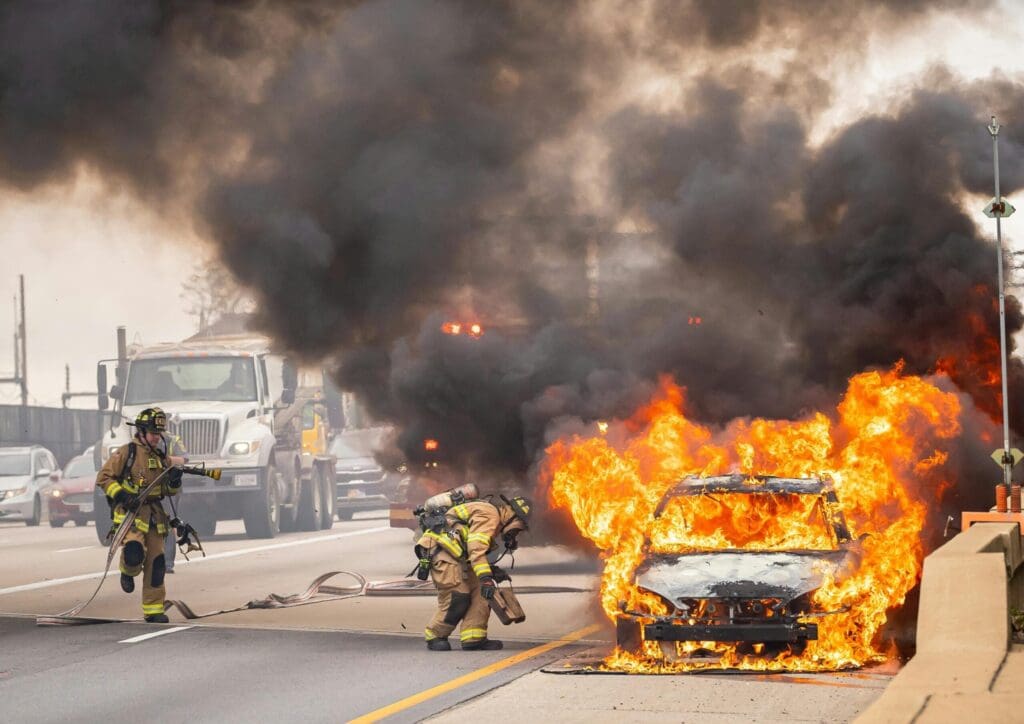
Vehicle crashes
Vehicle injuries start with the same few steps: medical care first, then photographs of the scene, names and numbers of anyone who saw it, the other driver’s insurance information and any estimates for repairs.
Pedestrian and bicycle injuries
Walkers and cyclists hurt by a vehicle should write down the location, the time of day, the lighting and the signals as soon as they can. Witnesses who stopped are valuable, so ask for their contact details before they leave.
Falls and unsafe property
Falls on someone else’s property usually depend on what the owner knew or should have known about the hazard. Photograph the spot before it changes, report the fall in writing, and keep the shoes you were wearing.
Wrongful death
If a loved one died because of another person’s wrongful act or omission, a different set of rules applies. A wrongful death claim follows its own rules in North Carolina; ask an attorney which date applies (N.C. Gen. Stat. 28A-18-2). It is a heavy time to make decisions, and an attorney can explain the process at your pace.
Injured in Clayton? Get matched with an attorney now.
Sharing Blame And Your Claim
Your own conduct is examined closely in North Carolina, because it can end a claim. Rash v. Waterway Landing Homeowners Ass’n (N.C. Ct. App. 2017) sets the rule.
A claim can be barred if you share any of the blame, with narrow exceptions in some cases (Rash v. Waterway Landing Homeowners Ass’n (N.C. Ct. App. 2017)). Photographs, witness names and medical records help show where the fault lies.
What The Law Says About Damages
In an ordinary injury claim in North Carolina, the amount depends on the facts of the claim. How fault is assigned can also change the amount.
Ask an attorney which rules, if any, reach your case. Punitive damages are limited separately (N.C. Gen. Stat. 1D-25(b)).
The Deadline To Sue
The general time limit for an injury claim in North Carolina is three years (N.C. Gen. Stat. 1-52(5)). A child may have more time, and a few other limited situations extend the period too (N.C. Gen. Stat. 1-17(a)).
A wrongful death claim follows its own rules, so ask which date applies (N.C. Gen. Stat. 28A-18-2). If a government body may be responsible, the steps can differ (N.C. Gen. Stat. 143-291, 143-299, 143-299.2). The type of claim decides the date, so do not wait.
What Auto Policies Must Cover
Under N.C. Gen. Stat. 20-279.21(b)(2), an auto liability policy in North Carolina must provide at least $50,000 for injury to one person, $100,000 for injury to two or more people in one accident and $50,000 for property damage.
Those figures are floors, and a serious injury can cost more than the other driver’s policy pays. They are minimums, not a measure of what your claim is worth.
The Court and Hospitals Behind a Clayton Claim
The Census Bureau lists Clayton in more than one county: Johnston County and Wake County. For Johnston County, the North Carolina court directory shows the Superior Court District 13 superior court in Smithfield, at 207 E Johnston St, Smithfield, NC 27577. For Wake County, the North Carolina court directory shows the Superior Court District 10 superior court in Raleigh, at 316 Fayetteville St. Mall, Raleigh, NC 27601. In Durham County, the state list of trauma centers shows Duke University Hospital in Durham as a Level I trauma center. That list also names WakeMed Health & Hospitals in Raleigh, in Wake County, as a Level I trauma center. The same list also names WakeMed Cary Hospital in Cary, in Wake County, as a Level III trauma center.
Ask every provider for your full records and an itemized bill, and keep a running list of appointments. A transfer between hospitals leaves two sets of records, so request both.
Where To Begin After An Injury In Clayton

Start with the form at the top. It asks a few questions about the injury. NeedAnAttorney.net reviews your details and works to match you with an attorney in our network who may handle cases in North Carolina. Using it is free, and it does not create an attorney client relationship.
Meanwhile, jot down the facts while they are fresh: date, time, place, who was there, what care you have had and what work you have missed. Save every bill and every message from an insurer.
Frequently Asked Questions
Where would a lawsuit about my injury be heard?
The answer turns on the people involved and the amount in dispute. Your attorney can confirm the right court for your claim. The courts named in the section above are the ones listed by the state judiciary for this area.
When must an injury lawsuit be filed in North Carolina?
Within three years for most injury claims (N.C. Gen. Stat. 1-52(5)). The period can be longer for a child, and a few other situations extend it too (N.C. Gen. Stat. 1-17(a)). An early start protects the evidence.
Can I still recover if the accident was partly my fault?
Under North Carolina law, a claim can be barred if you share any of the blame, with narrow exceptions in some cases (Rash v. Waterway Landing Homeowners Ass’n (N.C. Ct. App. 2017)). Photographs and witness names help show where the fault lies. Do not guess about fault when you talk to an insurer.
Does North Carolina put a ceiling on pain and suffering?
It depends on the bills, the missed work and the lasting effects, and an attorney can tell you whether any rule limits the amount. The amount depends on the facts of your claim. Ask an attorney whether any rule reaches your claim.
What are the minimum auto insurance limits in North Carolina?
$50,000 per person, $100,000 per accident and $50,000 for property damage (N.C. Gen. Stat. 20-279.21(b)(2)). Several policies can apply to one crash. Before you accept a payment, check for every policy that may apply.
Which papers should I hold on to after a crash?
Keep your medical records and itemized bills. Take photographs of the injuries and of where it happened. Pay records, repair estimates and insurer emails should go in the same place.
Must I give a recorded statement to an insurer?
You may speak with them, but you do not have to give a recorded statement right away. Keep it short and take the adjuster’s name and claim number. Nothing you say can be taken back, so take your time.
What if the injury happened on public property?
There are special steps. Special claim or notice steps can apply (N.C. Gen. Stat. 143-291, 143-299, 143-299.2). The rules for public bodies differ from the rules for private parties. Do not wait to ask.
Help Elsewhere in North Carolina
People are hurt in every part of North Carolina. These pages cover other communities.
