

Instantly Connect For Your Personal Injury Consultation When Filling Out Form
Your Hillsboro Personal Injury Attorney
Several assumptions tend to surface when someone is hurt. One is that a person who shares any blame for an event has no claim at all. Another is that there is plenty of time to act. A third is that a claim always means a trial. Each one is worth testing against the actual rules, and this page, written for readers in Hillsboro, takes a first look at them. It is a general overview and not an assessment of any individual situation.
On blame, the key text is section 32-03.2-02 of the North Dakota Century Code. As it appears in the North Dakota law text for N.D.C.C. 32-03.2-02, the section says contributory fault does not bar recovery unless the claimant’s fault was as great as the combined fault of all other persons, and damages are reduced in proportion to the claimant’s fault. So shared blame is not by itself the end of the discussion.
On time, a lawyer will point to section 28-01-16 of the North Dakota Century Code, which is in the North Dakota law text for N.D.C.C. 28-01-16(5). It says the actions it lists must be commenced within six years after the claim for relief has accrued. The words are about the actions listed in the section, and whether your own situation is one of them needs to be checked against the facts.
As for trials, a courtroom is one possible path and not the only one. Where court is involved, the North Dakota court system’s own page lists the Traill County district court address as 114 W Caledonia Ave in Hillsboro. Sanford Health’s own page for Sanford Hillsboro Medical Center lists its address as 12 Third St. SE in Hillsboro.
Visitors from other parts of the state can begin with the overview at North Dakota personal injury attorneys. A page for a neighboring community covers personal injury attorneys in Northwood.

What To Look For When Hiring Your Personal Injury Attorney

Choosing a lawyer can feel like a leap of faith. It does not have to be. A few practical checks reduce the guesswork.
First, listen for specifics. A lawyer who has real familiarity with injury matters will ask about dates, treatment, who said what to whom and what documents exist. General reassurance without those questions is a weaker sign.
Second, ask how the work is divided. Some offices have one person on a file from start to finish. Others share the work among several. Either arrangement can be fine, as long as you know whom to contact and what to expect.
Third, make sure you understand the money terms before anything is signed. That means how fees are calculated, which costs are separate, and what happens to those costs at the end. Request the terms in writing and take the time to read them.
To prepare, collect what you can:
- a list of every provider you have seen, with dates
- bills and statements for each visit
- photos of injuries taken as they developed
- photos or video of the scene or the vehicles
- statements or notes from witnesses
- paperwork from any insurer
- a note showing time away from work
Your questions will vary, but several are nearly always worth putting to a lawyer. What do you think are the weak points? How do you handle a case when the other side disputes fault? How will I learn about offers? What do you need from me this week?
Some precautions are simple. Keep your social media quiet on the subject. Do not guess about fault in conversations with an adjuster. Do not sign until you understand. Do not quit treatment on your own, and tell your provider if something is hurting.
Expect a lawyer to ask about your medical history. It is not an accusation. Earlier injuries or conditions matter because the other side is likely to raise them, and a lawyer wants to understand them before that happens. Complete and honest answers serve you better than a tidy story with gaps.
Witnesses deserve a mention. People remember less as time passes. If someone saw the event, write down their name and how to reach them while you still can, and note what they said in your own words.
Keep a running log of every call and letter that involves the matter: the date, who was on the other end, and a line about what was said. Over weeks, a log like that becomes a reliable record that is easy to hand to a lawyer, and it spares you from relying on memory for conversations that felt unimportant when they happened.
It is also fine to ask for time. A lawyer who respects your decision will not pressure you, and you can speak with more than one before choosing.
Intake form for an injury matter in Hillsboro
Personal Injury Types of Cases
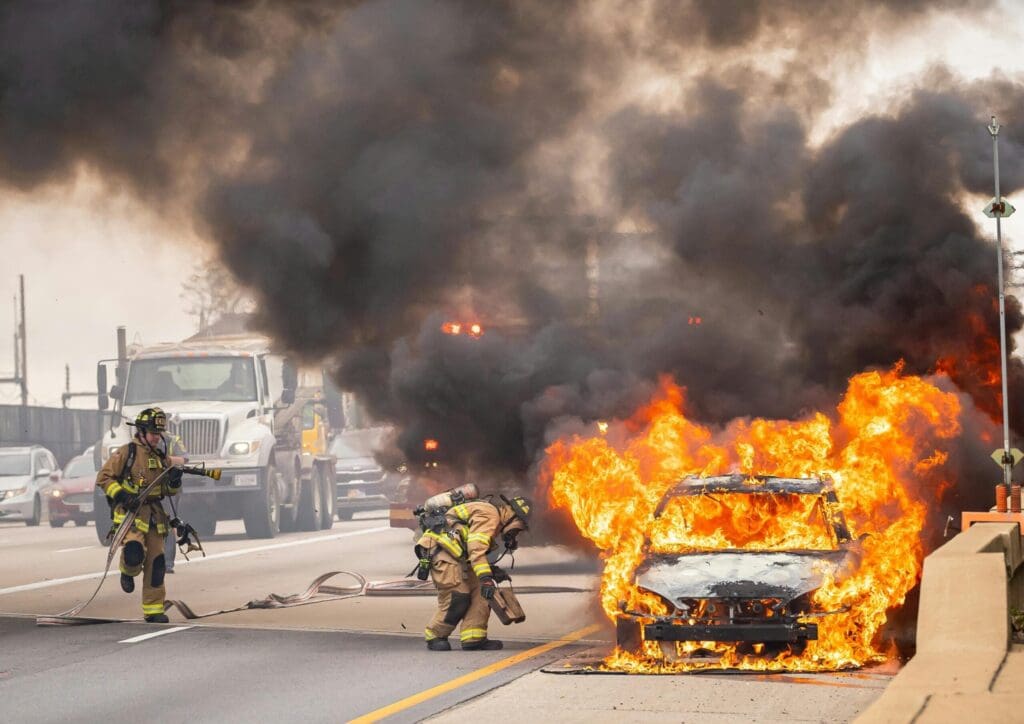
Here are the main groupings of injury matters, in the order a reader might meet them. One event can fall under more than one heading.
Motor Vehicle Accidents
Collisions generate questions about fault, conditions and coverage. A matter might involve a passenger car, a pickup, a large commercial truck, a motorcycle or a bicycle, and fault may center on impairment, distraction or reckless driving.
The motor vehicle liability policy for proof of financial responsibility described in section 39-16.1-11 of the North Dakota Century Code is covered in the North Dakota law text for N.D.C.C. 39-16.1-11. It has limits of twenty five thousand dollars for one person and fifty thousand dollars for two or more persons in one accident for bodily injury or death. Policies in actual use may be different.
Premises Liability
A property owner is expected to prevent hazards that endanger people on the premises. Complaints most often involve:
- loose, broken or missing stair parts
- badly lit entries, halls or alleys
- slippery floor surfaces
- ground that is broken, raised or uneven
- injuries from chemicals or heat
- dog bites
- additional unsafe conditions on someone else’s property
Work Place Accidents
A person hurt at work may pursue workplace benefits and may also ask whether an outside company played a role. Common circumstances are:
- falling or slipping on the job
- unsafe conditions at a work site
- equipment that was not serviced
- vehicle crashes during work
- electrical injuries
- sickness related to exposure at work
Wrongful Death
After a death, relatives often want to know who may file and what may be recovered. These matters follow many events: crashes, boating and aircraft accidents, drowning, electrocution, falls, fires and firearms.
When a death occurs, the question of timing is addressed by section 28-01-18(4) of the North Dakota Century Code, shown in the North Dakota law text for N.D.C.C. 28-01-18(4). It says that in an action for injuries done to the person of another when death ensues, the claim for relief is deemed to have accrued at the time of the death of the party injured.
Product and Medical Care Matters
Unsafe products and mistakes in diagnosis or treatment can each form the basis for a matter. Hold on to the product and its packaging, and ask for complete copies of your records and billing.
Losses and Damages
People ask to have counted: medical expenses, lost income, reduced earning capacity, pain and suffering, property damage, permanent injury and loss of enjoyment.
An upper limit exists for one category. Section 32-03.2-11(4) of the North Dakota Century Code, in the North Dakota law text for N.D.C.C. 32-03.2-11(4), says exemplary damages may not exceed two times the compensatory damages or two hundred fifty thousand dollars, whichever is greater.
Disputes about trademarks, copyrights or other business and creative property are covered on the page for intellectual property attorneys in Hillsboro.
Use the form on this page to send a short description of your matter
How To Start The Personal Injury Attorney North Dakota Hillsboro Intake Process
If you are ready to write to someone, the form on this page is the route. It asks for your contact information and a brief description of the event. Ordinary language is perfectly fine. Skip the parts you cannot be sure of.
Keep these within reach:
- the date and location where the injury occurred
- the people or businesses you think were involved
- the names of your doctors or clinics
- an insurer claim number, if you have one
- a number for any report that was taken
When you do not know something, say that. Supplying a missing detail afterward is easy, but retracting a wrong one can cost time.
In your description, narrate the event from the start, then describe your injuries and how they have progressed. Mention symptoms that remain, and any work you have missed. If you have a view about responsibility, include it. Records do not need to be collected first.
If someone else helps you with the form, such as a relative who types for you, read the finished text yourself before it is sent so that it matches your own recollection.
Using the form is a request for contact and carries no obligation. This page gives no promise about result, timing or cost, since each depends on facts that must be reviewed.
Other communities have pages too, for example personal injury attorneys in Grand Forks and personal injury attorneys in Fargo.
Frequently Asked Questions
Where is the county district court?
The North Dakota court system’s own page lists the Traill County district court address as 114 W Caledonia Ave in Hillsboro.
What if the other person says I was partly to blame?
That claim by itself does not decide the matter. Under section 32-03.2-02 of the North Dakota Century Code, contributory fault does not bar recovery unless the claimant’s fault was as great as the combined fault of all other persons, and damages are reduced in proportion to the claimant’s fault.
Why does a lawyer ask about my earlier medical history?
Earlier injuries or conditions can be raised by the other side, so a lawyer wants to know about them early. Share what you remember, and ask a provider for older records if they are needed.
What details about witnesses are useful?
A name and a way to reach the person come first. After that, a few words about where the person was standing and what the person saw or heard can help. Write these down soon, while the memory is fresh.
What if a state agency or employee is involved?
A written notice requirement applies. Section 32-12.2-04 of the North Dakota Century Code says a person bringing an injury claim against the state or a state employee presents written notice to the director of the office of management and budget within one hundred eighty days after the injury is discovered or reasonably should have been discovered.
