

Instantly Connect For Your Personal Injury Consultation When Filling Out Form
Your New Town Personal Injury Attorney
After an injury, people end up dealing with three kinds of offices, and mixing them up wastes time. There are health providers, who treat and record. There are public offices, such as courts and sheriffs, which hold official records. And there are lawyers, who advise on legal rights and deal with the other side. This page is for readers in New Town who want to keep those roles straight. It lists a few addresses taken from official and organizational pages, explains two state rules, and shows where to start on the form.
Health providers first. The MHA Nation’s own website lists Elbowoods Memorial Health Center at 1251 Elbowoods Loop, New Town, ND 58763-0400.
Public offices next. The North Dakota court system’s own Mountrail County page lists the district courthouse address as 101 N Main St, Stanley, ND 58784. Mountrail County’s own 911 Communications page lists the county sheriff with a physical address of 101 Main Street N, Stanley, ND 58784.
Lawyers are the third group, and their advice often turns on rules like these. Section 32-03.2-02 of the North Dakota Century Code, located in the Century Code chapter on fault and damages, says contributory fault does not bar recovery unless the claimant’s fault was as great as the combined fault of all other persons, and damages are reduced in proportion to the claimant’s fault.
The Century Code also has a provision on timing. Section 28-01-16, in the Century Code chapter on civil actions, says the actions it lists must be commenced within six years after the claim for relief has accrued. It reaches only the actions it lists, which is why a lawyer should be the one to match it to the facts.
Other pages on this site can help you look around. The statewide page is North Dakota personal injury attorneys, and a page for a nearby community is personal injury attorneys in Stanley.

What To Look For When Hiring Your Personal Injury Attorney

Think about how you want to work with a lawyer before you choose one. The answer shapes what you ask in the first conversation.
If you want to be closely involved, say so. Ask whether you will receive copies of letters and filings, whether you can call with questions between updates, and how decisions about offers are made. If you prefer to hear only about important developments, say that. A lawyer can adapt, as long as the preference is stated.
Next, think about how much of the paperwork you can supply. Even partial records are valuable. These items are usually among the most helpful:
- records and summaries from every provider you have seen
- bills, statements and receipts
- photos showing injuries and where they occurred
- pictures or video of vehicles, property or the scene
- names and numbers of witnesses
- messages with insurers or employers
- information on work you missed
If a document is not in your possession, a lawyer can often explain how to ask for it.
The first meeting is also a chance to test whether you are comfortable. Consider asking:
- How would you describe my situation in a sentence or two?
- What will you do first?
- What do you need from me and by when?
- How are fees and costs explained, and when will I see the terms in writing?
- If something changes, how will I hear about it?
Then pay attention to the answers. You are looking for clear language, honest limits and respect for your questions. You are not looking for assurances about the result. Nobody knows in advance how a matter will end.
Meanwhile, some behavior can protect your position. Say little in public about the event. Keep conversations with the other side’s insurer short, polite and factual, and tell them you will respond after you have spoken to someone. Take your time with releases and settlement checks. Continue with the medical care your providers recommend.
Remember the human side too. Injuries bring stress, and it can be hard to keep records while recovering. If someone close to you offers to help, accept. A relative who organizes papers or drives you to appointments can make a difference, and later may be able to describe how you were affected.
Write down the names of the people you speak with at each office, along with the date. Over time, a list of who said what makes it much easier to follow up and to explain to a lawyer how events unfolded.
Finally, keep an open mind about the pace of things. Obtaining records, waiting for treatment to run its course and exchanging information with insurers all take time. It is reasonable to ask a lawyer at any point what is being waited on.
Intake form for an injury matter in New Town
Personal Injury Types of Cases
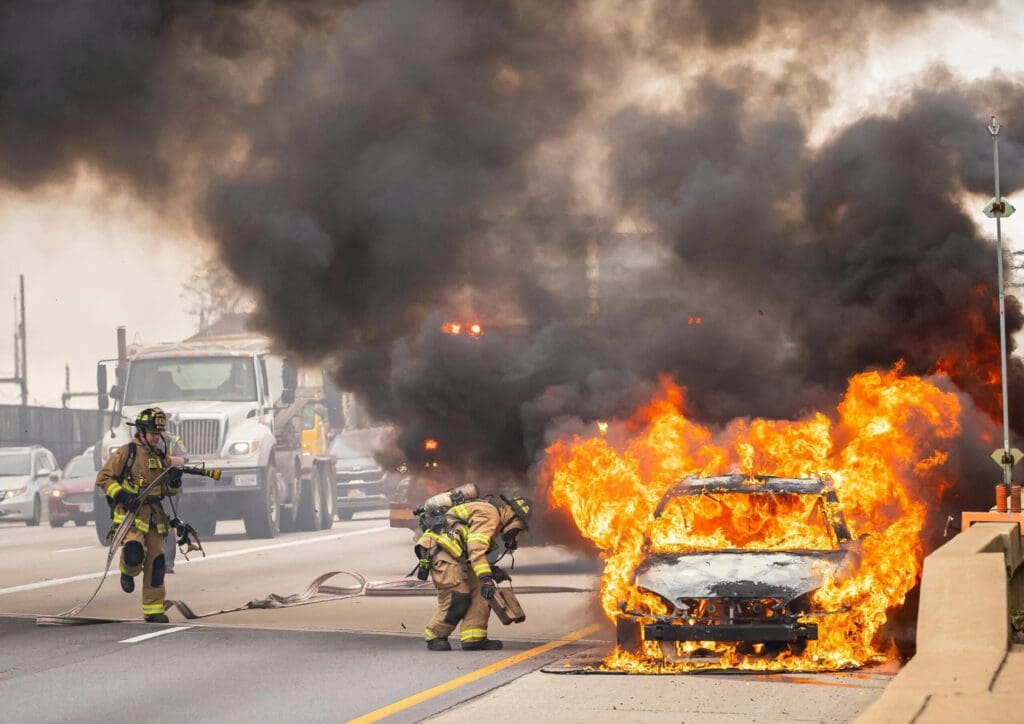
The next few headings describe the usual families of injury matters, in no special order. An incident can belong to more than one family.
Motor Vehicle Accidents
A crash tends to produce two urgent questions: whose conduct led to it, and what insurance is available. Weather, pavement, lighting, speed and the final position of the vehicles all feed the first. The category spans family cars and pickups, loaded semis, motorcycles and bicycles, and crashes linked to drinking, drugs, phone use or reckless speed.
Coverage rules are in the code. The Century Code chapter on financial responsibility holds section 39-16.1-11 of the North Dakota Century Code, which describes a motor vehicle liability policy for proof of financial responsibility. Limits of twenty five thousand dollars apply for one person, and fifty thousand dollars for two or more persons in one accident, for bodily injury or death. What a given driver carries may be different.
Work Place Accidents
Injured employees often start with workplace benefits. Some then ask whether another company, perhaps a supplier or a contractor, is partly responsible. Reported events include:
- falls and slips on the job
- dangers that were known but not removed
- machinery that lacked upkeep
- crashes in a vehicle used for work
- shocks from electrical equipment
- sickness caused by long exposure to harmful conditions
Premises Liability
People in charge of property are expected to prevent dangers that guests cannot easily see. Typical cases involve:
- steps or railings that fail under weight
- dark entrances and parking areas
- slick or oily floors
- uneven, cracked or sunken walking surfaces
- chemical or heat burns
- dog attacks
- other hazards on property someone else controls
Wrongful Death
When a person dies after an injury, relatives ask who can bring a claim and what it can cover. Fatal events include road crashes, boating and aircraft accidents, drowning, electrocution, falls, fires and firearm incidents.
The statute says when such a claim is deemed to begin. In the Century Code chapter on civil actions, section 28-01-18(4) of the North Dakota Century Code reads that in an action for injuries done to the person of another when death ensues, the claim for relief is deemed to have accrued at the time of the death of the party injured.
Product and Medical Care Injuries
A product that fails in ordinary use, or a mistake in diagnosis or treatment, can lead to a matter. Hold onto the product with its box and directions, and ask your provider for a complete copy of the chart and the charges.
Losses and State Limits
People who ask to have losses counted usually mean care costs, missed wages, a reduced earning future, pain and suffering, damaged property, permanent injury and lost enjoyment of life.
The code limits one category. Within the Century Code chapter on fault and damages, section 32-03.2-11(4) of the North Dakota Century Code says exemplary damages may not exceed two times the compensatory damages or two hundred fifty thousand dollars, whichever is greater.
Disputes about a trademark, a copyright or another business or creative work go to a separate page, intellectual property attorneys in New Town.
Use the form on this page to send a short description of your matter
How To Start The Personal Injury Attorney North Dakota New Town Intake Process
Use the form on this page when you want someone to get in touch. Provide your contact details and a brief account of the event. Everyday wording is fine, and any point you cannot confirm may be left out or flagged as unconfirmed.
Details that speed things up:
- the date and place of the injury
- the people or businesses connected with it
- the doctors, clinics or hospitals you have used
- an insurer claim number or letter
- a report number from police or from the business where it happened
Say so where a fact is unknown. A later discovery is easy to add, whereas a wrong detail can lead people astray.
Tell the story in the order it happened: the event, the injury, your treatment, the symptoms that continue and any time away from work. If you have an opinion about who was responsible, include it. The form does not have to wait until every record is collected.
Sending the form is a request for contact and nothing more. It does not bind you, and the page says nothing about how a matter would end, how long it would take or what it would cost, since those depend on facts still to be reviewed.
Pages for other nearby places include personal injury attorneys in Watford City and personal injury attorneys in Kenmare.
Frequently Asked Questions
Where is the district courthouse for Mountrail County?
The North Dakota court system’s own Mountrail County page gives the district courthouse address as 101 N Main St, Stanley, ND 58784.
Where can I find a health center run by the MHA Nation?
The MHA Nation’s own website gives the address of Elbowoods Memorial Health Center as 1251 Elbowoods Loop, New Town, ND 58763-0400.
Does being partly responsible mean I get nothing?
Not on its own. Section 32-03.2-02 of the North Dakota Century Code provides that damages are reduced in proportion to the claimant’s fault, and that recovery is not barred by contributory fault unless that fault was as great as the combined fault of all other persons.
What if I was hurt because of a state employee?
A written notice rule applies. As section 32-12.2-04 of the North Dakota Century Code puts it, a person bringing an injury claim against the state or a state employee presents written notice to the director of the office of management and budget within one hundred eighty days after the injury is discovered or reasonably should have been discovered.
Where is the county sheriff listed?
Mountrail County’s own 911 Communications page gives the physical address of the county sheriff as 101 Main Street N, Stanley, ND 58784.
