

Instantly Connect For Your Personal Injury Consultation When Filling Out Form
Ready to talk to someone about an injury in Harrisburg? The form above connects you directly, no need to read everything below first.
Your Harrisburg Personal Injury Attorney
An injury changes what an ordinary week looks like: appointments, missed work, calls from insurers, and questions nobody prepared you for. If it happened in Harrisburg, Pennsylvania’s rules on deadlines, shared fault, and auto insurance are written down, and knowing them early helps. The sections that follow cover the filing deadlines, the fault rule, the limited tort and full tort choice, claims against government bodies, the courts, and the kinds of injuries most often behind a claim. An attorney who handles Dauphin County claims can tell you which of these rules apply to your situation.

Your Key Pennsylvania Rules in One Place
- Personal injury lawsuits must be filed within 2 years (42 Pa.C.S. § 5524), unless a specific rule such as minority (§ 5533) changes the count.
- Hurt on public property or by a public vehicle? Give written notice within 6 months (42 Pa.C.S. § 5522), and get advice quickly.
- If you are partly at fault, you may still recover unless your share is greater than the defendants’ (42 Pa.C.S. § 7102). At 51% or more, recovery is barred.
- Limited tort versus full tort is chosen when you buy auto insurance, and it controls pain and suffering claims after a crash (75 Pa.C.S. § 1705).
- If a loved one died: a wrongful death action (42 Pa.C.S. § 8301) and a survival action (§ 8302) each have a two-year limit (§ 5524).
Filing Deadlines for Injury and Wrongful Death Claims in Pennsylvania
Start with the two-year limit in 42 Pa.C.S. § 5524, which covers personal injury and wrongful death actions caused by another’s wrongful act, neglect, or negligence.
A claim by a child is counted from adulthood: for an unemancipated minor, the period of minority is not part of the time to sue, and the person has the same time after reaching age 18 (42 Pa.C.S. § 5533(b)(1)). Under § 5533(a), insanity or imprisonment does not extend the time unless a statute provides otherwise.
When an injury leads to death, 42 Pa.C.S. § 8301 gives the family a wrongful death action and § 8302 lets the decedent’s own cause of action survive. The limit in § 5524 is two years for both.
If a city, county, township, transit agency, or Commonwealth agency may be responsible, the notice deadline is six months, not two years (42 Pa.C.S. § 5522(a)). The written notice must identify the injured person, the date and hour, and the approximate location, and a Commonwealth agency case also requires a filing with the Attorney General. A court must excuse a failure to file on a showing of reasonable excuse (§ 5522(a)(2)).
For a government unit other than the Commonwealth, the six months does not include up to 90 days during which the injured person could not give notice because of incapacity from the injury, the period starts at death if the injury results in death, and failure to give notice is not a bar if the unit had actual or constructive notice of the incident or condition (§ 5522(a)(3)).
If the injury came from medical care, a seven-year statute of repose applies in addition to the general filing rules, with an exception for a foreign object unintentionally left in the body (MCARE Act § 513, 40 P.S. § 1303.513).
Injured in Harrisburg? Get matched with an attorney now.
Shared Fault: Pennsylvania's 51% Rule

The rule is in 42 Pa.C.S. § 7102(a): a plaintiff who is partly at fault can still recover as long as the plaintiff’s negligence was not greater than the negligence of the defendants sued, and the recovery is diminished by the plaintiff’s share of the fault.
In practice that is the 51% bar. A person found 20% at fault recovers 80% of the damages, a person found 50% at fault recovers half, and a person found 51% or more at fault recovers nothing. Insurers know this, and arguing about percentages is a common way they try to reduce a claim.
Where several parties share the blame, the rule is several liability in 42 Pa.C.S. § 7102(a.1)(2), with joint and several liability for intentional torts, intentional misrepresentation, a 60% or greater share, hazardous substance releases, and Liquor Code § 497 violations.
Limited Tort and Full Tort: The Auto Insurance Choice
The choice is made on the auto policy. Full tort keeps the right to seek both economic and noneconomic damages after a crash caused by another person (75 Pa.C.S. § 1705(c)). Limited tort keeps the right to economic loss, but bars a claim for noneconomic loss such as pain and suffering unless the injury is a serious injury (§ 1705(d)).
The statute defines a serious injury as one resulting in death, serious impairment of body function, or permanent serious disfigurement (75 Pa.C.S. § 1702). Medical evidence usually decides whether an injury qualifies.
There are exceptions. Under 75 Pa.C.S. § 1705(d)(1), someone bound by limited tort recovers as if under full tort if the at-fault person was convicted of or accepted ARD for DUI in the accident, drove a vehicle registered in another state, intended to injure, or lacked required financial responsibility. Full tort rights are also retained against vehicle manufacturers and repairers for defects (§ 1705(d)(2)) and by occupants of vehicles other than private passenger vehicles (§ 1705(d)(3)).
Working out the applicable option can take some care. Under 75 Pa.C.S. § 1705(b)(2), the named insured’s choice covers other insureds on the policy, and when two policies conflict the occupant rule decides, with full tort as the fallback. Someone with no registered vehicle and no policy coverage is not precluded from seeking noneconomic loss (§ 1705(b)(3)). Separately, § 1711(a) requires the policy to include a $5,000 medical benefit.
When a Government Body Is Responsible for the Injury
Under 42 Pa.C.S. § 8541 a local agency is generally not liable for damages, and § 8542 opens only specific doors: negligent acts of the agency or its employees that fall into a listed category, such as vehicle operation, personal property, real property, traffic controls and street lighting, utility facilities, streets, sidewalks, or animals (§ 8542(b)).
Section 8553 of Title 42 limits what can be recovered from a local agency: $500,000 in the aggregate per cause of action or occurrence (§ 8553(b)), with pain and suffering available only in cases of death, or permanent loss of a bodily function, permanent disfigurement or permanent dismemberment when medical and dental expenses exceed $1,500 (§ 8553(c)).
For state agencies the framework is 42 Pa.C.S. § 8522, which lifts sovereign immunity only for listed categories such as vehicles, medical care in Commonwealth facilities, personal property, Commonwealth real estate, highways and sidewalks, potholes, and animals, and § 8528(b), which caps damages at $250,000 per plaintiff and $1,000,000 in the aggregate.
Any injury on public property, or involving a public vehicle, deserves prompt review because of the six-month notice in 42 Pa.C.S. § 5522.
Where an Injury Case From Harrisburg Is Filed
Injury lawsuits usually belong in the Court of Common Pleas, which has unlimited original jurisdiction (42 Pa.C.S. § 931). A magisterial district judge can hear civil claims up to $12,000 (§ 1515(a)(3)), and compulsory arbitration cannot be required above $50,000 (§ 7361(b)(2)).
A Harrisburg injury lawsuit that reaches the trial court is filed in the Court of Common Pleas of Dauphin County. That court is the Twelfth Judicial District (42 Pa.C.S. §§ 901, 951), and Harrisburg is the county seat.
The Claims That Come Up Most in Dauphin County

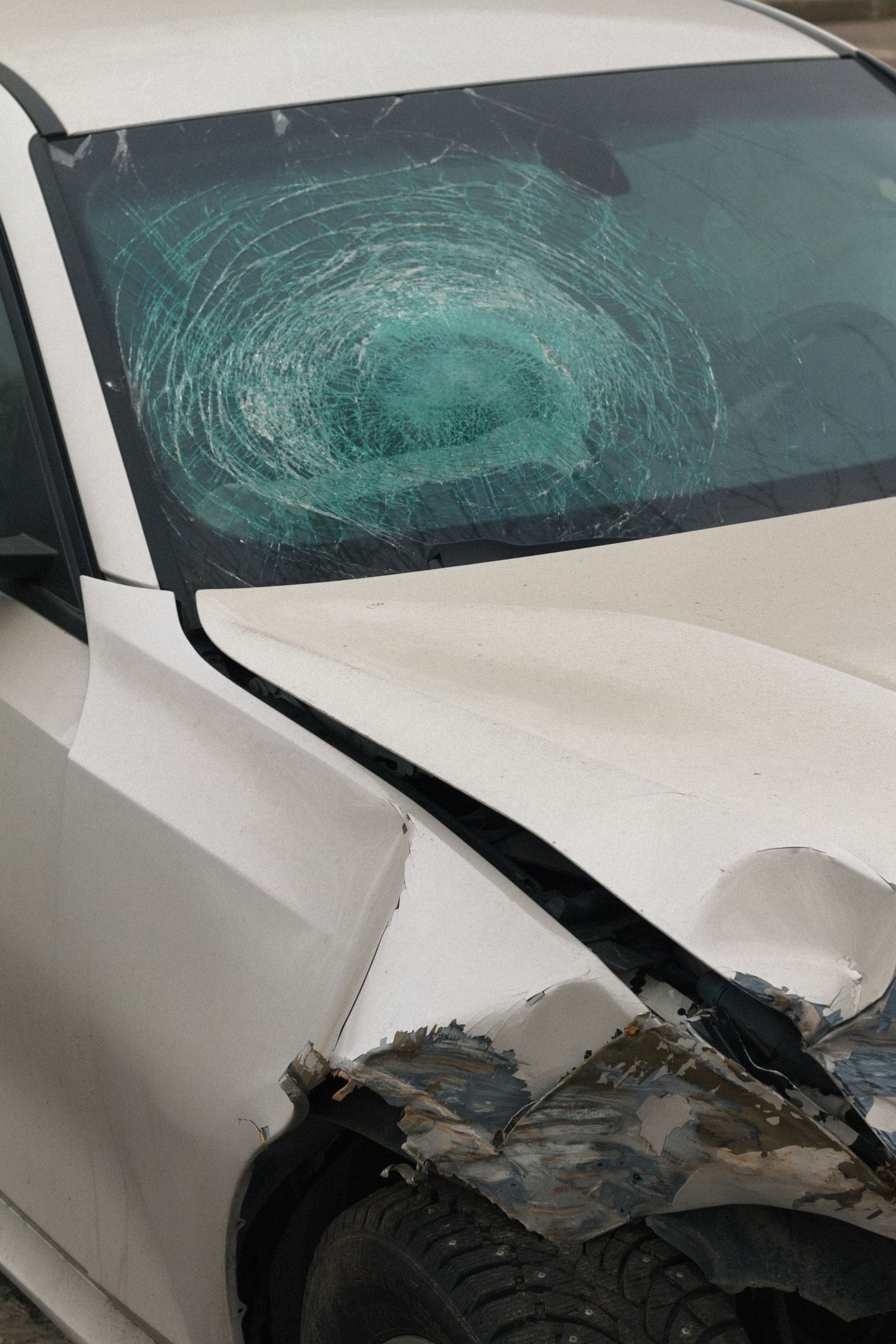
Collisions and Crash Injuries
After a collision, the questions are fault, injuries, and insurance. Which tort option applies can change whether pain and suffering is recoverable (75 Pa.C.S. § 1705), a medical benefit of $5,000 is required on covered policies (§ 1711(a)), and any fault assigned to you reduces the recovery (42 Pa.C.S. § 7102).
A person bound by limited tort still recovers as if under full tort when the at-fault vehicle was registered in another state (75 Pa.C.S. § 1705(d)(1)).
Slip and Fall and Premises Injuries
Premises injuries, such as a fall on a wet floor, an unlit stairway, or a broken step, turn on whether the owner or occupier was negligent. The injured person’s own share of the fault is weighed under 42 Pa.C.S. § 7102, and the two-year deadline in § 5524 applies.
Claims involving government-owned property have a six-month notice requirement (42 Pa.C.S. § 5522) and are limited to the listed exceptions, including real property and sidewalks (§ 8542(b)).
Dog Attacks
Pennsylvania’s Dog Law addresses what happens after a bite: the dog is confined and isolated for at least ten days, and the investigating officer notifies the victim of the medical results of the dog’s confinement (3 P.S. § 459-502(a), (b)). The owner or keeper must pay the victim’s medical treatment costs, and the Commonwealth is not liable for them (§ 459-502(b)(1)).
Claims for losses beyond medical costs follow the ordinary injury rules, including the two-year limit in 42 Pa.C.S. § 5524 and the fault rule in § 7102.
When an Injury Is Fatal
The family’s claim is the wrongful death action in 42 Pa.C.S. § 8301, which exists for the spouse, children, or parents of the deceased and is brought by the personal representative (Pa.R.C.P. 2202(a)). The estate’s claim is a survival action under § 8302.
If the death resulted from medical care, the MCARE Act requires the action to be commenced within two years after the death in the absence of affirmative misrepresentation or fraudulent concealment (40 P.S. § 1303.513(d)).
Defective Products and Work Injuries
When a defective product causes an injury, the claim can be brought against the maker or seller, and under Tincher v. Omega Flex, 104 A.3d 328 (Pa. 2014), the defect may be shown under a consumer-expectations standard or a risk-utility standard.
A worker hurt on the job generally looks to workers’ compensation against the employer (77 P.S. § 481(a)), while a claim against a third party, such as an equipment maker or another contractor, can proceed separately (§ 481(b)).
Have questions about your injury claim? Connect with an attorney.
What to Know About Cases in Harrisburg
Harrisburg cases are heard in Dauphin County. Knowing which court you will be in, and how it schedules cases, matters because deadlines such as the two-year filing limit and the six-month government notice run regardless of the court, and an attorney who handles Dauphin County matters can watch those dates for you.
Criminal cases follow different Pennsylvania rules, covered on our Harrisburg criminal defense page.
Frequently Asked Questions
When does the clock start on a personal injury claim?
The two-year period under 42 Pa.C.S. § 5524 applies to actions for injuries to the person and for death caused by another’s negligence. An attorney can look at the date of the injury and any rule that changes the count.
What is a notice of claim in Pennsylvania?
It is the written statement required by 42 Pa.C.S. § 5522(a)(1): the injured person’s name and address, the date and hour of the accident, its approximate location, and the name of any attending physician, filed within six months.
What if I was 50% at fault?
You can still recover, reduced by 50%, because your negligence is not greater than the defendants’ (42 Pa.C.S. § 7102(a)). At 51% you could not.
What is the tort election on a Pennsylvania auto policy?
When you buy or renew a private passenger auto policy you choose between full tort and limited tort (75 Pa.C.S. § 1705). The choice affects what you can claim after a crash.
Does a broken bone meet the serious injury threshold?
It depends on the injury and the medical evidence. The question is whether the injury meets the statutory definition in 75 Pa.C.S. § 1702, and an attorney can review your records against it.
What can a family recover in a wrongful death case?
In addition to other damages, the plaintiff may recover reasonable hospital, nursing, medical, funeral, and administration expenses caused by the injuries (42 Pa.C.S. § 8301(c)). Other damages depend on the case.
Does imprisonment extend the deadline to file an injury claim?
Not on its own. Insanity or imprisonment does not extend the time to commence a matter unless another statute says so (42 Pa.C.S. § 5533(a)).
Does the Dog Law cover the cost of my treatment?
Yes. The owner or keeper must pay the victim’s medical treatment costs from a biting or attacking dog (3 P.S. § 459-502(b)(1)).
What is compulsory arbitration in a Pennsylvania injury case?
It is a procedure where certain civil matters are first heard by a board of three lawyers when a court rule requires it. By statute, a matter cannot be sent to compulsory arbitration where the amount in controversy exceeds $50,000 (42 Pa.C.S. § 7361(b)(2)).
Is a workplace injury a personal injury case in Pennsylvania?
Partly. The claim against the employer is handled through workers’ compensation (77 P.S. § 481(a)), and a claim against another party, such as an equipment maker, can be a personal injury case (§ 481(b)).
Take the Next Step in Your Harrisburg Claim
An injury claim is easier to handle with someone reading the paperwork alongside you. Submit the form to be connected with an attorney who can go over your injury, the deadlines, and the court in Dauphin County.