

Instantly Connect For Your Personal Injury Consultation When Filling Out Form
Ready to talk to someone about an injury in New Castle? The form above connects you directly, no need to read everything below first.
Your New Castle Personal Injury Attorney
Being hurt because of someone else’s carelessness is stressful enough without a legal clock running in the background. This page explains the Pennsylvania rules that most often decide how an injury claim from New Castle unfolds. The sections that follow cover the filing deadlines, the fault rule, the limited tort and full tort choice, claims against government bodies, the courts, and the kinds of injuries most often behind a claim. The facts of your injury decide which rule controls, and an attorney who practices in Pennsylvania courts can sort that out quickly.

Deadlines and Fault Rules: The Short Version
- How long do I have to sue? Usually 2 years (42 Pa.C.S. § 5524). The clock is the same for a car crash, a fall, or a fatal accident.
- If a government body is involved, notice is due in 6 months (42 Pa.C.S. § 5522). A court can excuse a late notice only for a reasonable excuse.
- Fault is shared, not all-or-nothing, up to a point: 50% at fault still recovers a reduced amount, while 51% recovers nothing (42 Pa.C.S. § 7102).
- After a car accident, check your tort option. Under limited tort, pain and suffering requires a serious injury as the statute defines it (75 Pa.C.S. §§ 1702, 1705).
- Families have rights after a fatal accident: wrongful death and survival actions under 42 Pa.C.S. §§ 8301 and 8302, generally within two years.
Filing Deadlines for Injury and Wrongful Death Claims in Pennsylvania
Two years is the general rule. Under 42 Pa.C.S. § 5524, an action to recover damages for injuries to a person, or for a death caused by the wrongful act, neglect, or negligence of another, must be commenced within two years. The same section covers assault and battery claims and a catch-all for other negligence and tort actions.
Age matters. A minor’s time to sue does not begin to run until age 18 (42 Pa.C.S. § 5533(b)(1)), while insanity or imprisonment does not extend anyone’s time unless another statute says it does (§ 5533(a)).
Fatal accidents can support a wrongful death action (42 Pa.C.S. § 8301) and a survival action (§ 8302). Each is an action for the death of an individual caused by another’s negligence, so the two-year period in § 5524 applies.
A government defendant changes the calendar. Section 5522(a) of Title 42 requires written notice within six months of the injury, and dismissal follows if notice is not filed, unless the court finds a reasonable excuse for the failure (§ 5522(a)(2)). For a Commonwealth agency the notice also goes to the Attorney General.
There are protections for claims against local units: up to 90 days of incapacity from the injury is excluded, the time starts on the date of death in a fatal case, and the missed notice is not a bar if the government unit actually or constructively knew of the incident or condition (42 Pa.C.S. § 5522(a)(3)).
A claim that a health care provider caused the injury is a medical professional liability claim, and the MCARE Act adds a seven-year outer limit from the date of the alleged tort or breach, with an exception for a foreign object left in the body (40 P.S. § 1303.513).
Injured in New Castle? Get matched with an attorney now.
Comparative Negligence and the 51% Bar

Partial blame reduces a claim but does not always end it. Section 7102(a) of Title 42 allows recovery where the plaintiff’s negligence is not greater than the defendants’, with damages diminished in proportion to the plaintiff’s negligence.
The result is the familiar 51% bar: reduced recovery up to and including 50% fault, none at 51% or above. Evidence about speed, lighting, warnings, and conduct after the incident often decides where the percentage lands.
If a crash or fall involves several responsible parties, liability is usually divided by percentage and judgments are separate (42 Pa.C.S. § 7102(a.1)(2)). The listed exceptions, including an intentional tort or a defendant at least 60% liable, allow joint and several liability (§ 7102(a.1)(3)).
Full Tort, Limited Tort, and What Each Allows
Two options exist under 75 Pa.C.S. § 1705. With full tort you may seek compensation for economic and noneconomic loss caused by another’s fault. With limited tort you may seek economic loss, and you may seek noneconomic loss only when the injury is a serious injury.
The definition in 75 Pa.C.S. § 1702 is narrow: death, serious impairment of body function, or permanent serious disfigurement. An injury that is painful but does not meet it can be treated differently under limited tort.
There are exceptions. Under 75 Pa.C.S. § 1705(d)(1), someone bound by limited tort recovers as if under full tort if the at-fault person was convicted of or accepted ARD for DUI in the accident, drove a vehicle registered in another state, intended to injure, or lacked required financial responsibility. Full tort rights are also retained against vehicle manufacturers and repairers for defects (§ 1705(d)(2)) and by occupants of vehicles other than private passenger vehicles (§ 1705(d)(3)).
Because the election is tied to policies, a passenger, a pedestrian, or a driver of a borrowed car can each have a different answer. The rules are in 75 Pa.C.S. § 1705(b), and § 1711(a) separately requires a medical benefit of $5,000 on covered policies.
When a Government Body Is Responsible for the Injury
Local agencies, such as cities, boroughs, and townships, are generally immune from damages (42 Pa.C.S. § 8541), and liability exists only for the listed exceptions, where the damages would be recoverable at common law and the injury was caused by the negligent acts of the agency or an employee (§ 8542(a)). The listed categories include operating a motor vehicle, care of personal property, care of real property, traffic controls and street lighting, utility service facilities, streets, sidewalks, and animals (§ 8542(b)).
Damages against local agencies are capped at $500,000 in the aggregate for the same cause of action or occurrence (42 Pa.C.S. § 8553(b)), and recoverable losses are limited to past and future earnings and earning capacity, medical and dental expenses, loss of consortium, loss of support, property losses, and pain and suffering only for death or a permanent loss of a bodily function, permanent disfigurement, or permanent dismemberment where medical and dental expenses exceed $1,500 (§ 8553(c)).
A claim involving a state agency, such as a road under PennDOT’s control, follows the sovereign immunity exceptions in 42 Pa.C.S. § 8522(b) and the damages caps in § 8528(b): $250,000 for any plaintiff and $1,000,000 in the aggregate.
Since the notice period (42 Pa.C.S. § 5522) is far shorter than the general two years, government cases should be checked first for who owns the road, sidewalk, or vehicle.
Where an Injury Case From New Castle Is Filed
Three numbers frame the choice of court: unlimited jurisdiction in the Court of Common Pleas (42 Pa.C.S. § 931), $12,000 for civil claims before a magisterial district judge (§ 1515(a)(3)), and $50,000 as the ceiling for compulsory arbitration (§ 7361(b)(2)).
For a case from New Castle, the trial court is the Court of Common Pleas of Lawrence County, which serves the Fifty-third Judicial District (42 Pa.C.S. §§ 901, 951). The county seat is New Castle.
Types of Personal Injury Claims

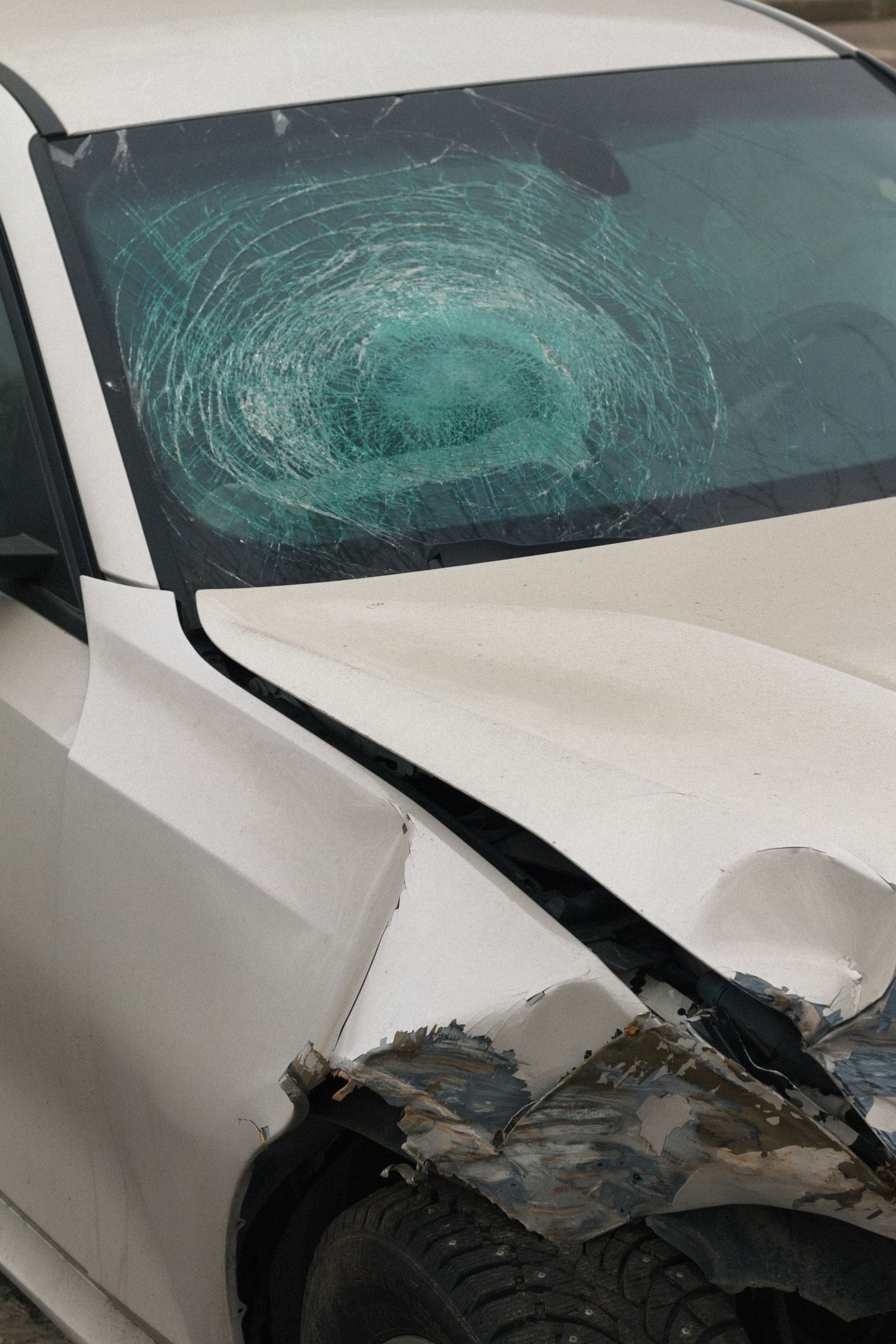
Crashes Involving Cars, Trucks, and Motorcycles
Crash claims combine several rules at once: the two-year deadline (42 Pa.C.S. § 5524), the 51% fault bar (§ 7102), and the limited tort and full tort choice (75 Pa.C.S. § 1705). Each can matter, and a police report and prompt medical records help on all three.
A vehicle defect can support a separate claim against a manufacturer or repairer, and limited tort does not limit that claim (75 Pa.C.S. § 1705(d)(2)).
Slip, Trip, and Fall Claims
When someone is hurt on another’s property, the case centers on what the owner knew or should have known and what was done about it, and on how much of the fault the injured person shares under 42 Pa.C.S. § 7102(a).
If the fall happened on a public sidewalk, a street, or public property, written notice within six months (42 Pa.C.S. § 5522) and the immunity exceptions for sidewalks, streets, and real property (§ 8542(b)) come into play.
Dog Attacks
After a dog bites or attacks a person, the dog must be immediately confined, and it is isolated for a minimum of ten days to determine the results of confinement (3 P.S. § 459-502(a)). The Dog Law also says the cost to the victim for medical treatment resulting from an attacking or biting dog must be paid fully by the owner or keeper of the dog (§ 459-502(b)(1)).
Beyond medical costs, recovery for other losses is an ordinary injury claim, with the two-year deadline in 42 Pa.C.S. § 5524.
Wrongful Death and Survival Claims
Two claims can come from a fatal accident: the wrongful death action for the spouse, children, or parents (42 Pa.C.S. § 8301(b)) and the survival action that lets the decedent’s own claim continue (§ 8302). The personal representative brings the wrongful death case (Pa.R.C.P. 2202(a)).
If the death resulted from medical care, the MCARE Act requires the action to be commenced within two years after the death in the absence of affirmative misrepresentation or fraudulent concealment (40 P.S. § 1303.513(d)).
Defective Products and Job-Related Injuries
Injuries from defective products are decided under the framework in Tincher v. Omega Flex, 104 A.3d 328 (Pa. 2014), which allows a plaintiff to prove a defect through the consumer-expectations standard or the risk-utility standard.
For injuries at work, an employer’s liability under the Workers’ Compensation Act is exclusive (77 P.S. § 481(a)), but an injured employee may bring an action at law against a third party who caused the injury (§ 481(b)).
Have questions about your injury claim? Connect with an attorney.
Local Court Details for New Castle
New Castle cases are heard in Lawrence County. Knowing which court you will be in, and how it schedules cases, matters because deadlines such as the two-year filing limit and the six-month government notice run regardless of the court, and an attorney who handles Lawrence County matters can watch those dates for you.
Criminal cases follow different Pennsylvania rules, covered on our New Castle criminal defense page.
Frequently Asked Questions
How long do I have to file a personal injury lawsuit in Pennsylvania?
Two years is the general rule. An action to recover damages for injuries to the person, or for a death caused by another’s wrongful act or negligence, must be commenced within two years (42 Pa.C.S. § 5524).
Do I have to give notice before suing a city or county in Pennsylvania?
Yes. Within six months a written statement must be filed with the government unit (42 Pa.C.S. § 5522(a)). For a unit other than the Commonwealth, up to 90 days of incapacity from the injury is excluded, and actual or constructive notice of the incident or condition means missed notice is not a bar (§ 5522(a)(3)).
What is Pennsylvania’s 51% rule?
It is the modified comparative negligence bar: at 50% or less you recover a reduced amount, and at 51% or more recovery is barred, because your negligence is greater than the defendants’ (42 Pa.C.S. § 7102(a)).
What are the exceptions to limited tort in Pennsylvania?
The at-fault person was convicted of or accepted ARD for DUI in the accident, drove a vehicle registered in another state, intended to injure, or lacked required financial responsibility (75 Pa.C.S. § 1705(d)(1)). Full tort rights also apply against vehicle manufacturers and repairers for defects (§ 1705(d)(2)) and to occupants of vehicles other than private passenger vehicles (§ 1705(d)(3)).
Who decides whether my injury is serious?
It depends on the evidence in your case, usually medical records and opinions, measured against the definition in 75 Pa.C.S. § 1702. Disputes are common.
How long do we have to file a wrongful death claim?
Two years for an action for the death of an individual caused by another’s negligence (42 Pa.C.S. § 5524). Claims against a government unit also require written notice within six months, and for a unit other than the Commonwealth that period starts at the death (§ 5522(a)(3)(ii)).
Can a minor file an injury lawsuit after turning 18?
Yes. The period of minority does not count against the time to sue, and the same time period applies once the person reaches 18 (42 Pa.C.S. § 5533(b)(1)).
Who pays my medical bills after a dog bite in Pennsylvania?
Under the Dog Law, any cost to the victim for medical treatment resulting from an attacking or biting dog must be paid fully by the owner or keeper of the dog, and the Commonwealth is not liable for those costs (3 P.S. § 459-502(b)(1)).
What is the small claims limit in Pennsylvania?
Civil claims up to $12,000, exclusive of interest and costs, can be brought before a magisterial district judge (42 Pa.C.S. § 1515(a)(3)). Larger claims are filed in the Court of Common Pleas (§ 931).
Can I sue a contractor for an injury on a job site?
A contractor or other company that is not your employer may be a third party, and the law preserves an action at law against a third party (77 P.S. § 481(b)).
Take the Next Step in Your New Castle Claim
If you are unsure where to start, the form above is the simplest first step. It connects you with an attorney who can explain your options in New Castle and what the next few weeks may involve.