

Instantly Connect For Your Personal Injury Consultation When Filling Out Form
Ready to talk to someone about an injury in Reading? The form above connects you directly, no need to read everything below first.
Your Reading Personal Injury Attorney
If you or someone in your family was injured in Reading, you are probably looking for plain answers about time limits, fault, and what a claim involves. Pennsylvania sets several of those by statute, so many answers can be checked. Below you will find the key deadlines at a glance, how fault is shared, how the auto insurance tort election works, what changes when a government body is involved, and which court hears a case from Berks County. These rules apply across Pennsylvania, but where a case is filed depends on the county, and an attorney familiar with the Court of Common Pleas of Berks County can explain what to expect there.

Pennsylvania Injury Claim Rules at a Glance
- Personal injury lawsuits must be filed within 2 years (42 Pa.C.S. § 5524), unless a specific rule such as minority (§ 5533) changes the count.
- Six months is the notice window for claims against government units (42 Pa.C.S. § 5522), and damages against them are capped by statute (§§ 8528, 8553).
- Shared fault: 51% is the bar. You can recover if your share of the fault is not greater than the other side’s, but the award is reduced by your percentage (42 Pa.C.S. § 7102).
- Two auto insurance options exist in Pennsylvania: full tort and limited tort (75 Pa.C.S. § 1705), and the difference can change what a crash claim is worth.
- Wrongful death: the action is brought by the personal representative for the spouse, children, or parents (42 Pa.C.S. § 8301; Pa.R.C.P. 2202), and a separate survival action is allowed (§ 8302).
How Long Do You Have to File an Injury Lawsuit?
For most injury claims the clock is two years. Section 5524 of Title 42 applies it to injuries to the person and to deaths caused by another’s negligence or wrongful act, and it also reaches other negligent, intentional, or tortious conduct not covered by a different limit.
A claim by a child is counted from adulthood: for an unemancipated minor, the period of minority is not part of the time to sue, and the person has the same time after reaching age 18 (42 Pa.C.S. § 5533(b)(1)). Under § 5533(a), insanity or imprisonment does not extend the time unless a statute provides otherwise.
A death caused by negligence can lead to both a wrongful death action (42 Pa.C.S. § 8301) and a survival action (§ 8302), each governed by the two-year limit in § 5524.
If a city, county, township, transit agency, or Commonwealth agency may be responsible, the notice deadline is six months, not two years (42 Pa.C.S. § 5522(a)). The written notice must identify the injured person, the date and hour, and the approximate location, and a Commonwealth agency case also requires a filing with the Attorney General. A court must excuse a failure to file on a showing of reasonable excuse (§ 5522(a)(2)).
For a government unit other than the Commonwealth, the six months does not include up to 90 days during which the injured person could not give notice because of incapacity from the injury, the period starts at death if the injury results in death, and failure to give notice is not a bar if the unit had actual or constructive notice of the incident or condition (§ 5522(a)(3)).
If the injury came from medical care, a seven-year statute of repose applies in addition to the general filing rules, with an exception for a foreign object unintentionally left in the body (MCARE Act § 513, 40 P.S. § 1303.513).
Injured in Reading? Get matched with an attorney now.
How Pennsylvania Handles Partial Fault

Under 42 Pa.C.S. § 7102(a), a claim survives if your negligence was not greater than the negligence of the defendants, and the damages are reduced in proportion to your share.
The result is the familiar 51% bar: reduced recovery up to and including 50% fault, none at 51% or above. Evidence about speed, lighting, warnings, and conduct after the incident often decides where the percentage lands.
Where several parties share the blame, the rule is several liability in 42 Pa.C.S. § 7102(a.1)(2), with joint and several liability for intentional torts, intentional misrepresentation, a 60% or greater share, hazardous substance releases, and Liquor Code § 497 violations.
Full Tort, Limited Tort, and What Each Allows
Section 1705 of Title 75 sets the two choices. Full tort leaves noneconomic damages available (§ 1705(c)); limited tort leaves economic damages available and limits noneconomic damages to serious injuries (§ 1705(d)).
A “serious injury” is defined in the statute as a personal injury resulting in death, serious impairment of body function, or permanent serious disfigurement (75 Pa.C.S. § 1702). Whether a particular injury meets that definition is often disputed.
Limited tort does not apply to everyone in every crash. A person bound by it may recover as if full tort had been chosen when the at-fault person was convicted of or accepted ARD for driving under the influence in that accident, was driving a vehicle registered in another state, intended to injure, or had not maintained financial responsibility (75 Pa.C.S. § 1705(d)(1)). Full tort rights are also kept against those in the business of designing, manufacturing, or repairing motor vehicles for a vehicle defect (§ 1705(d)(2)), and by an occupant of a motor vehicle other than a private passenger motor vehicle (§ 1705(d)(3)).
Working out the applicable option can take some care. Under 75 Pa.C.S. § 1705(b)(2), the named insured’s choice covers other insureds on the policy, and when two policies conflict the occupant rule decides, with full tort as the fallback. Someone with no registered vehicle and no policy coverage is not precluded from seeking noneconomic loss (§ 1705(b)(3)). Separately, § 1711(a) requires the policy to include a $5,000 medical benefit.
Injuries on Public Property or Involving Public Vehicles
Whether a city, borough, or township can be sued turns on 42 Pa.C.S. §§ 8541 and 8542. Immunity is the rule, and the exceptions are a closed list that includes vehicles, personal and real property, traffic controls and lighting, utility service facilities, streets, sidewalks, and animals.
There are statutory caps. A local agency’s liability is limited to $500,000 in the aggregate (42 Pa.C.S. § 8553(b)), and the types of loss are restricted, including pain and suffering only for death or permanent loss of function, disfigurement, or dismemberment when medical and dental expenses exceed $1,500 (§ 8553(c)).
Commonwealth parties, such as state agencies and their employees, have sovereign immunity with listed exceptions, including vehicle liability, medical-professional liability, care of personal property, Commonwealth real estate, highways and sidewalks, potholes and other dangerous conditions of highways, and animals (42 Pa.C.S. § 8522(b)). Damages are limited to $250,000 for any plaintiff and $1,000,000 in the aggregate (§ 8528(b)).
Since the notice period (42 Pa.C.S. § 5522) is far shorter than the general two years, government cases should be checked first for who owns the road, sidewalk, or vehicle.
Court Structure for Injury Claims in Berks County
Most serious injury lawsuits are filed in the Court of Common Pleas, which has unlimited original jurisdiction (42 Pa.C.S. § 931). Civil claims up to $12,000 can be filed with a magisterial district judge (§ 1515(a)(3)), and § 7361(b)(2) prevents compulsory arbitration where more than $50,000 is at stake.
The trial court for Reading is the Court of Common Pleas of Berks County, part of the Twenty-third Judicial District (42 Pa.C.S. §§ 901, 951), and the county seat is Reading.
What Kinds of Injury Cases Do We See in Reading?

Auto Accident Injuries
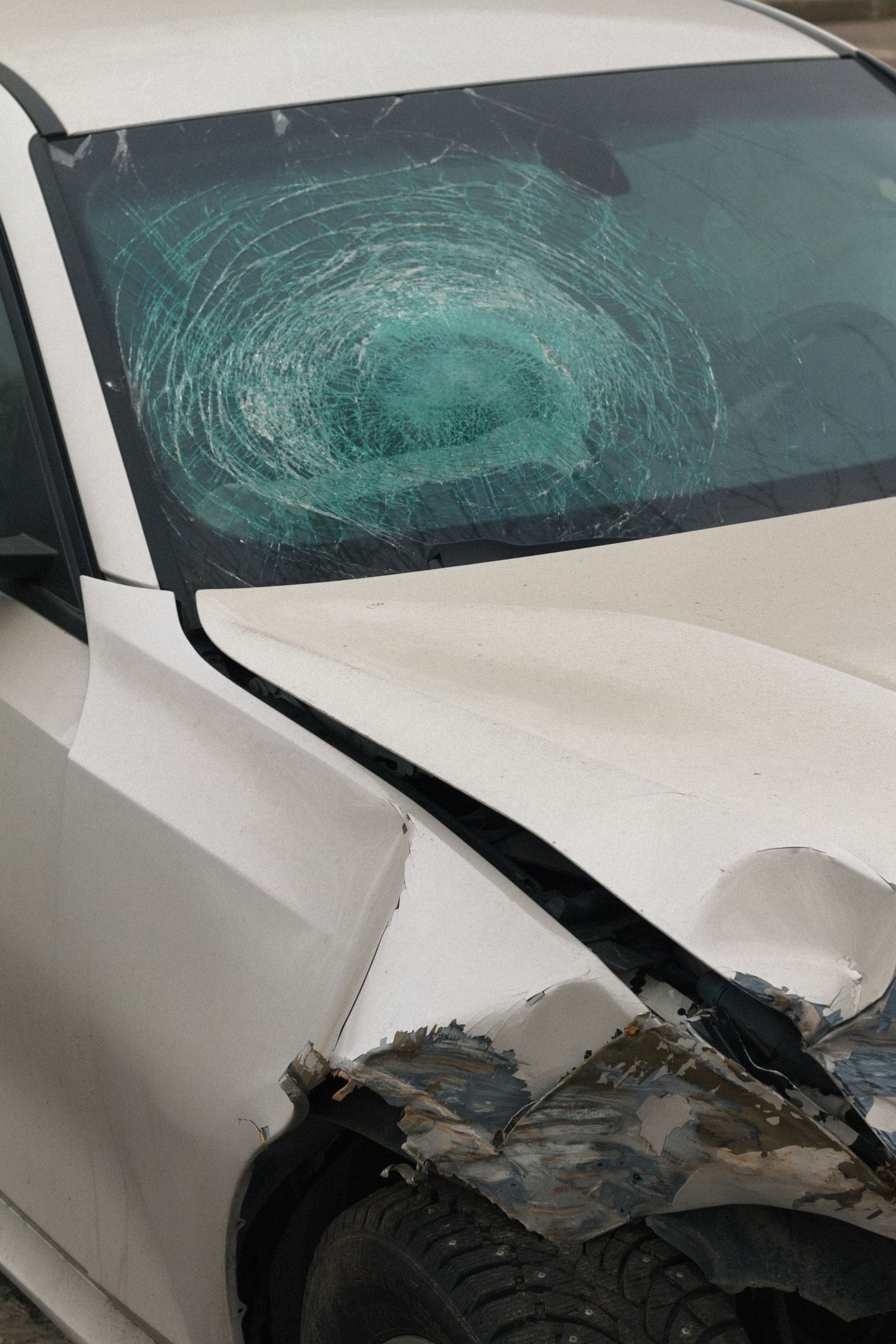
A vehicle crash can involve the at-fault driver, the injured person’s own policy, and sometimes a government body if the road or a public vehicle was involved (42 Pa.C.S. § 5522). Each layer has its own rules and deadlines.
If the at-fault driver was convicted of or accepted ARD for DUI in the accident, limited tort does not stand in the way (75 Pa.C.S. § 1705(d)(1)).
Injuries on Someone Else’s Property
Premises injuries, such as a fall on a wet floor, an unlit stairway, or a broken step, turn on whether the owner or occupier was negligent. The injured person’s own share of the fault is weighed under 42 Pa.C.S. § 7102, and the two-year deadline in § 5524 applies.
Where a public body owns the property, immunity is the starting point (42 Pa.C.S. § 8541), and the claim must fit a listed exception such as real property or sidewalks (§ 8542(b)).
Bitten by a Dog
Dog bite cases begin with the Dog Law’s medical cost rule, under which the owner or keeper of a biting dog pays the victim’s treatment costs (3 P.S. § 459-502(b)(1)), and with a confinement period of at least ten days for the dog (§ 459-502(a)).
A child bitten by a dog has the added protection of the minority rule in 42 Pa.C.S. § 5533(b)(1), which does not count the years before age 18.
When an Injury Is Fatal
Two claims can come from a fatal accident: the wrongful death action for the spouse, children, or parents (42 Pa.C.S. § 8301(b)) and the survival action that lets the decedent’s own claim continue (§ 8302). The personal representative brings the wrongful death case (Pa.R.C.P. 2202(a)).
Both actions are subject to the two-year limit in 42 Pa.C.S. § 5524.
Injuries From Products and On the Job
Injuries from defective products are decided under the framework in Tincher v. Omega Flex, 104 A.3d 328 (Pa. 2014), which allows a plaintiff to prove a defect through the consumer-expectations standard or the risk-utility standard.
If a third party such as a manufacturer or another company contributed to a workplace injury, the employee may bring an action at law against that party (77 P.S. § 481(b)) even though the employer is protected by § 481(a).
Injured in Reading? Talk to an attorney about your deadlines.
What to Know About Cases in Reading
An injury in Reading belongs to Berks County and its Court of Common Pleas. Local practice, such as how quickly cases are listed and how arbitration is used, shapes how the general rules on this page play out, and a local attorney can tell you what that looks like in Reading and in the magisterial district that may hear a smaller claim.
Charged with a crime rather than injured? Read about criminal defense in Reading.
Nearby cities we also cover: our Norristown page.
Frequently Asked Questions
What is the statute of limitations for an injury claim in Pennsylvania?
Most injury and wrongful death actions must be commenced within two years (42 Pa.C.S. § 5524). Claims against government units have a separate six-month written notice requirement (§ 5522).
What is a notice of claim in Pennsylvania?
It is the written statement required by 42 Pa.C.S. § 5522(a)(1): the injured person’s name and address, the date and hour of the accident, its approximate location, and the name of any attending physician, filed within six months.
How does shared fault reduce my compensation in Pennsylvania?
Damages are diminished in proportion to the negligence attributed to you (42 Pa.C.S. § 7102(a)). If you are found 30% at fault, for example, a $100,000 award becomes $70,000.
What is the difference between limited tort and full tort?
Full tort keeps the right to seek both economic and noneconomic damages after a crash caused by another person (75 Pa.C.S. § 1705(c)). Limited tort keeps the right to economic loss but precludes noneconomic loss unless the injury is a serious injury (§ 1705(d)).
How does Pennsylvania define a serious injury?
Under 75 Pa.C.S. § 1702, it is a personal injury resulting in death, serious impairment of body function, or permanent serious disfigurement.
Who can file a wrongful death claim in Pennsylvania?
The right of action exists for the spouse, children, or parents of the deceased (42 Pa.C.S. § 8301(b)), and the action is brought by the personal representative for the benefit of those entitled by law (Pa.R.C.P. 2202(a)).
Does imprisonment extend the deadline to file an injury claim?
Not on its own. Insanity or imprisonment does not extend the time to commence a matter unless another statute says so (42 Pa.C.S. § 5533(a)).
Is there a specific dog bite law in Pennsylvania?
The Dog Law (3 P.S. § 459-502) sets rules for confinement, notice, and the owner’s responsibility for medical treatment costs. Claims for other losses follow the ordinary injury rules, including the two-year limit in 42 Pa.C.S. § 5524.
Do I have to go to a courthouse in Reading for an injury claim?
A lawsuit is filed in the Court of Common Pleas, here the Court of Common Pleas of Berks County. Smaller civil claims, up to $12,000 exclusive of interest and costs, can go before a magisterial district judge (42 Pa.C.S. § 1515(a)(3)).
Can I bring an injury claim if I get workers’ compensation?
Possibly, against someone other than your employer. The employee may bring an action at law against a third party who caused the injury (77 P.S. § 481(b)), even though the employer’s liability is exclusive (§ 481(a)).
Take the Next Step in Your Reading Claim
If you are unsure where to start, the form above is the simplest first step. It connects you with an attorney who can explain your options in Reading and what the next few weeks may involve.