

Instantly Connect For Your Personal Injury Consultation When Filling Out Form
Your Maplewood Personal Injury Attorney
Not every injury is dramatic. Some come from a missed step in a familiar hallway, a minor collision that seemed harmless at the time, or a cleaning product that burned more than expected. What they share is the gap between the event and the answers: who is responsible, what treatment will cost, and what a sensible next move looks like. For readers in Maplewood who are sitting in that gap, this page lays out the general picture in an unhurried way.
Nothing below evaluates a specific case. The page covers how injury claims are commonly approached, which records are worth keeping, how to size up a lawyer, and the typical kinds of injury matters. Where it cites an official or institutional page, it says so, and you can open the source yourself.
Start with local paperwork. The township’s own Records Bureau page says the police Records Bureau is responsible for the classification and maintenance of all police reports and records. The township’s own website also includes File a Tort Claim and Request A Motor Vehicle Crash Report in its list of applications and forms.
For court locations, the court system’s Essex Vicinage page lists the Essex County Veterans Courthouse at 50 West Market Street, Newark, New Jersey.
A rule that shapes many conversations concerns percentages of fault. In model civil jury charge 7.31, the New Jersey Courts tell jurors that the plaintiff’s percentage of fault must be 50% or less to recover against any defendant, and that a plaintiff above 50% recovers no damages at all. The charge is the court system’s explanation and does not reproduce the statute text.
Deadlines are the second rule that shapes conversations. The text of section 2A:14-2 is set out in chapter 120 of the Laws of 2019. With the words except as otherwise provided by law up front, it provides that an action at law for an injury to the person caused by a wrongful act is to be commenced within two years after it accrued. Treat that as the wording as enacted in 2019, not necessarily the current text. A lawyer can check the present wording and whether an exception touches your dates.
Related pages include personal injury attorneys in Hillside for a nearby area and New Jersey personal injury attorneys for the state.

What To Look For When Hiring Your Personal Injury Attorney

Many people feel awkward walking into a lawyer’s office, as if they should already know the rules. You should not. Your part is to describe the situation as accurately as you can and to ask questions until you understand the answers. If you leave confused, that tells you something about the meeting.
Documents make the first conversation concrete. Pull together whatever you have from this list:
- Reports and bills from hospitals, clinics, therapists, and your own doctor
- Receipts for medication, equipment, and mileage or rides to treatment
- Pay slips and any letter about reduced hours or time off
- Photographs and video taken at the time and afterward
- Correspondence from insurance companies, including reference numbers
- The police report or an incident form
- Names and phone numbers of anyone who saw it happen
Next, prepare a personal log. Include dates, how you felt each day, and the things you could not do. A log kept while events are fresh carries more weight than memory.
Questions to ask each lawyer you see:
- What do you think are the weak points in what I have told you?
- Who will actually be working on my matter?
- How will progress be reported to me?
- Will you give me the fee terms in writing before I commit?
- What is your approach if the other side says I was careless?
- Who has the final say on a settlement offer?
- What should I avoid in the weeks ahead?
If you previously hurt the same part of your body, say so, even if the earlier injury healed. Old medical records are easy to find. Be cautious with social networks too, since an upbeat post can be cited against you.
Some insurers ask for recorded statements early in a claim. A lawyer can tell you what that involves before you decide how to reply.
After each meeting, review your notes and read any agreement slowly. Ask about unclear wording. When you have met more than one lawyer, set the notes side by side and weigh the explanations. Taking a few days is perfectly reasonable.
Intake form for an injury matter in Maplewood
Personal Injury Types of Cases
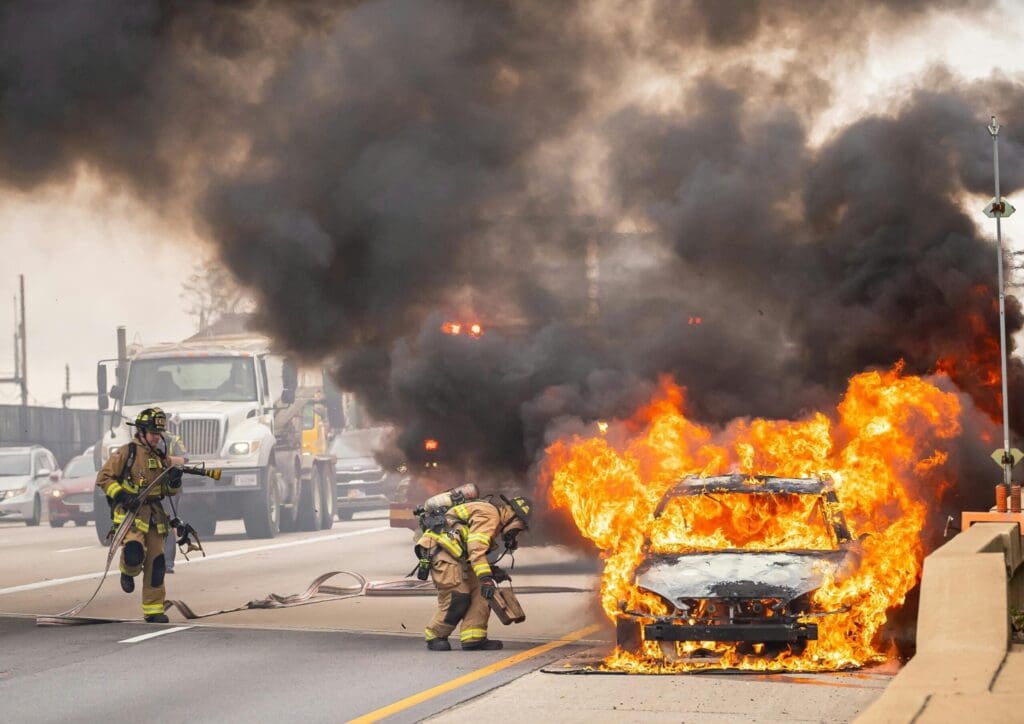
Injuries come in more shapes than any outline can hold, yet most conversations with a lawyer fall into the same few groups. In each, the opening questions are who was obliged to take care, how that obligation was missed, and what the injury has meant for the person hurt. If your issue is a brand, an invention, or an original work, it falls outside these groups and is addressed on the page for intellectual property attorneys in Maplewood.
Crashes on the road
One collision can hurt the driver, the passengers, someone crossing, and someone on a bike, and each person’s memory will be different. A lawyer compares those memories with the records. Scenarios that people describe:
- A collision between two cars
- A tractor trailer or large truck among the vehicles
- A cyclist hit by a motorist
- A motorcycle crash
- A driver impaired by alcohol or drugs
- A driver who was distracted or reckless
- A crash that fits none of these
Insurance limits are often the next subject. According to the Department of Banking and Insurance 2026 auto insurance buyer’s guide, bodily injury liability on a Standard Policy runs as low as $35,000 per person and $70,000 per accident. Remember that this is the low end of the Standard Policy column and that other limits exist. The Basic Policy column is not the same, and the guide is a consumer publication from an agency and not the statute.
Hazards in buildings and on grounds
A person in control of a property is expected to keep visitors from harm. The questions concern the hazard, how long it persisted, and who was responsible. Situations include:
- Stairs that were broken or had no rail
- Hallways and paths without light
- Floors that were wet or oily
- Walkways that were cracked or raised
- Hot or chemical hazards
- Dog attacks
- Other dangerous conditions
Hazards at work
At work, the employer, the job, and the site all shape what happens after an injury. People describe:
- Falls from roofs, scaffolds, or ladders
- Orders to work in unsafe conditions
- Tools or machines that were not maintained
- Crashes while driving for work
- Electrical shocks
- Illness from workplace exposure
- Other injuries on the job
Defective products
A product that is badly designed, badly made, or badly labeled can injure people. Tools, appliances, car parts, and children’s items are familiar examples. Keep the item, its packaging, and the receipt, and wait before repairing or discarding it so a lawyer can say whether it matters.
Government related matters
If a public entity or public employee may be involved, the matter may come with notice requirements and short time limits that are unlike those elsewhere. A lawyer asked early can point to the steps that may apply.
When a person dies
Relatives who lose someone through another’s negligence often ask who may bring a matter and what it can seek. Situations include:
- A fatal vehicle crash
- A drowning
- An electrocution
- A fatal fall
- A fire
- A firearm incident
- A fatal incident on the water or in the air
- Another fatal incident
A separate claim may arise for family members after a death, and it can carry its own time limits. A lawyer can explain how those rules fit the situation.
Punitive damages
These damages target conduct and not a loss. The law handles them separately from compensation, and a lawyer can explain whether they can be sought and what limits may apply.
Use the form on this page to send a short description of your matter
How To Start The Personal Injury Attorney New Jersey Maplewood Intake Process
Begin with the form on this page. It asks for your name, a way to reach you, and a short description of the incident. Sending it opens a conversation. It does not bind you, and the page makes no promise about outcome, price, or speed.
Keep these handy:
- The date and location of the incident
- Others who were involved
- The providers who treated you
- A police report or claim number, if there is one
- Your log or timeline
Be plain and factual. Say what you were doing, what went wrong, and how you are feeling. If a fact is unknown, say so. Small symptoms are worth a mention.
After sending the form, keep your papers in one place and follow your providers’ instructions. Keep receipts for your own spending and add to your notes as time passes. Avoid posting about the incident. If you want to compare other communities, the pages for personal injury attorneys in East Orange and personal injury attorneys in Newark are available.
Frequently Asked Questions
What does the township say about its police Records Bureau?
The police Records Bureau is responsible for the classification and maintenance of all police reports and records, according to the township’s own Records Bureau page.
What does the township’s website list among its applications and forms?
File a Tort Claim and Request A Motor Vehicle Crash Report.
Where is the Essex County Veterans Courthouse?
The court system’s Essex Vicinage page lists it at 50 West Market Street, Newark, New Jersey.
Should I keep the clothing or shoes I was wearing?
Often it helps to keep them unwashed and unrepaired, in a bag, until a lawyer has said whether they matter.
How do I describe pain on a form?
Say where it is, when it began, and what makes it worse. Consistent descriptions help your records reflect how you feel.
