

Instantly Connect For Your Personal Injury Consultation When Filling Out Form
Your Plainfield Personal Injury Attorney
Not long after an injury, many people discover that they have become amateur administrators. They are tracking appointments, saving receipts, decoding insurance letters, and wondering whether a casual phone call with an adjuster might matter later. In Plainfield, as elsewhere, that sudden workload is part of the experience, and it helps to have a reliable outline in hand. This page supplies one: general, plainly worded, and cited where it states facts.
It does not tell you what your case is worth or whether you have one. The sections that follow describe how injury claims are usually approached, what records are worth keeping, what to ask a lawyer, and which kinds of injury matters people raise. For your own situation, a lawyer who reads your documents is the right source.
The city’s police department page, on the city’s own website, lists a non emergency number of 908 753 3131 and an email address for non emergency traffic concerns, and you can see it at the city police department page.
For court information, the New Jersey court system’s own Union Vicinage page lists the Union County Courthouse at 2 Broad Street in Elizabeth.
Hackensack Meridian Health’s own page for JFK University Medical Center lists its address as 65 James Street, Edison, NJ 08820.
Many readers ask how long they have to act. The text of section 2A:14-2 is set out in chapter 120 of the Laws of 2019. According to that text, an action at law for an injury to the person caused by a wrongful act is to be commenced within two years after it accrued, and the section begins with except as otherwise provided by law. Since this is the wording as enacted in 2019 and not necessarily the current text, a lawyer can check the current text and whether an exception reaches your dates.
Another frequent question is what happens when a person was partly responsible. Jurors are told about it in model civil jury charge 7.31, where the New Jersey Courts say that to recover against any defendant the plaintiff’s percentage of fault must be 50% or less, and a plaintiff above 50% recovers no damages at all. The charge is the court system’s explanation of the statute and not the statute text.
Readers who want a broader view can open the page for personal injury attorneys in Scotch Plains or the statewide New Jersey personal injury attorneys page.

What To Look For When Hiring Your Personal Injury Attorney

Hiring a lawyer is not a purely rational process. Part of it is comfort: whether you feel heard and whether the explanations make sense to you. Part of it is substance: whether the lawyer asks useful questions and is honest about uncertainty. A single meeting can tell you quite a lot about both.
To make the meeting productive, collect documents in advance. Common examples:
- Discharge instructions, test results, and bills from each provider
- Receipts for drugstore items, supports, and travel to treatment
- Wage records or an employer’s note about missed shifts
- Pictures and video from the scene and from the weeks after
- Everything that an insurer has sent or said
- Any police, property, or workplace report
- Names and numbers of people who saw what happened
Next, make a timeline. Start with the incident and move forward, adding appointments and changes in symptoms. Where you are uncertain, say so, and do not fill the gap with a guess.
Questions you might ask each lawyer:
- What do you see as the difficult points in my matter?
- Who will be doing most of the work?
- How will I hear from you, and how often?
- Can I read the fee agreement before agreeing to anything?
- What is your plan if the insurer blames me?
- Who decides whether to accept an offer?
- Which of my everyday habits could affect the matter?
Be candid about previous injuries that touched the same part of the body, and about any gaps in treatment. Those facts usually emerge, and a lawyer who knows about them can plan around them. Be careful about the internet too. A photograph that shows you smiling can be quoted as evidence that you were fine.
An insurer may ask for a recorded statement early on. Before you agree, ask a lawyer what it involves.
During the meeting, write notes and read each page of any agreement. If a term is unclear, ask for it to be explained. After speaking with several lawyers, compare your notes and consider which explanation helped you most. Nobody has to decide on the spot, and a lawyer who respects that is showing you how the working relationship is likely to go. Ask, too, what the lawyer would need from you at the start, so that you can plan your time around it.
Intake form for an injury matter in Plainfield
Personal Injury Types of Cases
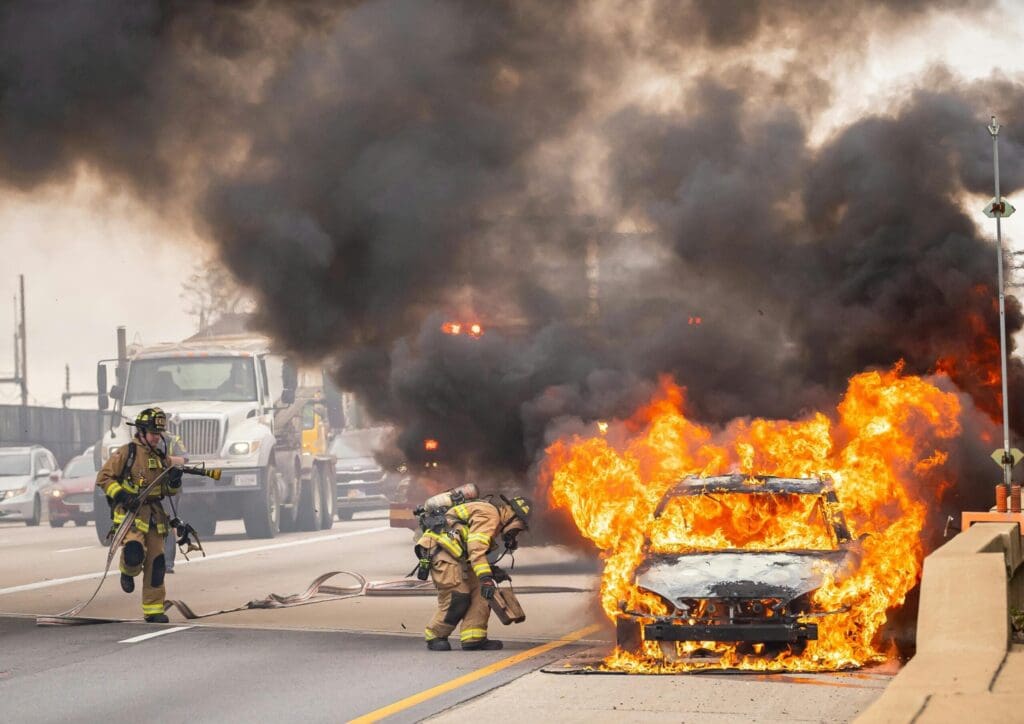
Sorting injury matters by origin makes them easier to talk about, and that is how this section is arranged. A lawyer’s opening questions are much the same in every group: what standard of care applied, where the responsible party fell short, and how the injury has disrupted the person’s life. Matters about a trademark, a patent, or a creative work are another field, covered by the page for intellectual property attorneys in Plainfield.
Incidents on roads and sidewalks
Anyone sharing the street can be hurt, and in one crash the accounts from the driver, a passenger, and a bystander may not match. The lawyer checks them against the medical record. Situations that people describe:
- Two cars colliding at a junction
- A crash involving a tractor trailer or delivery van
- A cyclist hit as a vehicle turned
- A motorcycle collision
- A driver who was under the influence
- A driver who was on a phone or driving recklessly
- Another kind of crash on the road
Limits on insurance come up often. The Department of Banking and Insurance 2026 buyer’s guide for auto insurance, which can be read at the buyer’s guide for 2026, shows bodily injury liability on a Standard Policy as low as $35,000 per person and $70,000 per accident. That describes the lowest figures in the Standard Policy column. It leaves out other limits a policy may carry, the Basic Policy column reads differently, and the guide is an agency’s consumer publication and not the statute.
Hazards on land and in buildings
An owner, landlord, or business manager is expected to keep a place reasonably safe for people who enter. A lawyer looks at the hazard, how long it persisted, and who should have corrected it. Examples that arise:
- A stair that was cracked or missing a rail
- A stairwell or lot with dead lights
- A floor that stayed wet
- A sidewalk panel raised by roots
- A burn from a heater, stove, or chemical
- A dog bite
- Another condition that put visitors at risk
Injuries during employment
When the injury happens at work, the employer and the duties of the job add questions. People point to:
- A fall from a ladder, roof, or dock
- An order to work in unsafe conditions
- A tool or machine nobody maintained
- A vehicle crash during a work trip
- An electrical shock
- Illness after exposure to something at work
- Some other injury on the job
Dangerous consumer goods
A defective tool, appliance, vehicle part, or children’s item can cause injury. The inquiry looks at how the item was designed, made, labeled, and used. Keep it with its box and receipt if you can, and put off repair or disposal until a lawyer has said whether it matters.
Claims against public bodies
A public entity or public employee on the other side can mean different procedures. Notice requirements may be unusual and time limits short compared with other matters. Ask a lawyer about it early.
Fatal injuries
When a relative dies through another person’s negligence, the family typically asks who can bring a matter and what it can seek. Scenarios include:
- A fatal vehicle crash
- A drowning
- An electrocution
- A fatal fall
- A fatal fire
- A fatal shooting
- A fatal accident on the water or in the air
- Another fatal incident
A death can lead to a separate claim for family members, and that claim can have its own time limits. A lawyer can say which rules fit.
Punitive damages
Awards of this kind respond to wrongful conduct and not to a loss. The law handles them apart from compensation, and a lawyer can explain whether they can be sought and what limits may apply.
Use the form on this page to send a short description of your matter
How To Start The Personal Injury Attorney New Jersey Plainfield Intake Process
Use the form on this page to begin. It requests your name, a way to reach you, and a brief description of the incident. Sending it opens a conversation. It does not obligate you, and the page makes no promise about outcome, price, or timing.
Pull these together first:
- The date and place of the incident
- Other people or businesses that were involved
- The providers who have treated you
- A report number or a claim number
- Your timeline
Write in plain words about what you were doing, what went wrong, and how you feel. If you do not know a detail, say so. Include small symptoms.
When the form is submitted, keep your documents in one place and follow your providers’ instructions. Save receipts for what you pay and continue your notes. When treatment changes or a symptom shifts, add a dated note so the record stays current. Think before posting about the incident. To look at nearby places, there are pages for personal injury attorneys in Westfield and personal injury attorneys in Middlesex.
Frequently Asked Questions
What does the city’s police page list for non emergency contact?
The police department page on the city’s own website lists a non emergency number of 908 753 3131 and an email address for non emergency traffic concerns.
What courthouse does the Union Vicinage page name?
The Union County Courthouse at 2 Broad Street in Elizabeth.
Where is JFK University Medical Center, according to its own page?
Hackensack Meridian Health’s own page lists its address as 65 James Street, Edison, NJ 08820.
What should I do about a bill I do not understand?
Keep it and ask the provider for an itemized statement. A lawyer can explain how bills are used in a claim.
Do old photos on my phone matter?
They can. Pictures from before the incident can show how you looked or what a place was like, and later ones show how the injury changed. Keep the originals.
