

Instantly Connect For Your Personal Injury Consultation When Filling Out Form
Your Maryville Personal Injury Attorney
There is a difference between being hurt and being ready to deal with it. Readers in Maryville who are somewhere in between may find it useful to have the basic terms laid out in one place: what a personal injury claim is, what a county page says about the court clerk’s work, and what two legal sources can and cannot tell you. The material is general. It does not apply the law to anyone’s facts, and it says nothing about how a particular matter will end.
Begin with the court. The Blount County government page for its Circuit Civil Court lists damage cases, personal injury and property, among the types of cases the court’s clerk office handles. That tells you the kind of case the clerk’s office deals with. It does not tell you whether a suit is right for you, or whether one is needed at all, since many matters are discussed with an insurer first.
A claim, in plain terms, is a request for payment sent to whoever caused the harm or to that party’s insurer. The request covers what the harm cost: treatment, pay lost while recovering and everyday activities you could not carry on. Whether it works depends on evidence. A dated photograph, a saved receipt and a short note written the same week are worth more than a memory of what happened.
On the medical side, the hospital’s own location page gives the address of Prisma Health Blount Memorial Hospital as 907 East Lamar Alexander Parkway in Maryville. The provider that treated you is the right place to ask how to request your records and itemized bills.
The 50% line comes from an agency summary of a court decision. In a bulletin dated June 29, 1993, the Tennessee Department of Commerce and Insurance says the Tennessee Supreme Court’s 1992 McIntyre decision set up modified comparative negligence, so a plaintiff must be less than 50% at fault in order to recover (bulletin PDF). Because the document is a summary, it should not be mistaken for the opinion or for current statute text. A lawyer can tell you what rule applies now.
Filing periods are easy to overlook, so one example is worth a look. Peterson v. Carey, an opinion of the Tennessee Court of Appeals dated October 23, 2023, upheld a ruling that applied the one year statute of limitations in section 28-3-104(a)(1) to a passenger’s suit for personal injuries filed over a year after a car accident. The decision is about that suit only. No general deadline is given here, so a lawyer is the right person to ask about yours.
If another town is closer to you, try the page for personal injury attorneys in Alcoa, or start from the Tennessee personal injury attorneys overview.

What To Look For When Hiring Your Personal Injury Attorney

Hiring a lawyer tends to go better when you decide in advance what you are looking for. For most people the list is short: someone who explains clearly, answers questions without irritation and tells the truth about uncertainty.
To test for those qualities, prepare before each conversation. Write a short account of what happened and pick questions that call for more than yes or no. A handful that work:
- Walk me through what you would do in the first few weeks.
- Which tasks are yours, and which are mine?
- Who speaks to the insurer, and how will I hear what was said?
- What is the usual cause of delay in a matter like mine?
- Where would you expect disagreement to arise?
What you hear in reply is data. Specific answers, with reasons attached, suggest the office has done this work before. Smooth answers with no reasons ask for another question.
Practical details matter more than they seem. Ask how you will be contacted, whether meetings can happen by phone or video and whether a relative may join. Ask what language support exists if you need it. Reasonable offices expect these questions.
Cost deserves its own conversation. Ask how expenses are explained, what the paperwork says if a matter ends without payment and whether you can take the document home. Refuse nothing you do not understand, and do not feel rushed by a deadline the office has set for itself. If a clause is unclear, ask for it in plain words and wait for an answer that you could repeat to a friend.
Bring a folder, and do not tidy it first:
- Treatment paperwork: bills, discharge sheets, prescriptions
- Pictures taken on the day and in the weeks after
- Proof of money spent, such as repair receipts
- Wage records or an employer note about missed shifts
- Every message from an insurer
- A page of events in order, marked where you are guessing
Say the uncomfortable things first. Glancing at a phone, hurrying or an earlier injury to the same joint are ordinary human facts, and a lawyer can plan around them far more easily than around a surprise.
While you are still deciding, be cautious with adjusters. They are paid by the insurer. A short factual answer is fine, a request for time is fine and so is a call to a lawyer before you sign a release or consent to a recording.
Intake form for an injury matter in Maryville
Personal Injury Types of Cases

Injury matters tend to fall into a few families. A habit worth forming comes first under each heading, and a general list follows. The lists describe kinds of situations, not any reader’s own.
Wrecks on roads and highways
Immediately after a collision, swap details with the other driver, photograph the vehicles and the surroundings from varied spots and find out how to get the police report. Even if you feel only sore, see a provider, since some injuries surface late. The kinds of wrecks include:
- Collisions between passenger cars
- Crashes involving a truck or a tractor trailer
- Cyclists struck by vehicles
- Motorcycle crashes
- Crashes with a drunk driver
- Crashes with a distracted driver
- Crashes with a reckless driver
- Other motor vehicle accidents
Two of the three required limits concern people and one concerns property. According to the Department of Revenue’s insurance page, a liability policy must at least carry $25,000 for each injury or death in an accident, $50,000 per accident for total injuries or deaths and $25,000 for property damage per accident. The page describes them as minimum limits and mentions an exemption. Ask a lawyer whether a specific vehicle is covered.
Hazards at a property
Property owners and managers may be asked whether they knew about a hazard and let it stand. After a fall, photograph the exact place, note the light and your footwear and write down who was close by. Keep the clothes you wore. Examples:
- Stair edges that are broken
- Back lots and alleys left dark
- Wet or slippery floors
- Paving that is cracked or uneven
- Burns from something dangerous on the premises
- Contact with chemicals
- Dog bites
- Other unsafe conditions
Work injuries
A worker who is hurt on the job deals with an employer, its insurer and sometimes a contractor or equipment maker. Follow the reporting steps your workplace requires, hold a copy of what you file and tell every clinician that the injury happened while working. A lawyer is the one to ask which process fits your case. Examples:
- Slips and falls on the job
- Unsafe conditions on a work site
- Tools or machines not kept in repair
- Electrical hazards
- Asbestosis or lung disease linked to exposure at work
- Other injuries suffered while working
Product failures and treatment questions
Whether the problem is a product or a treatment decision, preserve what you can. For a product, keep the item, packaging and receipt unrepaired for a qualified examiner. For treatment, request charts and bills and record events in order. Trained reviewers generally read them.
Claims against the state
A claim against the state is a distinct kind of matter. The Tennessee Department of Treasury says that for general liability, automobile liability and professional malpractice, the limits of liability are $300,000 per person and $1 million per occurrence. That statement covers the three categories named and no others, and this page does not describe any other claim against the state.
Fatal accidents
A claim of their own may be open to family members when a death is caused by another party’s carelessness, but the rules on who may bring it are not set out here. Examples include:
- Motor vehicle collisions
- Firearm incidents
- Electrocutions
- Falls
- Drowning
- House and building fires
- Other kinds of fatal incident
Nothing in this section should be taken as a deadline or as a rule about who is responsible. The case in the opening is a passenger’s injury suit, not a death claim, and a lawyer can address a specific matter.
Different rules apply to brands and creative works than to injuries, and they are discussed on intellectual property attorneys in Maryville, not here.
Use the form on this page to send a short description of your matter
How To Start The Personal Injury Attorney Tennessee Maryville Intake Process
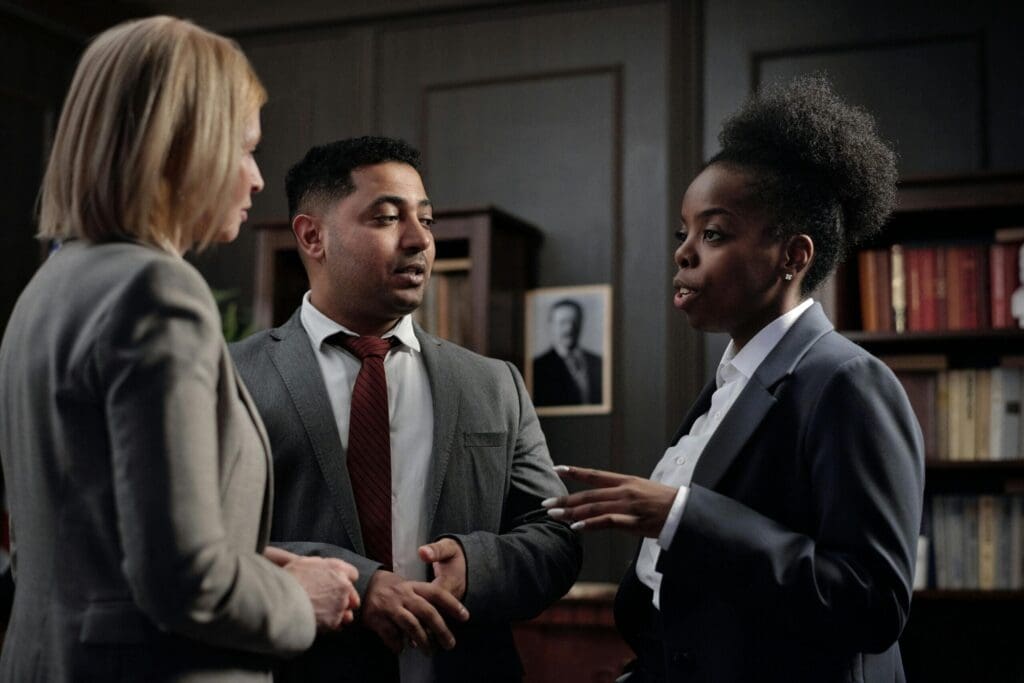
If you would like to describe your matter, begin with the form on this page. It wants your name, a way to reach you and a few lines about the injury. Casual wording is acceptable. A field that does not apply can be skipped, as long as the description says why.
Things to have within reach:
- A report, claim or case number, if you were given one
- Names of the people and businesses involved
- Where you were treated, and on what dates
- Photos, letters or messages you plan to refer to
Memory has holes, and that is acceptable, especially after a frightening or painful day. Write “not sure” and say who might know. A correction costs little, whereas a confident error can mislead.
By itself, the form commits you to nothing. It is a way into a conversation, and what comes of that conversation depends on facts nobody has yet examined. Read each confirmation before agreeing, and provide only what you are comfortable providing.
Afterward, keep up the paper trail: bills as they come, notes on how symptoms change and copies of anything signed or sent, insurer messages included. Dating each item takes seconds and saves confusion later, particularly if weeks pass between one bill and the next.
Other pages for readers in the region include personal injury attorneys in Knoxville and personal injury attorneys in Oak Ridge.
Frequently Asked Questions
What kinds of cases does the Blount County Circuit Civil Court page mention?
Among the types of cases the court’s clerk office handles, the Blount County government page for its Circuit Civil Court lists damage cases, personal injury and property.
Which address does the hospital’s page give for Blount Memorial?
The hospital’s own location page gives the address of Prisma Health Blount Memorial Hospital as 907 East Lamar Alexander Parkway in Maryville. If another facility treated you, use its name on forms.
Does every injury matter end up in court?
No. Many are discussed with an insurer first, and some are resolved without a lawsuit. A lawyer can explain the options for a specific situation.
Can I keep working on my records after sending the form?
Yes, and you should. Add new bills and notes as they come, and keep copies of what you send.
