

Instantly Connect For Your Criminal Defense Consultation When Filling Out Form
Ready to talk to someone about a charge in New Castle? The form above connects you directly, no need to read everything below first.
Your New Castle Criminal Defense Attorney
Nothing about a criminal charge in New Castle is small to the person facing it. Pennsylvania law gives you fixed reference points, from how a charge is graded to when a trial must start to what can eventually come off a record. This page explains the grading system, the limitation periods, why Rule 600 is less strict than it sounds, and what can happen to a record afterward, citing the statute or rule each time. The details of your case decide which rule controls, and an attorney who practices in Pennsylvania courts can sort that out quickly.

Deadlines, Trial Timing, and Records: The Short Version
- How long can they wait to charge me? Usually 2 years (42 Pa.C.S. § 5552(a)), with longer periods for listed offenses such as aggravated assault, robbery, and theft.
- Speedy trial: 365 days under Rule 600, counted from the complaint, but only delay caused by the Commonwealth’s lack of diligence is counted against it.
- Held in jail before trial: 180 days is the limit on pretrial incarceration under Rule 600(B), after which you can ask for release on nominal bail, unless the law does not allow bail in your case.
- Every charge has a grade: felony of the first, second, or third degree, misdemeanor of the first, second, or third degree, or summary offense (18 Pa.C.S. § 106). The grade caps the penalty.
- Clearing a record: expungement, automatic Clean Slate limited access, and petition-based limited access are three different tools with different waiting periods (18 Pa.C.S. §§ 9122, 9122.1, 9122.2).
The Grading System Behind Your Charge
Every Pennsylvania criminal charge carries a grade. Section 106 of Title 18 lists them: first-, second-, and third-degree felonies, first-, second-, and third-degree misdemeanors, and summary offenses at the bottom.
The ceilings are set by statute. A first-degree felony can bring up to 20 years, a second-degree felony up to 10, and a third-degree felony up to 7 (§ 1103), while misdemeanors are capped at 5, 2, and 1 years (§ 1104) and summary offenses at 90 days (§ 1105). Each grade also has a fine limit (18 Pa.C.S. § 1101): $25,000 for a felony of the first or second degree, $15,000 for the third, $10,000 to $2,500 across the misdemeanor degrees, and $300 for a summary offense, with exceptions where a statute provides its own amount.
Section 106 also fills the gaps: a felony or misdemeanor without a stated degree is third degree, and an offense punishable by no more than 90 days is summary.
The Statute of Limitations on a Pennsylvania Criminal Charge
For most offenses the Commonwealth has two years to start a prosecution (42 Pa.C.S. § 5552(a)). Offenses not named in the longer-period lists, such as simple assault and DUI, are subject to that general two-year rule.
Two lists extend the default. Five years for offenses such as aggravated assault, burglary, robbery, theft, forgery, and drug offenses punishable under § 13(f) (§ 5552(b)), and twelve years for rape, sexual assault, incest, and sexual abuse of children (§ 5552(b.1)). For murder and voluntary manslaughter there is no deadline (§ 5551).
What stops the clock is the start of the prosecution: an indictment, an information, or a warrant, summons, or citation that is served without unreasonable delay (§ 5552(e)). Under § 5554 the period is also paused while the accused is continuously absent from the state or cannot reasonably be located here, or while a prosecution for the same conduct is pending.
Charged in New Castle? Get matched with an attorney now.
The 365-Day Trial Rule: What It Really Means
Rule 600 sets a 365-day period, counted from the day the complaint is filed, for a trial to begin. If the rule was violated, the defense can file a written motion asking the court to dismiss the charges with prejudice, and the judge must hold a hearing on it. How the days are counted is what matters. Under Rule 600(C), time lost to the Commonwealth’s lack of diligence is included, and all other delay is excluded, so a case can lawfully run past 365 days when the delay came from the defense, from a waiver, or from circumstances the prosecution could not control.
In practice the fight is over the adjusted date. The judge is required to record who requested each continuance and whether the time is included or excluded (Rule 600(C)(3)), and the Commonwealth carries the burden of showing due diligence before it can rely on excluded time. Courts do not treat delay as one thing. Emergency orders suspending Rule 600 during the pandemic excluded hundreds of days in Commonwealth v. Malone (2023), while in Commonwealth v. Harth (2021) the Supreme Court held that judicial delay can excuse a late trial only if the Commonwealth was diligent.
A different, shorter limit protects someone held before trial: 180 days from the complaint under Rule 600(B). Only delay caused by the defense is excluded from that count, and the remedy is a motion for immediate release on nominal bail, unless bail is not available in the case. Cases in Philadelphia Municipal Court follow their own rule, Rule 1013, with a 180-day period, which is why a Philadelphia timeline can look different from one in Lawrence County.
Where Your Case Is Heard in New Castle
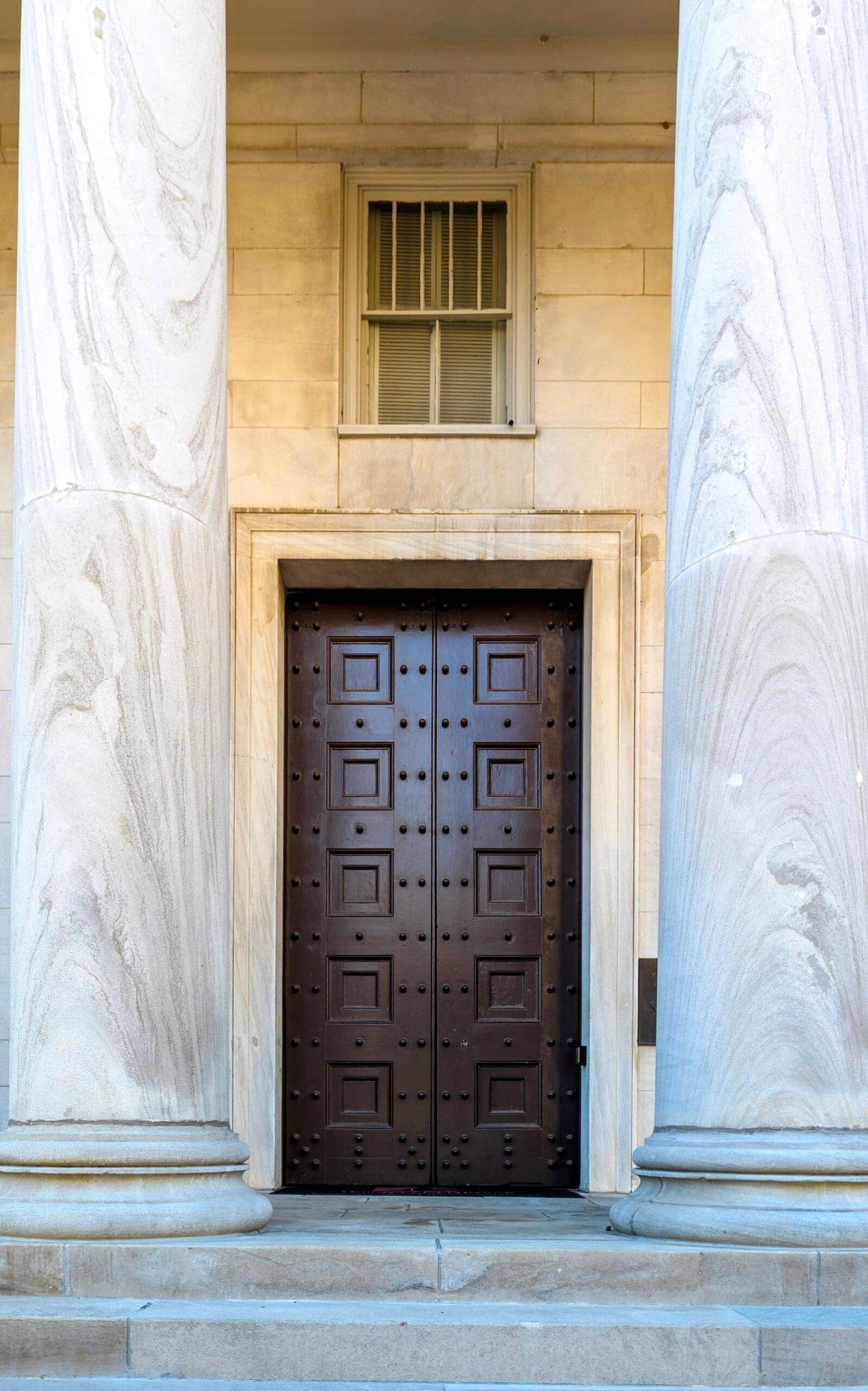
Early steps happen before a magisterial district judge: arraignment, bail, summary offenses, and the preliminary hearing (42 Pa.C.S. § 1515). If the charges go forward, the Court of Common Pleas is where the case is tried.
For a charge arising in New Castle, that trial court is the Court of Common Pleas of Lawrence County, which serves the Fifty-third Judicial District (42 Pa.C.S. §§ 901, 951). The county seat is New Castle. Which magisterial district hears the case is set by where the offense is alleged to have occurred (Pa.R.Crim.P. 130).
Answers on the Charges We Hear About Most
Does my blood alcohol level change what I face on a DUI?
Yes, the number matters a great deal. A level of 0.08 to under 0.10 is general impairment, 0.10 to under 0.16 is high rate, and 0.16 or above is highest rate (75 Pa.C.S. § 3802), and each step up brings a higher minimum for a first offense: six months of probation and $300, then 48 hours in jail and $500 to $5,000, then 72 hours and $1,000 to $5,000 (§ 3804).
Different limits apply to some drivers. A minor can be charged at 0.02, and commercial drivers face 0.04 (0.02 for a school bus or school vehicle) under 75 Pa.C.S. § 3802(e) and (f), so the standard in the tiers above is not the only one.
What are the penalties for possession of a controlled substance?
Possession of a controlled substance under 35 P.S. § 780-113(a)(16) is a misdemeanor with a maximum of one year and a $5,000 fine, or three years and $25,000 after a prior conviction. Possession of a small amount of marijuana, 30 grams or 8 grams of hashish, carries a maximum of 30 days and $500. Charges of delivery or possession with intent to deliver are felonies with much higher ceilings.
A drug offense can also lead to a DUI-type charge: driving with any amount of a Schedule I substance, or a non-prescribed Schedule II or III substance, in the blood can be charged under 75 Pa.C.S. § 3802(d)(1), separately from the drug charge itself.
What is the difference between simple assault and aggravated assault?
Simple assault (18 Pa.C.S. § 2701) is generally a second-degree misdemeanor, up to two years and $5,000. It drops to a third-degree misdemeanor (one year, $2,500) if it happened in a fight entered into by mutual consent, and rises to a first-degree misdemeanor (five years, $10,000) if an adult 18 or older commits it against a child under 12. Aggravated assault (§ 2702) is a felony, first degree for some subsections and second degree for others.
An assault charge also sets the calendar: with a two-year default for simple assault and five years for aggravated assault (42 Pa.C.S. § 5552), the date of the incident and the date the complaint or warrant issued can matter.
How does Pennsylvania grade theft charges?
Theft is graded mainly by value (18 Pa.C.S. § 3903). Over $2,000, or a motor vehicle, is a third-degree felony; $100,000 to under $500,000 is a second-degree felony; $500,000 or more is a first-degree felony. Most other theft is a first-degree misdemeanor, with second-degree ($50 to under $200) and third-degree (under $50) misdemeanors when the property was not taken from a person or by threat. Retail theft has its own scale (§ 3929).
Theft offenses (18 Pa.C.S. §§ 3921 to 3933) are on the five-year list in 42 Pa.C.S. § 5552(b), so the Commonwealth has more time to bring them than the two-year default.

Your dates and deadlines matter. Get matched with an attorney in New Castle today.
Can I Get This Expunged? Three Different Ways to Clear a Record

Three routes exist for clearing a Pennsylvania record, and which one fits depends on how the case ended and how long ago. They are expungement, automatic Clean Slate limited access, and limited access by petition, and they are not interchangeable.
The classic remedy is expungement (18 Pa.C.S. § 9122), which removes the record but applies in limited situations: cases without a conviction, acquittals on all charges (which are now expunged automatically), and Accelerated Rehabilitative Disposition cases dismissed after completion (Pa.R.Crim.P. 320). A conviction can be expunged only if it was a summary offense after five clean years, or at 70 after ten clean years.
Clean Slate limited access (§ 9122.2) is automatic, with no petition, once the waiting period has passed and court-ordered restitution and a fee are paid: five years for a summary conviction; seven years without another conviction punishable by a year or more for a second- or third-degree misdemeanor or any misdemeanor punishable by no more than two years; and ten years for a qualifying drug offense under the Controlled Substance Act. Non-conviction outcomes are included.
Limited access by petition (§ 9122.1) covers people who are not reached automatically. A qualifying misdemeanor can be petitioned for after seven years without a new conviction, and a listed lower-level felony, such as certain theft, forgery, criminal mischief, or criminal trespass offenses, after ten years. First- and second-degree felonies are excluded, restitution and a fee are required, and the district attorney can object.
Exclusions matter as much as waiting periods. Violent offenses (offenses against the person), offenses against the family, firearms offenses, registration offenses, and corruption of minors are left out of most of these processes (18 Pa.C.S. §§ 9122.1, 9122.3), and some prior records disqualify a person too.
Limited access is not erasure. The State Police and the courts must withhold a limited-access record from most background checks (18 Pa.C.S. § 9121), but the record still exists and criminal justice agencies can see it. A few requesters can still get it, including child-welfare agencies, custody and protection-from-abuse cases, and employers whose federal rules require a criminal-history review. Even after an expungement, including one that follows a diversion or probation program, the prosecutor and the State Police keep a list of names, used only to decide eligibility for later programs, to identify people in criminal investigations, and to grade later offenses (§ 9122(c)).
Local Court Details for New Castle
New Castle cases are heard in Lawrence County. Knowing which court you will be in, and how it schedules cases, matters because the Rule 600 count depends on the reasons for each delay, and an attorney who handles Lawrence County matters can watch those dates for you.
Injury claims follow different Pennsylvania rules, covered on our New Castle personal injury page.
Frequently Asked Questions
How long can the state wait to charge me with a crime in Pennsylvania?
Usually two years from the offense (42 Pa.C.S. § 5552(a)). Aggravated assault, burglary, robbery, theft, forgery, and certain drug offenses get five years, major sexual offenses get twelve, and murder and voluntary manslaughter have no limit. The clock stops when a warrant, summons, or citation is issued and served without unreasonable delay.
Is 365 days a hard deadline for my trial?
No. It is a starting point that adjusts. The count includes only Commonwealth delay without due diligence and excludes every other period (Pa.R.Crim.P. 600(C)(1)), and the judge must record who asked for each continuance and to whom the delay is attributed (Rule 600(C)(3)).
What are the maximum sentences for Pennsylvania crimes?
Felony maximums are 20, 10, and 7 years; misdemeanor maximums are 5, 2, and 1 years; and a summary offense allows up to 90 days (18 Pa.C.S. §§ 1103, 1104, 1105). Individual statutes can set their own penalties within those classes.
What happens if I am charged with a summary offense?
It usually starts and finishes before a magisterial district judge, who has jurisdiction over summary offenses (42 Pa.C.S. § 1515). The penalty ceiling is 90 days and a $300 fine unless another statute provides otherwise (18 Pa.C.S. §§ 1105, 1101).
What is a preliminary hearing in Pennsylvania?
A preliminary hearing takes place before a magisterial district judge acting as the committing magistrate (42 Pa.C.S. § 1515). Charges that go forward are then handled in the Court of Common Pleas.
Can I get out on bail if my trial is delayed?
Possibly. After 180 days in custody the defense can ask to be released on nominal bail, with any nonmonetary conditions, unless the case is one where the law does not allow bail (Rule 600(B) and (D)(2)).
Is a first DUI a felony in Pennsylvania?
Not by itself. A first DUI is a misdemeanor, with a maximum of six months in the general-impairment tier (75 Pa.C.S. § 3803(a)(1)). The grade rises with prior offenses and some aggravating facts, such as a minor in the vehicle, and reaches a felony of the third degree once there are three or more prior offenses (§ 3803(a)(3)).
Does completing ARD count as a conviction?
ARD is a diversion program that can end in dismissal instead of a conviction, but it is not invisible: for retail theft, a prior ARD counts when deciding whether a later theft is a first, second, or subsequent offense (18 Pa.C.S. § 3929(b.1)), and for DUI, driving under the influence within 10 years after completing ARD is a separate offense (75 Pa.C.S. § 3802(h)(1)).
Can a misdemeanor be expunged in Pennsylvania?
Usually through limited access, not expungement. A second- or third-degree misdemeanor can qualify for automatic Clean Slate limited access after seven years without a conviction for an offense punishable by a year or more (18 Pa.C.S. § 9122.2), and a qualifying misdemeanor can be petitioned for after seven years (§ 9122.1).
What does limited access mean on a Pennsylvania record?
The record still exists, but the State Police and courts must withhold it from most non-criminal-justice requests (18 Pa.C.S. § 9121). It is a restriction on who sees it, not a deletion.
Take the Next Step in Your New Castle Case
A charge is easier to face with someone reading the paperwork alongside you. Submit the form to be connected with an attorney who can go over the charge, the deadlines, and the court in Lawrence County.
