

Instantly Connect For Your Personal Injury Consultation When Filling Out Form
Your Long Branch Personal Injury Attorney
People rarely plan to read about injury law. They end up doing it at a kitchen table, with a discharge sheet beside a laptop, after a collision, a slip, or a failure of some product. If you are in Long Branch and have reached that stage, you may be hunting for a straight answer to a simple question: what should happen next? This page offers an orderly place to start, written in plain terms and cited where it states a fact.
Expect general information only. The sections explain how claims tend to be approached, what to gather, how to talk with a lawyer, and the kinds of matters people bring. A lawyer who reads your records is the one who can speak to your own circumstances, so nothing here should be taken as an opinion on them.
The SR-1 deserves a mention for anyone who was in a crash. On its own page, the state transportation department says the Self Reporting Crash form (SR-1) is used for a crash that police did not investigate. See the SR-1 page of the state transportation department.
Courts come next. On the court system’s own Monmouth Vicinage page, the Monmouth County Courthouse in Freehold is listed at 71 Monument Street, Freehold, NJ 07728, and the hours are given as Monday to Friday, 8:30 a.m. to 4:30 p.m.
What does the law say about waiting too long? A look at the text of chapter 120 of the Laws of 2019 is a start, since the chapter sets out section 2A:14-2. The section, in that form, begins with except as otherwise provided by law and goes on to say that an action at law for an injury to the person caused by a wrongful act is to be commenced within two years after it accrued. Note that the form is the 2019 wording and not necessarily the current text. A lawyer can check the present text and tell you if an exception could matter.
When two parties both erred, the question of who recovers is explained to jurors in numbers. The model charge is civil jury charge 7.31, and it tells jurors that a plaintiff whose percentage of fault is 50% or less can recover against any defendant, while a plaintiff above 50% recovers no damages at all. It is how the courts explain the statute for jurors and is not the text of the statute.
For surrounding areas, see the page for personal injury attorneys in Neptune and the statewide New Jersey personal injury attorneys page.

What To Look For When Hiring Your Personal Injury Attorney

A helpful way to think about hiring a lawyer is as a series of small tests of comfort and clarity. Do you understand the explanations? Are your concerns addressed directly? Is there room to ask for a second explanation without feeling foolish? A few honest answers will tell you more than a long brochure.
Pulling your documents together beforehand speeds everything along. Items to look for:
- Medical charts, imaging reports, and statements of what you owe
- Bills for prescriptions, mobility aids, and rides to appointments
- Wage statements or an employer letter covering missed time
- Pictures of the scene, vehicle damage, or the hazard, plus pictures of injuries as they heal
- Any message from an insurance adjuster
- An accident, police, or incident report
- The names of witnesses
In addition, make a rough chronology. Start with when it happened and run it up to today. Mark the parts you cannot recall.
Questions to bring to each conversation:
- Where do you think my account is weakest?
- Will an attorney or a staff member handle most of my questions?
- How often do you update clients?
- Is there a written fee agreement that I can take with me?
- What will you do if the insurer says I was mostly at fault?
- Who decides if an offer is acceptable?
- Which actions of mine could harm my position?
If you had any earlier trouble with the same body part, tell the lawyer. The records usually reveal it, and the other side will find it. In the same spirit, review what you share online, since a posted photo may be viewed as proof that you are better than you feel.
If an insurer asks you to give a recorded statement, ask a lawyer first what that means.
Take notes at the meeting. Read any agreement slowly, ask about every term that is unclear, and, if you consult several lawyers, put the notes side by side before choosing. A good lawyer will not rush you.
Intake form for an injury matter in Long Branch
Personal Injury Types of Cases
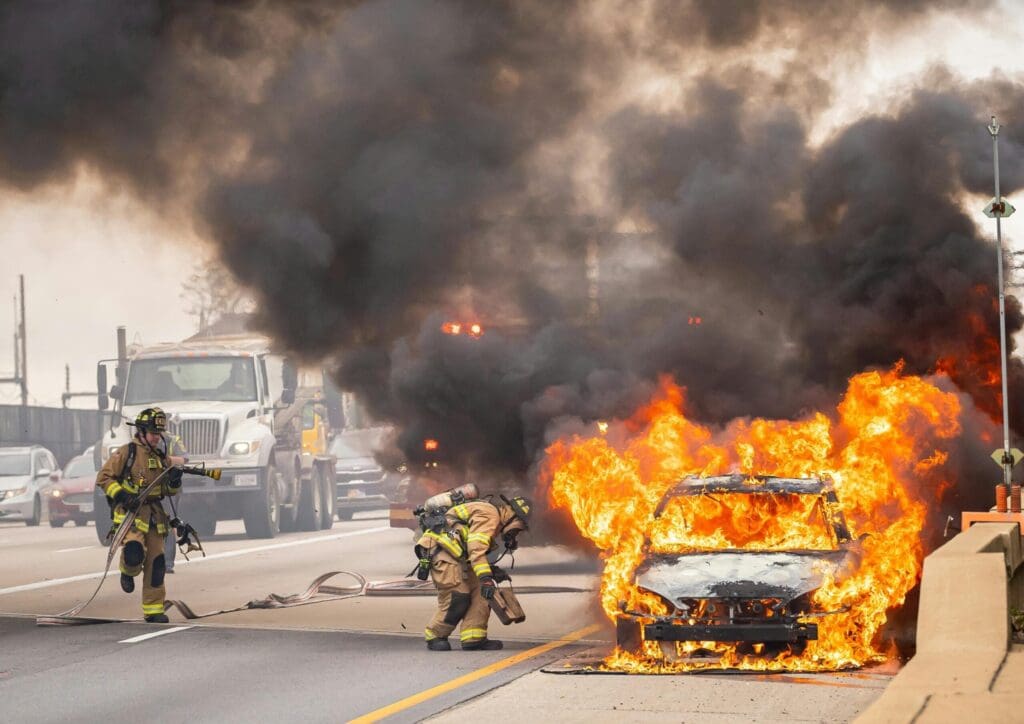
The headings below describe the most common kinds of injury matters, grouped by cause. Each raises the same three questions: who had a duty, what went wrong, and what the injury has done to ordinary life. A dispute about a name, an invention, or a creative work is another subject, handled on the page about intellectual property attorneys in Long Branch.
Road accidents
Drivers, passengers, pedestrians, and cyclists can be hurt in a single crash. A lawyer reconstructs what happened and reads the medical records alongside. Typical examples:
- A crash between two ordinary cars
- A collision with a commercial truck or tractor trailer
- A bicycle struck on a road
- A motorcycle accident
- A driver who was drunk or on drugs
- A driver who was distracted, speeding, or reckless
- Any other vehicle collision
The subject of insurance limits arises often. The New Jersey Department of Banking and Insurance 2026 auto insurance buyer’s guide shows bodily injury liability on a Standard Policy as low as $35,000 per person and $70,000 per accident. These amounts are the bottom of the Standard Policy column and not the only limits a policy may have. On the same chart the Basic Policy column differs. The guide is a consumer guide from an agency, not the statute.
Places that were unsafe
People who own, rent, or manage a property are expected to keep it from endangering others. The relevant questions: what was wrong, how long had it been wrong, and whose job was it to fix? Examples:
- A stairway with damaged steps
- A dark path or parking area
- A wet floor with no warning
- A walkway with a raised or broken edge
- A burn, scald, or chemical exposure
- A dog bite
- Some other hazard
Injured at work
An injury at work carries questions that other accidents do not, since the employer, the job, and the site shape what comes next. Descriptions include:
- A fall at a job site
- Unsafe working conditions
- Equipment that was not kept in repair
- A crash in a work vehicle
- A shock or electrical burn
- An illness from workplace exposure
- Some other injury on the job
Unsafe products
A product that fails or has a defect can injure people whether it is a tool, an appliance, a part of a car, or a toy. The inquiry looks at how it was designed, assembled, and labeled, and how it was used. Keep the item, the box, and the receipt. Please hold off on fixing or throwing it away until a lawyer says whether it matters.
Claims against the government
A matter involving a public entity or public employee can carry unusual notice requirements and very short time limits, unlike the usual injury matter. Asking a lawyer early is the careful course.
Death cases
After a fatal injury caused by negligence, relatives ask who may bring a matter and what it can seek. Examples include:
- A deadly crash
- A drowning
- Electrocution
- A fall that proved fatal
- A fatal fire
- A fatal shooting
- A death on the water or in the air
- Another fatal incident
A separate claim can arise for family members after a death, and it may have time limits of its own. A lawyer can explain which rules apply to a particular situation.
Damages that punish
Punitive damages respond to wrongful conduct and not to a loss, so they are handled apart from compensation. A lawyer can explain whether they can be sought and which limits might apply.
Use the form on this page to send a short description of your matter
How To Start The Personal Injury Attorney New Jersey Long Branch Intake Process
Everything starts with the form on this page. It takes your name, a way to contact you, and a short description of the event. Sending it opens a conversation. It does not bind you in any way, and the page makes no promise about the outcome, the price, or the speed.
Put these within reach:
- The day and place of the incident
- The people or businesses that were involved
- The providers who treated you
- A police report or claim reference, if one exists
- Your chronology
Describe the event simply: what you were doing, what went wrong, and how you feel today. Where you are uncertain, say so. Include symptoms even if they seem small.
Once you submit, keep your records together and follow your providers’ instructions. Save receipts for what you have paid, and keep your notes current. Think about the effect of public posts before making them.
To look at neighboring places, there are pages for personal injury attorneys in Colts Neck and personal injury attorneys in Howell.
Frequently Asked Questions
What is the SR-1 form used for?
The state transportation department’s own page says the Self Reporting Crash form (SR-1) is used for a crash that police did not investigate.
What address does the Monmouth Vicinage page give for its courthouse?
It lists the Monmouth County Courthouse at 71 Monument Street, Freehold, NJ 07728.
What hours does that page list?
Monday to Friday, 8:30 a.m. to 4:30 p.m.
How is shared fault handled by a jury?
According to model civil jury charge 7.31, the plaintiff’s percentage of fault must be 50% or less for recovery against any defendant, and a plaintiff above 50% recovers no damages at all. A lawyer can walk through how that could apply to your facts.
What time limit does the 2019 session law set out?
Chapter 120 of the Laws of 2019 sets out section 2A:14-2, which provides that, except as otherwise provided by law, an action at law for an injury to the person caused by a wrongful act is to be commenced within two years after it accrued. That is the 2019 wording and not necessarily the current text, so a lawyer can check it.
Are there special steps for a claim involving a public body?
Matters involving a public entity or public employee can have special notice requirements and short time limits, so ask a lawyer early.
